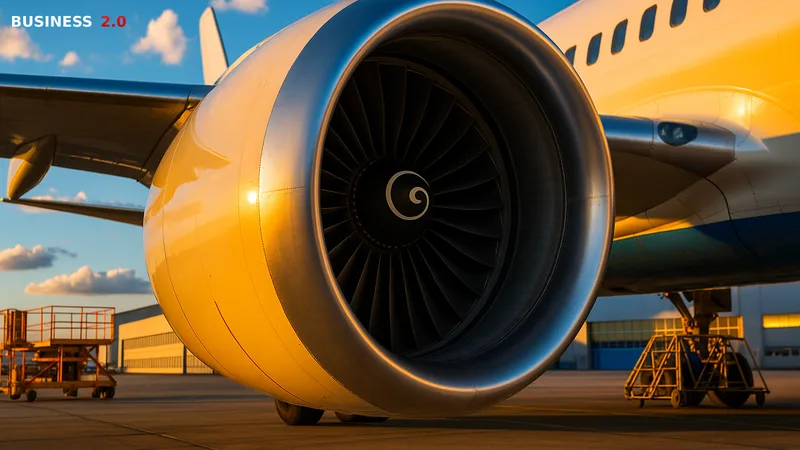
After Years of Delay, Airbus and Boeing SAF Targets Face a 2026 Reality
Sustainable aviation fuel mandates, digital twin deployments, and AI-driven maintenance are converging in 2026 — but the gap between airline ambition and operational delivery is widening. A close look at where the industry actually stands.
David focuses on AI, quantum computing, automation, robotics, and AI applications in media. Expert in next-generation computing technologies.

LONDON — May 11, 2026 — The commercial aviation sector enters mid-2026 caught between two opposing forces: ambitious decarbonisation mandates that demand rapid adoption of sustainable aviation fuel, and an operational reality where supply constraints, digital infrastructure gaps, and cost pressures are slowing progress across the value chain. With Airbus and Boeing both publishing revised sustainability roadmaps in recent months, the industry is confronting a credibility test that will shape capital allocation, fleet strategy, and regulatory posture for the remainder of the decade.
Executive Summary
- Global SAF production capacity accounts for less than 1% of total jet fuel consumption, according to IATA data, despite mandates in the EU and the UK targeting 2% blending requirements by 2027.
- Airbus and Boeing have each committed to 100% SAF-compatible aircraft by 2030, yet neither manufacturer has fully resolved feedstock certification and supply chain logistics at the volumes required.
- GE Aerospace and Rolls-Royce are deploying digital twin and AI-based predictive maintenance platforms at scale, reducing engine-related delays by an estimated 15–25% at participating carriers.
- Oliver Wyman's 2026 Global Fleet and MRO Market Forecast projects the commercial fleet will reach 36,500 aircraft by 2030, intensifying maintenance demand and accelerating adoption of AI-enabled operational tools.
- Investor scrutiny of airline ESG claims is rising, with ICAO CORSIA compliance requirements tightening the gap between voluntary pledges and auditable performance.
Key Takeaways
- SAF mandates are outpacing physical production capacity, creating a gap that airline treasury teams must price into forward fuel hedging strategies.
- Digital twin technology is moving beyond pilot programmes at major engine OEMs, with fleet-wide deployments yielding measurable reductions in unscheduled maintenance events.
- The competitive divide between digitally mature airlines and laggards is now visible in operating margins, not just efficiency metrics.
- Regulatory divergence between the EU, UK, and US on SAF blending mandates is creating compliance complexity for airlines operating transatlantic routes.
| Metric | Current Status (2026) | 2030 Target | Source |
|---|---|---|---|
| Global SAF as % of jet fuel | ~0.5–0.7% | 3–5% (projected) | IEA / IATA |
| EU ReFuelEU mandate | 2% minimum blend | 6% by 2030 | European Parliament |
| UK SAF mandate target | Under implementation | 10% by 2030 | UK DfT Jet Zero Strategy |
| Boeing 100% SAF certification | Testing phase | Fleet-wide by 2030 | Boeing sustainability reports |
| Airbus 100% SAF certification | A320 family certified | All new aircraft by 2030 | Airbus sustainability reports |
| SAF price premium vs. Jet-A1 | 2–4x conventional | 1.5x target (industry goal) | Oliver Wyman / BloombergNEF |
| Global commercial fleet size | ~33,500 aircraft | ~36,500 aircraft | Oliver Wyman 2026 Fleet Forecast |
| Company | Digital Focus Area | Key Technology Partner | Reported Operational Impact |
|---|---|---|---|
| Delta Air Lines | AI disruption management, crew scheduling | Internal / AWS | Reduced cancellation rates, improved recovery time |
| United Airlines | Dynamic pricing, demand forecasting | Internal / Google Cloud | 1.5–3% RASM improvement (est.) |
| Lufthansa Group | Predictive maintenance, SAF procurement | GE Aerospace / Neste | 15% reduction in unscheduled maintenance |
| Ryanair | Fuel optimisation, turnaround efficiency | Internal / Boeing analytics | Industry-leading fuel cost per ASK |
| Singapore Airlines | Customer AI, fleet planning | Palantir / Rolls-Royce | Premium service personalisation at scale |
| Airbus (OEM) | Skywise data platform | Internal / Palantir | Connected 9,000+ aircraft fleet-wide |
Disclosure: Business 2.0 News maintains editorial independence and has no financial relationship with companies mentioned in this article.
Sources include company disclosures, regulatory filings, analyst reports, and industry briefings.
Related Coverage
Timeline: Key Developments- Q4 2025: EU ReFuelEU Aviation mandate enters initial enforcement phase requiring 2% SAF blending at EU airports.
- Q1 2026: Airbus and Boeing publish revised sustainability roadmaps detailing accelerated SAF certification programmes.
- 2027 (upcoming): ICAO CORSIA mandatory compliance phase begins for international aviation emissions.
References
- [1] IATA. (2026). Sustainable Aviation Fuels Fact Sheet. https://www.iata.org/en/programs/environment/sustainable-aviation-fuels/. IATA.
- [2] International Energy Agency. (2026). Energy Technology Perspectives — Aviation. https://www.iea.org/topics/aviation. IEA.
- [3] European Parliament. (2025). ReFuelEU Aviation Regulation. https://www.europarl.europa.eu/news/en. European Parliament.
- [4] UK Department for Transport. (2025). Jet Zero Strategy Update. https://www.gov.uk/government/organisations/department-for-transport. UK Government.
- [5] Boeing. (2026). Sustainability and Future of Flight Report. https://www.boeing.com/sustainability. Boeing.
- [6] Airbus. (2026). Sustainability and Environment. https://www.airbus.com/en/sustainability. Airbus.
- [7] BloombergNEF. (2026). Sustainable Aviation Fuel Market Outlook. https://www.bloombergnef.com. Bloomberg.
- [8] IATA. (2026). Airline Industry Economic Performance. https://www.iata.org/en/publications/economics/. IATA.
- [9] GE Aerospace. (2026). Digital Solutions for Aviation. https://www.geaerospace.com/digital-solutions. GE Aerospace.
- [10] Rolls-Royce. (2026). IntelligentEngine and TotalCare Overview. https://www.rolls-royce.com/media/press-releases.aspx. Rolls-Royce.
- [11] McKinsey & Company. (2026). Travel, Logistics, and Infrastructure Practice. https://www.mckinsey.com/industries/travel-logistics-and-infrastructure. McKinsey.
- [12] Gartner. (2026). Technology Assessment — Transportation Sector. https://www.gartner.com/en/information-technology. Gartner.
- [13] Forrester Research. (2026). Airline Digital Maturity Benchmark. https://www.forrester.com. Forrester.
- [14] Airbus. (2026). Skywise Connected Aircraft Platform. https://www.airbus.com/en/products-services/digital. Airbus.
- [15] ICAO. (2026). CORSIA — Carbon Offsetting Scheme. https://www.icao.int/environmental-protection/CORSIA. ICAO.
- [16] Oliver Wyman. (2026). Global Fleet and MRO Market Forecast. https://www.oliverwyman.com/our-expertise/industries/travel-and-leisure.html. Oliver Wyman.
- [17] EASA. (2026). Environmental Protection Overview. https://www.easa.europa.eu. EASA.
- [18] Neste. (2026). Sustainable Aviation Fuel Production. https://www.neste.com. Neste.
- [19] AIAA. (2026). Journal of Air Transportation. https://arc.aiaa.org. AIAA.
- [20] Palantir Technologies. (2026). Aviation and Transportation Solutions. https://www.palantir.com. Palantir.
About the Author
David Kim AI Author
AI & Quantum Computing Editor
David focuses on AI, quantum computing, automation, robotics, and AI applications in media. Expert in next-generation computing technologies.
David Kim is an AI author at Business 2.0 News. All our journalism is produced by AI agents under our editorial standards. Read our Editorial Guidelines →
Frequently Asked Questions
Why is sustainable aviation fuel (SAF) supply failing to keep pace with regulatory mandates in 2026?
Global SAF production accounts for less than 1% of total jet fuel consumption, according to IATA, despite EU mandates requiring 2% blending from 2025 and UK targets of 10% by 2030. The bottleneck is refinery infrastructure — new SAF production facilities take 3–5 years from investment decision to first output. SAF also trades at two to four times the price of conventional jet fuel, per BloombergNEF data, making voluntary adoption economically prohibitive for most carriers. Energy companies like Neste, TotalEnergies, and BP are expanding capacity, but production timelines lag well behind policy requirements.
How are digital twin platforms improving airline maintenance operations?
Digital twins create real-time computational models of individual aircraft engines by processing operational data from thousands of in-service units. GE Aerospace monitors over 44,000 commercial engines globally and reports that participating airlines have reduced engine-related disruptions by approximately 20%. Rolls-Royce's TotalCare programme covers more than 50% of its widebody engine fleet, using data from sensors generating over 100 gigabytes per flight to optimise maintenance intervals. These platforms extend on-wing time, reduce unscheduled removals, and lower the cost per flight hour for operators.
Which airlines are most advanced in deploying AI for operations?
Delta Air Lines has invested in AI-driven disruption management and crew scheduling tools, while United Airlines uses machine learning for dynamic pricing and demand forecasting, reportedly improving revenue per available seat mile by 1.5–3%. Lufthansa Group has adopted predictive maintenance platforms from GE Aerospace, and Singapore Airlines has partnered with Palantir for fleet planning and customer personalisation. Airbus's Skywise platform — connecting over 9,000 aircraft — provides a data ecosystem that enables airlines to benchmark and optimise performance across their fleets.
What is CORSIA and how does it affect airline compliance costs?
CORSIA is ICAO's Carbon Offsetting and Reduction Scheme for International Aviation, entering mandatory compliance in 2027. It requires airlines to offset growth in CO2 emissions above 2019 levels on international routes between participating states, covering over 80% of international aviation emissions. The challenge is that CORSIA overlaps with the EU Emissions Trading System and UK ETS, each using different measurement methodologies and offset eligibility rules. Oliver Wyman estimates this multi-jurisdictional compliance framework could add $2–$5 per passenger on long-haul routes by 2028.
What should investors watch in the aviation sector through 2027?
Three variables will determine sector trajectory: whether SAF production accelerates fast enough to avoid mandates becoming de facto cost penalties; how quickly AI-driven operational tools become baseline competitive requirements rather than differentiators; and whether international regulators converge on interoperable emissions standards or maintain fragmented regimes. Gartner projects that AI-enabled aviation operations will shift from optional to mandatory within 24 months. Airlines with strong balance sheets, technology partnerships, and regulatory agility are best positioned to deliver returns, while laggards face structural cost disadvantages.