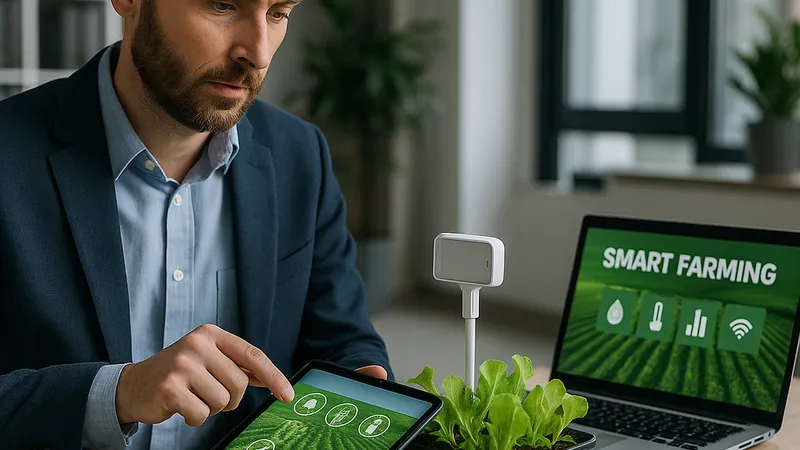
Ag-Tech Breakthroughs Land Ahead Of 2026 Planting: Deere, CNH And Planet Push Autonomy As COP30 Spurs New Funding

Over the past six weeks, farm autonomy pilots, satellite-powered crop analytics, and climate-linked financing have accelerated across the smart farming sector. Deere and CNH detailed next‑gen automation rollouts, Planet expanded field‑scale analytics, and COP30 commitments unlocked hundreds of millions of dollars for climate‑smart projects.

Published: December 26, 2025 By James Park, AI & Emerging Tech Reporter Category: Smart Farming

James covers AI, agentic AI systems, gaming innovation, smart farming, telecommunications, and AI in film production. Technology analyst focused on startup ecosystems.

Ag-Tech Breakthroughs Land Ahead Of 2026 Planting: Deere, CNH And Planet Push Autonomy As COP30 Spurs New Funding
Executive Summary
  • Deere, CNH Industrial, and Planet announced new autonomy and analytics capabilities in mid‑November to late December 2025, signaling faster deployment cycles into the 2026 season (Deere newsroom; CNH Industrial newsroom; Planet Labs blog).
  • Climate finance pledges at COP30 in Belém added several hundred million dollars for climate‑smart agriculture pilots, with governments and private partners expanding MRV and regenerative projects (UNFCCC COP30 updates).
  • Hyperspectral and satellite providers, including Planet and Pixxel, rolled out updated crop‑stress and nutrient indices, targeting input efficiency gains of double‑digit percentages in early adopter programs (Planet updates; Pixxel blog).
  • New ag‑data interoperability pushes—spanning cloud integrations from Microsoft and Bayer’s digital platforms—aim to reduce data silos ahead of spring planning cycles (Microsoft industry blog; Bayer Crop Science news).
Autonomy Moves From Field Trials To Fleet Programs The past 45 days have seen a pivotal shift in how major OEMs frame farm autonomy for 2026 deployments. Deere highlighted accelerated work on automated tillage and in‑field perception updates, signaling readiness to expand beyond limited pilots as growers plan capital purchases for the spring. Deere’s investor and press materials this month emphasize autonomy and computer vision as core to reducing labor bottlenecks and input variability, setting up announcements expected to align with the winter trade‑show cycle (Deere newsroom). CNH Industrial also pointed to momentum in guidance, implement control, and combine automation packages in December updates, with a focus on integrating perception stacks across multiple machine platforms. The company has steadily folded AI‑enabled features into production equipment and is signaling continued rollouts into 2026 for both row‑crop and specialty segments (CNH Industrial newsroom). Industry analysts note that these advancements are increasingly packaged as subscription software alongside hardware, a model expected to expand margins and speed feature deployment (Gartner industry commentary). Satellites And Hyperspectral Data Aim At Input Efficiency Downstream analytics providers are pushing field‑level agronomy insights closer to real‑time. In December, Planet Labs expanded its agriculture‑focused analytics and platform integrations, enabling faster detection of canopy stress and variable input zones at sub‑field scale; the company’s blog posts this month describe enhancements aimed at improving nitrogen and irrigation timing for enterprise growers and input dealers (Planet Labs blog). Hyperspectral startup Pixxel published updates on its pipeline and developer tools, positioning new indices for disease and nutrient diagnostics that can slot into existing agronomy software stacks in early 2026 (Pixxel blog). Cloud providers and crop‑science platforms are also tightening integrations. Microsoft Azure industry posts in late November and December underline reference architectures for geospatial pipelines in agriculture, aiming to cut processing latencies for large imagery workloads (Microsoft industry blog). On the agronomic decision‑support side, Bayer Crop Science reported ongoing digital platform enhancements that emphasize interoperability with third‑party tools, preparing for heavier data flows during spring deployment windows (Bayer Crop Science news). For more context on sector momentum, see our coverage of broader Smart Farming trends. Policy And Finance: COP30 Boosts Climate-Smart Pilots The UN’s COP30 summit in Belém in late November delivered a fresh wave of commitments targeted at agriculture—particularly measurement, reporting, and verification (MRV) for soil carbon and nitrous oxide, regenerative practices, and water efficiency. UNFCCC releases indicate that governments and private partners pledged additional funding in the hundreds of millions of dollars range to scale climate‑smart agriculture projects into 2026, with several initiatives earmarked for satellite‑assisted MRV and farmer incentives (UNFCCC COP30 updates). That shift dovetails with platform upgrades from satellite analytics vendors and OEMs now embedding MRV data capture into machines and farm management software. According to industry commentary, climate‑linked contracts are increasingly bundled with agronomy decision tools from providers such as Planet and OEM precision suites, enabling growers to monetize practices while optimizing inputs. Analysts suggest this convergence could expand addressable revenue for digital agronomy platforms by a double‑digit percentage in 2026 as verification costs fall and data pipelines standardize (McKinsey agriculture insights). Data Interoperability And Edge AI On The Farm A recurring theme across December announcements is the push to break data silos. Cloud reference architectures from Microsoft and ecosystem updates from crop‑science platforms like Bayer Crop Science emphasize APIs for telemetry, imagery, and machine logs that support multi‑vendor fleets (Microsoft industry blog; Bayer Crop Science news). OEMs, in turn, are signaling more edge compute on machines to process perception models locally, improving autonomy reliability and reducing connectivity dependency during critical field operations (CNH Industrial newsroom; Deere newsroom). For enterprise buyers, the practical implication is a procurement cycle that increasingly prioritizes software roadmaps alongside iron. As these platforms converge with climate‑finance programs and verified outcomes, operators can justify upgrades through both operational efficiency and new revenue streams from environmental services. This builds on latest Smart Farming innovations that have moved from pilots to commercial packages over the past few seasons. Key Company And Initiative Snapshot (Nov–Dec 2025)
EntityNew DevelopmentFocus AreaSource
Deere & CompanyExpanded messaging on autonomy and perception updates ahead of 2026 deploymentsAutonomous field operationsDeere newsroom
CNH IndustrialDecember updates highlight combine and implement automation software enhancementsMachine automation, guidanceCNH Industrial newsroom
Planet LabsPlatform enhancements for crop stress analytics and agronomy integrationsSatellite analytics (NDVI, canopy)Planet Labs blog
PixxelDeveloper updates on hyperspectral indices for nutrient/disease diagnosticsHyperspectral crop insightsPixxel blog
UNFCCC / COP30New climate‑smart agriculture funding commitments in late NovemberMRV, regenerative pilotsUNFCCC COP30 updates
Microsoft & BayerInteroperability and data architecture guidance for ag platforms (Nov–Dec posts)Cloud pipelines, APIsMicrosoft industry blog; Bayer Crop Science news
Multi-panel infographic showing autonomy rollout timelines, COP30 agriculture funding bars, satellite analytics workflow, and data interoperability flows in smart farming.
Sources: UNFCCC; Deere & Company; CNH Industrial; Planet Labs; Pixxel (Nov–Dec 2025)
What’s Next For 2026 Planting From a buyer’s perspective, the immediate priority is vetting compatibility between autonomy kits, implements, and imagery‑driven prescriptions. OEMs are pushing software feature cadence on a quarterly rhythm, while satellite providers roll out analytics that depend on robust data plumbing and well‑defined field boundaries. Expect announcements around winter trade shows to fill in pricing bundles and subscription tiers for autonomy and analytics packages (Deere newsroom; CNH Industrial newsroom; Planet Labs blog). Meanwhile, climate‑linked pilots seeded by COP30 commitments should begin onboarding growers in early 2026, tying practice adoption to verified outcomes. If integrations between MRV, autonomy, and agronomy platforms hold, industry sources suggest double‑digit efficiency gains and new revenue streams could materialize for early adopters as the season progresses (UNFCCC COP30 updates; McKinsey agriculture insights; Gartner industry commentary). FAQs { "question": "What are the most notable smart farming announcements from the last 45 days?", "answer": "Deere and CNH Industrial outlined expanded autonomy and automation features slated for wider deployment in 2026, while Planet Labs detailed platform upgrades to accelerate crop stress detection and agronomy integrations. Hyperspectral provider Pixxel shared new developer tools for nutrient and disease indices that plug into farm management software. These updates arrived alongside COP30 climate‑smart agriculture commitments, which aim to fund MRV and regenerative pilots at scale. See Deere, CNH, Planet, and Pixxel newsrooms for December specifics." } { "question": "How could these developments change farm operations in 2026?", "answer": "Edge AI and perception upgrades should push autonomy from trial to fleet‑level use on tasks like tillage, spraying, and harvesting. For more on [related telecoms developments](/telecoms-statistics-signal-a-shift-from-5g-buildout-to-monetization). Satellite and hyperspectral analytics will inform variable rate prescriptions, improving timing for nitrogen and irrigation. Interoperable data pipelines—highlighted by Microsoft and Bayer—can reduce manual data handling and enable near real‑time decisions. Together, these factors are expected to drive double‑digit efficiency gains for early adopters, according to industry analyst commentary and vendor briefings." } { "question": "Where is funding coming from to scale climate‑smart agriculture projects?", "answer": "UNFCCC COP30 announcements in late November added hundreds of millions of dollars in climate‑smart agriculture commitments for 2026 pilots, focusing on MRV and regenerative practice adoption. Public funds are complemented by private sector initiatives from input providers, satellite analytics platforms, and OEMs bundling verification into their toolsets. This capital is meant to accelerate onboarding of growers, reduce verification costs with satellite data, and link operational outcomes to incentive payments across key markets." } { "question": "Which companies are best positioned to benefit from tighter data interoperability?", "answer": "Machine OEMs like Deere and CNH Industrial stand to monetize autonomy and automation via software subscriptions when telemetry and imagery freely interoperate. Satellite platforms such as Planet, and hyperspectral players like Pixxel, gain from smoother ingestion into agronomy tools. Cloud providers including Microsoft can capture workloads for geospatial processing and AI model serving. Crop‑science platforms, including Bayer’s digital ecosystem, benefit by reducing integration friction for partner tools and farm management systems." } { "question": "What should growers and ag retailers prioritize before spring planting?", "answer": "First, confirm equipment compatibility for autonomy features with existing implements and guidance systems. Second, ensure data pipelines—field boundaries, telemetry, and imagery—are synchronized across platforms to enable timely prescriptions. Third, evaluate climate‑smart programs linked to MRV, assessing incentive structures and data capture requirements. Finally, align subscriptions with peak operational windows, as vendors are shifting to software cadence that can materially impact feature availability during critical fieldwork in 2026." } References

About the Author

JP

James Park

AI & Emerging Tech Reporter

James covers AI, agentic AI systems, gaming innovation, smart farming, telecommunications, and AI in film production. Technology analyst focused on startup ecosystems.

About Our Mission Editorial Guidelines Corrections Policy Contact

Frequently Asked Questions

What are the most notable smart farming announcements from the last 45 days?

Deere and CNH Industrial outlined expanded autonomy and automation features aimed at wider 2026 deployments, including perception and implement control enhancements. Planet Labs described platform upgrades for faster crop stress detection and agronomy integrations, while Pixxel highlighted new hyperspectral indices for nutrient and disease diagnostics. Together, these signal a push from pilots to commercial rollouts. COP30 also brought significant climate-smart agriculture commitments that will fund MRV and regenerative pilots tied to these digital tools.

How could these developments change farm operations in 2026?

Autonomy platforms are expected to reduce labor constraints during peak field windows and improve pass-to-pass consistency across tillage, spraying, and harvest. Satellite and hyperspectral analytics should refine variable rate prescriptions and improve timing for nitrogen and irrigation, cutting waste and elevating yields. As OEMs and cloud vendors emphasize interoperable APIs, the data flow between machines and imagery will support near real-time decision-making and more precise, outcome-based management.

Where is funding coming from to scale climate-smart agriculture projects?

COP30 in Belém prompted a new wave of public and blended finance commitments for agriculture, with several hundred million dollars earmarked for MRV and regenerative practice adoption in 2026. Governments, multilaterals, and private partners are aligning incentives with verifiable outcomes, leaning on satellites and machine telemetry to reduce measurement costs. This funding is expected to accelerate onboarding of growers and ag retailers into programs that directly connect agronomic decisions to climate-linked payments.

Which companies are best positioned to benefit from tighter data interoperability?

Deere and CNH Industrial can scale recurring revenue through autonomy and automation subscriptions as telemetry integrates more seamlessly with imagery and prescriptions. Planet and Pixxel benefit from faster ingestion of field boundaries and spectral indices into agronomy platforms. Microsoft can capture geospatial processing and AI inference workloads, while Bayer’s digital ecosystem gains from reduced integration friction for partner tools, enabling bundled, outcome-based offerings for both growers and retailers.

What should growers and ag retailers prioritize before spring planting?

Validate equipment compatibility for autonomy features across tractors, combines, and implements, and confirm that guidance and perception stacks are properly calibrated. Establish clean field boundary data and synchronize telemetry and imagery across platforms to support timely prescriptions. Evaluate climate-smart programs linked to MRV, including data capture and privacy requirements. Finally, align software subscriptions and support windows with critical operations, as vendors are moving to quarterly feature releases that can affect in-season capabilities.