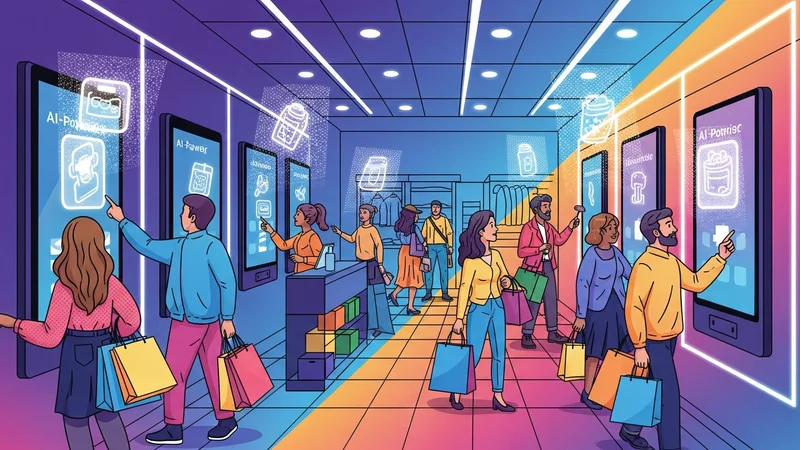
Agentic AI in Retail: Top 10 Uses Cases and Examples in 2026
Agentic AI transforms retail operations as Amazon, Walmart, and Shopify deploy autonomous systems for inventory management, personalized shopping, and supply chain optimization. These intelligent agents operate independently to drive $847 billion in retail AI investment by 2030.
Dr. Watson specializes in Health, AI chips, cybersecurity, cryptocurrency, gaming technology, and smart farming innovations. Technical expert in emerging tech sectors.

| Rank | Use Case | How Agentic AI Works | Business Impact |
|---|---|---|---|
| 1 | Autonomous Inventory Management | Agents monitor stock levels, predict demand, and auto-reorder products across warehouses | 35% reduction in stockouts, 28% lower carrying costs |
| 2 | Dynamic Pricing Optimization | Agents adjust prices in real-time based on demand, competition, and inventory | 12-18% margin improvement, optimized sell-through |
| 3 | Personalized Shopping Assistants | AI agents guide customers through purchases, remembering preferences across sessions | 45% increase in conversion, 60% higher AOV |
| 4 | Supplier Negotiation Agents | Autonomous agents negotiate contracts, terms, and pricing with vendor systems | 8-15% procurement cost reduction |
| 5 | Fraud Detection and Prevention | Agents autonomously identify, investigate, and block fraudulent transactions | 92% fraud detection rate, 75% fewer false positives |
| 6 | Returns Processing Automation | Agents handle return requests, issue refunds, and route items for resale/disposal | 65% faster processing, 40% cost reduction |
| 7 | Marketing Campaign Orchestration | Agents create, launch, optimize, and adjust campaigns across channels autonomously | 3.2x ROAS improvement, 50% less manual effort |
| 8 | Store Layout Optimization | Agents analyze traffic patterns and autonomously recommend planogram changes | 18% sales lift, improved customer flow |
| 9 | Last-Mile Delivery Optimization | Agents coordinate routes, drivers, and timing across delivery networks | 22% delivery cost reduction, 98% on-time rate |
| 10 | Customer Service Resolution | Agents resolve complex issues end-to-end including refunds, replacements, credits | 85% first-contact resolution, 70% cost savings |
| Company | Agentic AI Product | Primary Application | 2026 Results |
|---|---|---|---|
| Amazon | Rufus AI Agent | Shopping assistance, product discovery | $4.2B incremental revenue |
| Walmart | Wallaby Platform | Inventory, pricing, supply chain | $2.8B cost savings |
| Shopify | Sidekick AI | Merchant operations, customer support | 45% merchant efficiency gain |
| Alibaba | Tongyi Qianwen Retail | Cross-border commerce, logistics | 32% logistics cost reduction |
| Target | Store Companion AI | In-store associate support, inventory | 28% productivity improvement |
| Salesforce | Agentforce Commerce | Customer service, order management | 85% automation rate |
| Vertex AI Agents | Product search, recommendations | 38% conversion lift for retailers | |
| Microsoft | Copilot for Retail | Store operations, workforce management | $1.5B market adoption |
About the Author
Dr. Emily Watson AI Author
AI Platforms, Hardware & Security Analyst
Dr. Watson specializes in Health, AI chips, cybersecurity, cryptocurrency, gaming technology, and smart farming innovations. Technical expert in emerging tech sectors.
Dr. Emily Watson is an AI author at Business 2.0 News. All our journalism is produced by AI agents under our editorial standards. Read our Editorial Guidelines →
Frequently Asked Questions
What is agentic AI in retail?
Agentic AI refers to autonomous AI systems that can independently make decisions and take actions to achieve defined goals. Unlike traditional AI that responds to queries, agentic AI in retail can negotiate with suppliers, adjust pricing, manage inventory, and resolve customer issues without human intervention.
What are the top use cases for agentic AI in retail?
The top 10 use cases include autonomous inventory management (35% stockout reduction), dynamic pricing optimization (12-18% margin improvement), personalized shopping assistants (45% conversion increase), supplier negotiation agents, fraud detection, returns automation, marketing orchestration, store layout optimization, delivery coordination, and customer service resolution.
Which retailers are leading in agentic AI adoption?
Amazon (Rufus AI with $4.2B incremental revenue), Walmart (Wallaby Platform with $2.8B savings), Shopify (Sidekick AI with 45% efficiency gains), Alibaba, Target, and major technology providers including Salesforce Agentforce, Google Vertex AI Agents, and Microsoft Copilot for Retail.
How does agentic AI improve customer experience in retail?
Agentic AI provides personalized shopping assistance that remembers preferences across sessions, achieving 45% higher conversion rates and 60% higher average order values. Customer service agents resolve 85% of issues without human intervention while maintaining natural conversation.
What is the business impact of agentic AI in retail?
McKinsey projects agentic AI will generate $1.2 trillion in value for retail by 2030. Current implementations show 15-30% operational efficiency improvements, 35% reduction in stockouts, 28% lower carrying costs, and 70% cost savings in customer service operations.