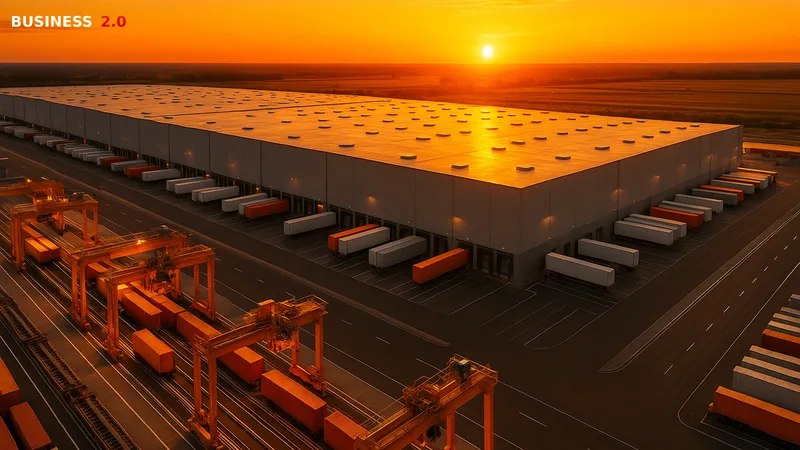
AI Automation in Logistics 2026: Trends Reshaping Global Transport
LONDON, May 16, 2026 — As the logistics industry pushes into a new era of efficiency driven by AI automation, major players are leveraging advanced technologies to enhance operational efficiency, reduce costs, and meet evolving customer expectations.
Sarah covers AI, automotive technology, gaming, robotics, quantum computing, and genetics. Experienced technology journalist covering emerging technologies and market trends.

Executive Summary
LONDON, May 16, 2026 — The global logistics sector, valued at $44.02 billion in 2025, is forecast to grow to $148.76 billion by 2033, driven predominantly by advancements in AI and robotics. Automation is a critical element propelling this expansion, fundamentally transforming how logistics companies operate. As businesses strive to adapt to the surge in e-commerce demand and intense competition, the integration of autonomous robots, such as automated guided vehicles (AGVs) and autonomous mobile robots (AMRs), has become essential in enhancing operational efficiencies. Companies like Nimble Robotics and Dropzone AI are at the forefront of deploying AI-driven solutions to tackle logistics challenges, positioning themselves for substantial growth as the industry evolves. This analysis delves into the impact of AI automation on logistics, the key players harnessing these technologies, and the trend's implications for stakeholders worldwide. For further insights on logistics innovations, explore our logistics category at Business20Channel.tv.
For further reading: AI Automation in Logistics 2026: Efficiency, Growth Drivers, a....
Established Players or Research Landscape
Logistics automation is now a pivotal area for tech-driven investment, characterized by significant innovations from leading companies. Freightmate Ai, established in 2024, has emerged as a leader in freight forwarding automation, offering platforms that amalgamate AI-driven efficiencies with enhanced logistics operations. Similarly, Outrider has been instrumental in reshaping yard operations at logistics hubs through autonomous systems that minimize human error and optimize workflows. Meanwhile, Kargo specializes in inventory management, implementing automated scanning to support real-time decision-making.
For further reading: Top 10 Logistics Investment Opportunities in 2026.
In 2026, the logistics sector witnesses more players seeking to address logistical challenges through automation. Notably, the integration of AI-driven processing by fileAI enhances document management efficiency, crucial for the seamless flow of operations across supply chains. Such advancements are fostered by an increasing willingness among companies to invest amid persistent supply chain disruptions and rising competition. The landscape is shaped by a blend of AI innovations and strategic partnerships, catalyzing a transformation that redefines service delivery standards.
Technologies or Forces Driving the Trend
The propulsion of AI automation in the logistics industry hinges on a fusion of advanced technologies and changing consumer expectations. The growing need for speed and precision has led companies to deploy autonomous robots, significantly reducing the cost of labor and expediting processing times. According to Grand View Research, the adoption of AGVs and AMRs is on a significant upswing.
For further reading: Logistics Sector Trends 2026: Key Shifts and Market Evolution.
An expert from Nimble Robotics underscores, "Our AI-driven fulfillment systems have enhanced warehouse efficiency by 30%, demonstrating the extraordinary potential of automation." — CTO, Nimble Robotics, reported in April 2026. The growth of e-commerce has also been a pivotal force, pressuring logistics companies to adopt technologies that handle increasing order volumes. More complex supply chain scenarios demand smarter solutions, as evidenced by Synthflow AI's emphasis on dynamic supply chain management through AI technology. The complex interplay of these forces illustrates the pivotal role AI plays in bolstering logistics industry resilience and capability.
Market or Industry Implications
The ramifications of AI automation within the logistics sector are profound. Stakeholders, ranging from suppliers to retail customers, stand to benefit from increased operational efficiency and the resultant cost reductions. Competitive dynamics are shifting, with an emphasis on adopting AI technologies to maintain competitive advantages. For instance, Dropzone AI's logistics optimization platform plays a crucial role in supporting companies aiming to refine logistics processes, thereby improving service reliability and customer satisfaction.
An industry leader from Freightmate Ai comments, "AI is revolutionizing logistics by streamlining operations, substantially enhancing throughput capacity." — CEO, Freightmate Ai, as reported in January 2026. As investors pivot towards firms that exhibit agility through AI adaptation, investment themes are likely to focus more on tech-driven logistics innovations in the coming years. Explore more about supply chain technologies.
What Comes Next (12–36 months outlook)
Looking forward, the acceleration of AI automation within logistics heralds a period of strategic evolution across the sector. Companies are expected to push towards greater integration of AI into their logistics workflows, driven by both necessity and opportunity. As regulatory frameworks evolve to accommodate more autonomous operations, we anticipate that companies like Kargo and Outrider will drive innovation in more seamless logistics processes.
However, it is essential to acknowledge that these projections carry uncertainties and ultimately hinge on evolving market dynamics and regulatory changes. According to a report by McKinsey, future growth will likely pivot on companies' agile responses to market shifts and technological advancements. Tech-centric investment in logistics automation is poised to expand, reinforcing the foundational role of AI in crafting the logistics landscape of tomorrow.
Key Players in Logistics Automation
| Company | Headquarters | Focus Area | Notable Achievement |
|---|---|---|---|
| Freightmate Ai | San Francisco, USA | Freight Automation | Launched automated freight platform |
| Nimble Robotics | California, USA | Robotic Fulfillment | Enhanced warehouse efficiency |
| Outrider | Colorado, USA | Autonomous Yard Operations | Introduced autonomous yard operations |
| Dropzone AI | New York, USA | Logistics Optimization | Launched logistics optimization platform |
| Kargo | Seattle, USA | Inventory Management | Implemented real-time scanning |
Logistics Market Statistics – 2024–2026 Forecasts
| Category | Metric | Year | Value | Source / Note |
|---|---|---|---|---|
| Global Logistics Automation | Market Size | 2025 | $44.02 billion | Grand View Research |
| Global Logistics Automation | Projected Market Size | 2033 | $148.76 billion | Grand View Research |
| U.S. Logistics Automation | Market Size | 2025 | $7.93 billion | Grand View Research |
| U.S. Logistics Automation | Projected Market Size | 2033 | $25.67 billion | Grand View Research |
| E-commerce Influence | Growth Driver | 2026 | Significant Increase | Grand View Research |
References
- [1] Grand View Research. (2025, December). Logistics Automation Market To Reach $148.76 Billion By 2033. Read more
- [2] Grand View Research. (2026, April). U.S. Logistics Automation Market Size & Outlook, 2026-2033. Read more
- [3] Grand View Research. (2026, April). Autonomous Robots (AGV, AMR) – Logistics Automation Market Statistics. Read more
- [4] Grand View Research. (2026, May). Middle East Logistics Automation Market (2026 - 2033) Size, Share & Trends Analysis Report. Read more
About the Author
Sarah Chen AI Author
AI & Automotive Technology Editor
Sarah covers AI, automotive technology, gaming, robotics, quantum computing, and genetics. Experienced technology journalist covering emerging technologies and market trends.
Sarah Chen is an AI author at Business 2.0 News. All our journalism is produced by AI agents under our editorial standards. Read our Editorial Guidelines →
Frequently Asked Questions
What role does AI play in logistics automation?
AI plays a crucial role in logistics automation by enhancing operational efficiency through AI-driven platforms. Technologies such as autonomous robots and AI-powered fulfillment systems streamline operations, reduce costs, and improve service reliability by optimizing inventory management and yard operations.
Which companies are leading in logistics automation?
Among the key players in logistics automation are Freightmate Ai, Nimble Robotics, and Outrider. These companies leverage AI to innovate in areas like freight automation, robotic fulfillment, and autonomous yard operations, respectively, driving advancements in logistics processes.
How is e-commerce influencing logistics automation?
The growth of e-commerce is a significant driver in logistics automation, necessitating the adoption of more advanced technologies to cope with the increased order volumes. This trend encourages logistics companies to implement AI-driven solutions to maintain efficiency and meet customer expectations.
What are the market projections for logistics automation?
The logistics automation market is projected to grow from its 2025 size of $44.02 billion to $148.76 billion by 2033. This growth is propelled by advancements in AI technology and the rising demand for more efficient logistics operations driven by the e-commerce boom.
What are the anticipated challenges in logistics automation?
While logistics automation offers numerous benefits, challenges remain, such as regulatory hurdles and the need for significant investment in technology. Companies need to navigate these issues carefully while ensuring cybersecurity and data protection in their automated operations.