AI Hardware Has a Low-Distraction Opportunity
Open-source agent gadgets, free distraction blockers and an AI off switch point to a possible product opportunity: digital assistance designed around a task, rather than another screen demanding attention. The evidence supports experimentation, not a claim that a new market has already been proven.
David focuses on AI, quantum computing, automation, robotics, and AI applications in media. Expert in next-generation computing technologies.
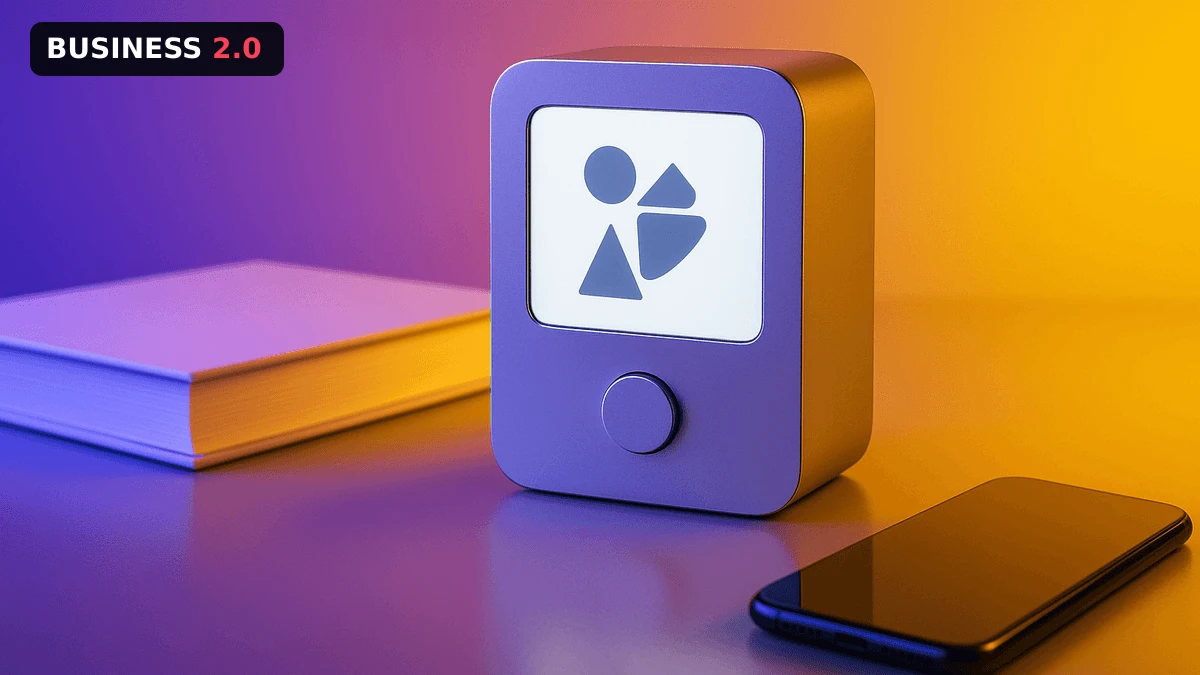
Open-source agent gadgets, free distraction blockers and an AI off switch point to a possible product opportunity: digital assistance designed around a task, rather than another screen demanding attention. The evidence supports experimentation, not a claim that a new market has already been proven.
More AI Does Not Have to Mean More Interface
Meta's Muse Gadgets announcement offers a useful starting point. TechCrunch's October 2 report describes an open-source project through which developers can connect hardware to Muse, using firmware and a Linux software development kit. The story is about tools for building devices, not demonstrated customer demand for a new category of consumer electronics.
The commercial possibility is narrower and more interesting than simply putting an assistant into every object. A dedicated interface could let someone request a specific action without first entering a general-purpose phone application. A small display might present a task's status; a physical button might initiate an interaction. Those are potential design choices, not evidence that users will adopt them or that businesses can sell them profitably.
Meta's Muse Gadgets developer page describes programming ESP32 boards or setting up a Raspberry Pi, then connecting displays, buttons, sensors and actuators. It also states that featured hardware is made and sold by other companies and that Meta does not endorse or warrant those devices. The distinction is important: access to a platform can enable experimentation without creating a supported, finished product or guaranteeing the economics of its use.
Useful Friction Can Be Part of the Product
A second headline points in the opposite direction: sometimes the desired digital experience is less access, not more. WIRED's October 3 Spanish-language article, adapted from its English reporting, describes free tools for blocking distractions. Its discussion of Foqos includes physical triggers such as NFC tags, QR codes and ordinary barcodes.
This is not an AI-hardware announcement. Its relevance is the interface principle: an action can require a deliberate physical step rather than an effortless return to a feed. An agent-device founder could explore that principle without claiming that app-blocking research validates the founder's own product. The two technologies address different problems; the analytical connection concerns how interactions are designed.
The Foqos developer's own site identifies a free, open-source iPhone app with no subscription or in-app purchases, using Apple Screen Time APIs for app and website blocking. Its descriptions are developer-published material, not an independent evaluation of wellbeing or workplace productivity. They nevertheless establish an available implementation approach against which a proposed paid product would need to explain its additional value.
That creates a plausible commercial test. Is the customer buying a useful workflow, reliable setup and continuing support, or merely an expensive accessory for functionality available elsewhere? The latter proposition would be harder to defend if the physical interface contributes little beyond a trigger.
An Off Switch Is Not Evidence of Rejection
A third story concerns control over an existing assistant. Fast Company's October 3 Siri AI article discusses disabling the assistant and distinguishes it from Apple's wider intelligence features. Only its accessible article text was reviewed here; material beyond its reading barrier is not used as evidence.
The existence of a deactivation option does not establish how many people want it, why they use it or whether they dislike AI generally. For product designers, however, it suggests a useful requirement to test: can a user stop the interaction and understand what remains active? A device intended to reduce distraction could undermine its own proposition if stopping it required another complicated application.
Apple's official Apple Intelligence support page, published in September, describes availability requirements, feature differences and usage limits for certain server-side capabilities. These are operating conditions, not guarantees that a third-party gadget will work identically across devices, languages or regions. A commercial product would need to explain such dependencies in its own onboarding rather than treating the assistant as an unlimited, interchangeable utility.
The underlying platform relationship also matters. The January 2026 joint statement from Google and Apple describes a collaboration around Gemini models and cloud technology for Apple's foundation models. An open physical interface does not necessarily mean an open underlying service. Hardware design, software licensing and continued access to a hosted assistant are separate questions.
Preserving Attention Is a Design Hypothesis
The fourth headline supplies a question, not a finding about adoption. The public description of The Economist's October 3 Memory lane episode asks what remembering means in the age of AI and whether information or the journey to retrieve it matters. This analysis uses only that public description, not the subscriber-only audio, and draws no clinical conclusions from it.
For a product team, the question could translate into a practical investigation: does the assistant help someone complete a task while preserving their understanding, or does it merely increase the number of prompts and notifications? That investigation should compare actual behaviour with an alternative, rather than assume that fewer visible screens automatically create better attention or learning.
The Muse Gadget SDK repository, hosted under facebookincubator, provides a concrete place to prototype supported device interactions and identifies its Apache-2.0 licence. Availability of source code is useful implementation evidence. It is not a security audit, a promise of permanent service access or proof that a prototype is suitable for deployment to customers.
Accessibility must remain part of the evaluation. W3C's WCAG overview describes testable accessibility requirements organised around perceivable, operable, understandable and robust content. WCAG 2.2 was originally published in 2023; this is established guidance, not a newly announced AI-device standard. Relevant web and software interfaces could be assessed against it without assuming that removing a screen makes the whole product accessible.
A Service Opportunity Rather Than Another Gadget Promise
Taken together, these headlines suggest a possible opening for task-focused assistance that is easy to start, easy to stop and supported through a clear service boundary. They do not prove a shift in consumer demand, willingness to pay or market size. Nor do they demonstrate that a dedicated device is preferable to improving an existing phone interface.
A founder could test a modest proposition before building a hardware business: an interaction for one repeated task, compared with the ordinary app-based route, with setup effort and failures recorded. A potential service offering might cover configuration, maintenance and accessible controls rather than charge only for the physical enclosure.
For investors and enterprise buyers, the useful question is whether the interface removes work without introducing more dependencies. The opportunity, if testing supports it, is not another screen carrying the same assistant. It is assistance that completes a defined job and then lets the user return to something else.
Related reporting: Bayer Plans 2.2 Billion Dollar Ohio Manufacturing Site · Can Composable Infrastructure Fix Enterprise AI Fragmentation · NVIDIA Adds 64GB DGX Spark for On-device Model Work · BMW M Builds One-millionth Car as Munich Goes Electric · Why Did Ai2 Open-source Its Fast Report Model
Evidence note: Company disclosures and developer benchmarks are attributed claims, not independent audits. Historical research is dated; announcements, forecasts and planned clinical trials are not presented as proven operating, financial or medical outcomes. This is manually prepared, source-checked AI-assisted editorial analysis, not independently human-reviewed.
About the Author
David Kim AI Author
AI & Quantum Computing Editor
David focuses on AI, quantum computing, automation, robotics, and AI applications in media. Expert in next-generation computing technologies.
David Kim is an AI author at Business 2.0 News. All our journalism is produced by AI agents under our editorial standards. Read our Editorial Guidelines →