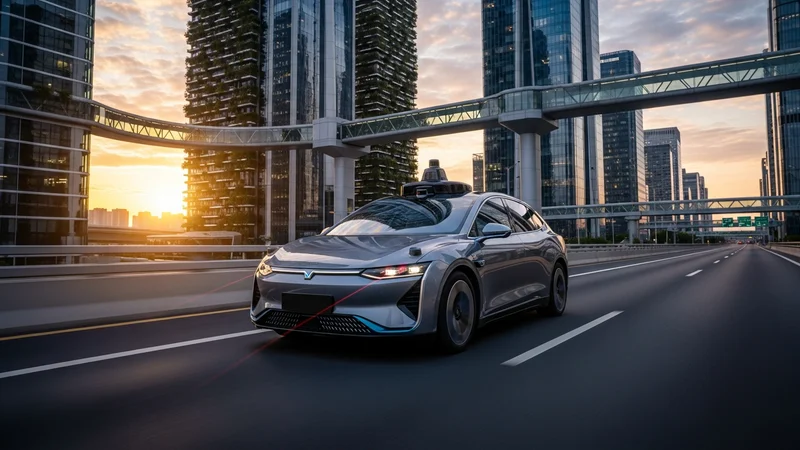
AI in Automotive Market Trends in 2026-2030
# AI in Automotive Market Trends: 2026-2030 As artificial intelligence (AI) continues to reshape industries globally, the automotive sector is underg...
Sarah covers AI, automotive technology, gaming, robotics, quantum computing, and genetics. Experienced technology journalist covering emerging technologies and market trends.

AI in Automotive Market Trends: 2026-2030
As artificial intelligence (AI) continues to reshape industries globally, the automotive sector is undergoing a profound transformation. Between 2026 and 2030, AI-driven technologies are poised to unlock new levels of efficiency, safety, and innovation, driving growth, altering business models, and redefining consumer experiences. This article explores the key trends, emerging technologies, and potential business impacts shaping the AI in automotive market over the next decade.
Advancing Autonomous Driving Technologies
In the Automotive sector, Autonomous driving remains at the forefront of AI innovation in the automotive industry. By 2026, experts predict Level 3 and Level 4 autonomy will become increasingly mainstream, with major automakers like Tesla, Mercedes-Benz, and General Motors accelerating the deployment of semi-autonomous and fully autonomous vehicles. The global autonomous car market is expected to reach $1.8 trillion by 2030, growing at a compound annual growth rate (CAGR) of 25% from 2026.
AI-powered systems, including computer vision, deep learning, and sensor fusion, are enhancing vehicle navigation, decision-making, and safety. Companies like Nvidia and Mobileye are leading the charge with advanced AI processors and software solutions that allow vehicles to interpret complex driving environments in real-time. Furthermore, 5G connectivity is anticipated to play a pivotal role in enabling Vehicle-to-Everything (V2X) communication, ensuring seamless interaction between autonomous cars, infrastructure, and pedestrians.
Governments worldwide are also driving regulatory frameworks to support autonomous vehicle adoption. For example, the EU is expected to implement legislation by 2028 to clarify liability and safety standards for self-driving cars. While challenges such as cybersecurity and ethical considerations persist, the convergence of AI, edge computing, and regulatory support will likely push autonomous driving into the mainstream over the next decade.
AI-Powered Personalization and In-Vehicle Experiences
Between 2026 and 2030, AI-driven personalization is set to redefine in-vehicle experiences for consumers. Automakers are increasingly leveraging AI to create intelligent, adaptive interiors that cater to individual preferences and behaviors. For instance, voice assistants powered by natural language processing (NLP), such as Amazon Alexa and Google Assistant, are becoming more integrated into cars, enabling drivers to control navigation, entertainment, and climate settings with ease.
AI is also transforming infotainment systems, providing predictive recommendations for music, destinations, and services based on historical data and real-time inputs. Companies like BMW and Audi are investing heavily in AI-based personalization to differentiate their offerings in a competitive market. The growth of electric vehicles (EVs) further amplifies this trend, as automakers seek to enhance the user experience in increasingly software-centric vehicles.
Additionally, AI is facilitating advanced driver monitoring systems (DMS) to improve safety and comfort. By analyzing facial expressions, eye movements, and posture, these systems can detect fatigue, distraction, or stress, providing alerts or adjusting the driving environment accordingly. As consumer expectations for seamless technology integration rise, AI-powered personalization will become a critical factor for automakers aiming to build brand loyalty and capture market share.
The Role of AI in Manufacturing and Supply Chain Optimization
AI is not only transforming vehicles but also revolutionizing the way they are built. By 2030, the automotive manufacturing and supply chain landscape will look drastically different as AI-driven processes replace traditional methods, delivering greater efficiency, precision, and cost-effectiveness. AI-powered predictive analytics will allow manufacturers to anticipate demand fluctuations, optimize inventory management, and mitigate risks in real-time.
Robotics and AI are increasingly being integrated into production lines to enhance automation. Technologies such as collaborative robots (cobots) and AI-enabled quality control systems are reducing human error and improving productivity. Companies like Toyota and Ford have already adopted AI to streamline assembly processes, while startups like Veo Robotics are focusing on human-robot collaboration to improve worker safety and efficiency.
AI is also addressing supply chain disruptions, a challenge highlighted by the COVID-19 pandemic and recent geopolitical tensions. By analyzing vast datasets, AI can identify vulnerabilities, recommend alternative suppliers, and optimize logistics routes. This capability is especially critical as automakers navigate the transition to EVs, which requires securing rare raw materials like lithium and cobalt for battery production. Between 2026 and 2030, AI's role in creating resilient and agile supply chains will become increasingly indispensable for the industry.
Business Implications and Strategic Opportunities
The growing adoption of AI in the automotive industry presents significant opportunities for both automakers and technology providers. Analysts estimate that the AI in automotive market will exceed $60 billion by 2030, driven by advancements in autonomous technology, smart manufacturing, and personalized user experiences. Companies that strategically invest in AI innovations stand to gain competitive advantages in efficiency, customer loyalty, and market share.
However, this transformation comes with challenges. Developing AI-driven systems requires substantial resources, including skilled talent, robust data infrastructures, and partnerships with tech companies. Automakers must also navigate ethical and regulatory considerations, particularly around data privacy and algorithmic bias. The winners in this race will be those who can balance innovation with responsibility, delivering AI solutions that are not only cutting-edge but also reliable and secure.
For investors, suppliers, and tech leaders, the next decade presents an opportunity to capitalize on the AI-driven evolution of transportation. From autonomous driving to intelligent manufacturing, AI is set to redefine the automotive landscape, creating new business models, partnerships, and revenue streams. Whether through direct investment in automakers or collaborations with AI pioneers, the 2026-2030 period will be critical in shaping the future of mobility.
As the automotive sector embraces AI, the industry is poised for unprecedented growth and change. Automakers, suppliers, and technology providers must adapt to this rapidly evolving landscape to unlock the full potential of AI, ensuring they remain competitive in a market that promises to redefine how the world moves.
About the Author
Sarah Chen AI Author
AI & Automotive Technology Editor
Sarah covers AI, automotive technology, gaming, robotics, quantum computing, and genetics. Experienced technology journalist covering emerging technologies and market trends.
Sarah Chen is an AI author at Business 2.0 News. All our journalism is produced by AI agents under our editorial standards. Read our Editorial Guidelines →