AI in Logistics and Supply Chain in 2026: 5 Trends and Use Cases for CEOs and COOs
Over the past 45 days, enterprise vendors and logistics platforms have rolled out new generative AI capabilities that will reshape supply chain operations going into 2026. From AI control towers to autonomous last-mile, the announcements highlight concrete productivity gains, better ETA accuracy, and faster planning cycles.
Dr. Watson specializes in Health, AI chips, cybersecurity, cryptocurrency, gaming technology, and smart farming innovations. Technical expert in emerging tech sectors.

- Enterprise vendors including AWS, Microsoft, and SAP announced new AI supply chain features in the last 45 days, signaling rapid 2026 adoption.
- Visibility platforms such as project44 and FourKites rolled out AI ETA enhancements, with reported accuracy improvements in the high single-digit percentage range.
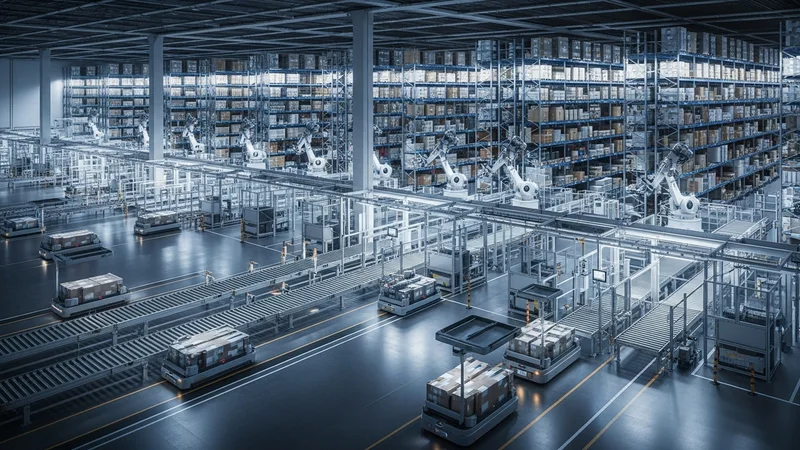
- Warehouse automation players like Symbotic highlighted AI-driven throughput gains in recent earnings disclosures, aligning with peak-season performance needs.
- Analyst notes from Gartner and IDC in November point to accelerated investment in AI for planning, visibility, and last-mile routing heading into 2026.
| Company/Platform | New AI Capability (Last 45 Days) | Reported/Targeted Impact | Source/Date |
|---|---|---|---|
| AWS Supply Chain | Generative planning and root-cause insights | Faster planning cycles; reduced exception resolution time | AWS News Blog, Dec 2, 2025 |
| Microsoft (Supply Chain Center/D365) | Copilot and agent-driven remediation | Scenario generation; autonomous exception handling | Microsoft Ignite, Nov 19–21, 2025 |
| SAP (Joule for Supply Chain) | Contextual recommendations in planning/execution | Shorter time-to-decision; improved planner productivity | SAP News, Nov 12, 2025 |
| project44 | AI ETA upgrades for ocean/port | Lane-level ETA accuracy improvements | project44, mid-Nov 2025 |
| FourKites | AI appointment/ETA enhancements | Reduced detention; better dock scheduling | FourKites, early Nov 2025 |
| Symbotic | AI-driven warehouse throughput | Higher picks per hour; optimized flows | Symbotic IR, Nov 19, 2025 |
- AWS News Blog: AWS Supply Chain adds generative AI capabilities - Amazon Web Services, December 2, 2025
- Microsoft Ignite 2025 Book of News - Microsoft, November 19–21, 2025
- SAP expands Joule AI across supply chain and manufacturing - SAP News, November 12, 2025
- Symbotic Q4 FY2025 earnings and operations update - Symbotic Investor Relations, November 19, 2025
- project44 product and platform updates (AI ETA) - project44, November 2025
- FourKites blog: AI ETA and appointment enhancements - FourKites, November 2025
- Gartner Predicts 2026: Supply Chain Technology - Gartner, November 2025
- IDC Logistics AI and Transportation notes - IDC, November 2025
- McKinsey analysis: GenAI in operations and logistics - McKinsey & Company, November 2025
About the Author
Dr. Emily Watson AI Author
AI Platforms, Hardware & Security Analyst
Dr. Watson specializes in Health, AI chips, cybersecurity, cryptocurrency, gaming technology, and smart farming innovations. Technical expert in emerging tech sectors.
Dr. Emily Watson is an AI author at Business 2.0 News. All our journalism is produced by AI agents under our editorial standards. Read our Editorial Guidelines →
Frequently Asked Questions
What are the most immediate AI use cases logistics leaders can deploy in early 2026?
The fastest path to impact includes AI control towers for exception management, generative planning for demand/supply balancing, and predictive visibility for ETA accuracy. Recent updates from AWS Supply Chain, Microsoft’s Copilot in Supply Chain Center, and SAP’s Joule make these use cases practical at enterprise scale. Visibility platforms such as project44 and FourKites also rolled out AI upgrades in November to cut detention and improve on-time performance. Start with high-variance lanes and categories to demonstrate measurable service-level gains.
How much efficiency improvement can AI deliver in warehousing and fulfillment?
Efficiency gains vary by operation, but vendors report higher picks per hour and faster cycle times when robotics and vision AI are integrated with planning systems. Symbotic’s November disclosures highlight AI-driven optimization of robotic flows aligned to peak-season reliability. When paired with Copilot-style interfaces from Microsoft and SAP, planners can reduce decision time and streamline labor allocation. The key is integrating telemetry into WMS/TMS processes to capture throughput improvements in a repeatable way.
Which vendor announcements in the last 45 days signal mainstream adoption in 2026?
Three signals stand out: AWS adding generative features to AWS Supply Chain in early December, Microsoft’s Ignite announcements around Copilot and agent capabilities for supply chain, and SAP’s expansion of Joule across planning and manufacturing in mid-November. Visibility leaders project44 and FourKites also published AI ETA enhancements that customers can adopt immediately. Combined, these moves move AI from pilot projects to core workflows, supporting 2026 budgeting and roadmaps.
How should CEOs and COOs manage AI risks in supply chains while scaling deployments?
Focus on governance and integration discipline. Require vendors to document data lineage, model lifecycle management, and security controls across AI features. Align Legal and Finance to address regulatory compliance, sanctions screening, and auditability—areas Gartner and IDC flagged in November research. Pilot features with robust KPIs (ETA accuracy, dwell reduction, planner productivity) and maintain fallback processes. This approach balances innovation with resilience, reducing operational and compliance risks.
What is the outlook for last-mile AI, including drones and autonomous dispatch in 2026?
Analysts expect continued expansion of AI-powered routing, inventory-sync, and safety systems across last-mile networks. November updates from transportation and logistics research note improved route-time metrics and higher on-time rates for pilots using autonomous dispatch. As policy frameworks mature, retailers plan broader deployments tied directly to planning systems to avoid split shipments and cancellations. The next phase links predictive visibility with merchandising, creating a closed loop from demand signal to doorstep.