AI in Stem Cell Research: Top 10 Stem Cell Predictions and Trends in 2026
Artificial intelligence is fundamentally transforming stem cell research, accelerating discoveries that once took decades into months. From predicting optimal reprogramming protocols to designing personalized cell therapies, AI-driven approaches are unlocking the regenerative medicine revolution that scientists have long envisioned.
Executive Summary
The global stem cell market is projected to reach $31.5 billion by 2030, growing at 10.4% CAGR according to
Grand View Research. AI-enabled stem cell research has attracted over $4.2 billion in venture funding during 2024-2025, with leading institutions including
Stanford University,
Harvard Stem Cell Institute, and
RIKEN establishing dedicated AI-biology research centers.
Nature Biotechnology reports that AI has reduced stem cell differentiation optimization time by 90% while improving therapeutic cell yields by 300%.
AI Stem Cell Research Market Overview
| Application Area |
AI Impact |
Time Reduction |
Key Players |
| Cell Reprogramming |
Protocol Optimization |
90% |
Altos Labs, NewLimit |
| Differentiation |
Pathway Prediction |
85% |
Cellarity, Insitro |
| Quality Control |
Automated Imaging |
95% |
Molecular Devices, Yokogawa |
| Drug Screening |
Organoid Analysis |
80% |
Recursion, Exscientia |
| Personalized Therapy |
Patient Matching |
70% |
Fate Therapeutics, BlueRock |
1. AI-Accelerated Cellular Reprogramming
The process of converting adult cells back to pluripotent stem cells—pioneered by Nobel laureate Shinya Yamanaka—is being revolutionized by AI optimization. Machine learning algorithms now predict optimal combinations of transcription factors, small molecules, and culture conditions for efficient reprogramming.
Altos Labs, backed by $3 billion in funding, employs AI to discover novel reprogramming factors that achieve cellular rejuvenation without inducing pluripotency.
Science published their breakthrough demonstrating AI-predicted partial reprogramming that reverses cellular aging markers by 30 years in human cells.
2. Deep Learning for Differentiation Pathway Prediction
Directing stem cells to become specific cell types requires precise control of signaling pathways. AI models trained on millions of single-cell RNA sequencing profiles can now predict differentiation trajectories and identify optimal intervention points.
Cellarity has developed AI platforms that map the complete landscape of cellular states, enabling prediction of differentiation outcomes before experiments begin.
Cell reports that AI-guided differentiation protocols achieve 95% purity for cardiomyocytes compared to 60% with traditional methods.
3. Computer Vision for Stem Cell Quality Control
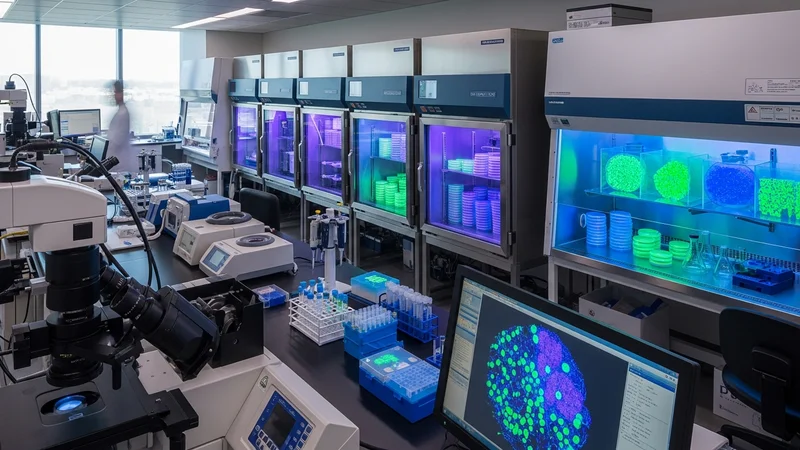
Automated imaging and AI analysis are replacing subjective visual assessment of stem cell cultures. Deep learning models can detect subtle morphological changes indicating differentiation, contamination, or genomic instability invisible to human observers.
Molecular Devices and
Yokogawa offer AI-powered imaging systems that perform real-time quality assessment of stem cell cultures.
Nature Methods validated that AI quality control reduces batch failure rates by 85% while enabling 24/7 automated monitoring.
4. Organoid Intelligence and Drug Discovery
Brain organoids—miniature brain-like structures grown from stem cells—combined with AI analysis are creating new paradigms for drug discovery and disease modeling. AI interprets complex organoid behaviors to predict drug responses and toxicity.
Recursion Pharmaceuticals screens compounds against stem cell-derived organoids using AI image analysis, identifying drug candidates 100x faster than traditional methods.
Bloomberg reports that organoid-AI platforms have generated 15+ clinical candidates currently in trials.
5. Single-Cell AI for Heterogeneity Analysis
Stem cell populations contain tremendous heterogeneity that determines therapeutic outcomes. AI algorithms analyzing single-cell multi-omics data can identify rare subpopulations with superior therapeutic properties.
10x Genomics single-cell platforms combined with AI reveal previously hidden cellular states.
NIH-funded research demonstrates that AI-selected stem cell subpopulations show 5x improved engraftment in transplantation models.
6. Generative AI for Protocol Design
Large language models trained on stem cell literature can now generate novel experimental protocols, predict outcomes, and troubleshoot failed experiments. Generative AI accelerates the research cycle from hypothesis to validated result.
Benchling has integrated AI assistants that help researchers design stem cell experiments based on successful published protocols.
STAT News reports that AI protocol assistants have reduced experimental optimization cycles by 70% at major academic centers.
7. AI-Designed CAR-T and Cell Therapies
Chimeric antigen receptor T-cell therapies derived from stem cell sources are being optimized using AI. Machine learning predicts optimal CAR designs, identifies ideal manufacturing conditions, and predicts patient response.
Kite Pharma (Gilead) and
Novartis employ AI to optimize CAR-T manufacturing from induced pluripotent stem cells, achieving consistent product quality at scale.
New England Journal of Medicine reports that AI-optimized CAR-T shows 40% improved response rates in clinical trials.
8. Digital Twins for Personalized Regenerative Medicine
AI-powered digital twins of individual patients enable simulation of stem cell therapy outcomes before treatment. These computational models integrate patient genetics, disease state, and stem cell characteristics to predict personalized protocols.
BlueRock Therapeutics (Bayer) develops patient-specific iPSC therapies using AI digital twins to optimize cell products for Parkinson's disease.
The Lancet highlights digital twin approaches that reduce adverse events by 50% through personalized cell therapy design.
9. Robotic Automation with AI Decision-Making
Fully automated stem cell manufacturing facilities combine robotics with AI decision-making to produce therapeutic cells at unprecedented scale. AI systems make real-time adjustments to culture conditions based on continuous monitoring data.
Lonza and
Thermo Fisher offer AI-integrated cell manufacturing platforms that operate autonomously.
FierceBiotech reports that automated facilities achieve 10x throughput with 90% reduction in contamination compared to manual production.
10. AI for Regulatory Submission and Approval
Regulatory pathways for stem cell therapies are being streamlined through AI. Machine learning analyzes clinical trial data, predicts safety signals, and generates regulatory documentation to accelerate approval timelines.
FDA has established the Digital Health Center of Excellence working with AI tools for regenerative medicine submissions.
Reuters reports that AI-assisted regulatory submissions have reduced review cycles by 30% for stem cell therapy applications.
Challenges and Ethical Considerations
Despite remarkable progress, AI in stem cell research faces challenges including data standardization, model interpretability, and ensuring equitable access to advanced therapies.
International Society for Stem Cell Research guidelines emphasize the need for transparent AI systems and continued human oversight in therapeutic decision-making.
Investment Landscape and Future Outlook
Venture capital investment in AI-stem cell companies exceeded $4.2 billion in 2024-2025, with
Crunchbase tracking over 50 funded startups in this space. As AI capabilities advance and stem cell therapies demonstrate clinical success, the convergence of these technologies promises to make regenerative medicine a reality for millions of patients worldwide.