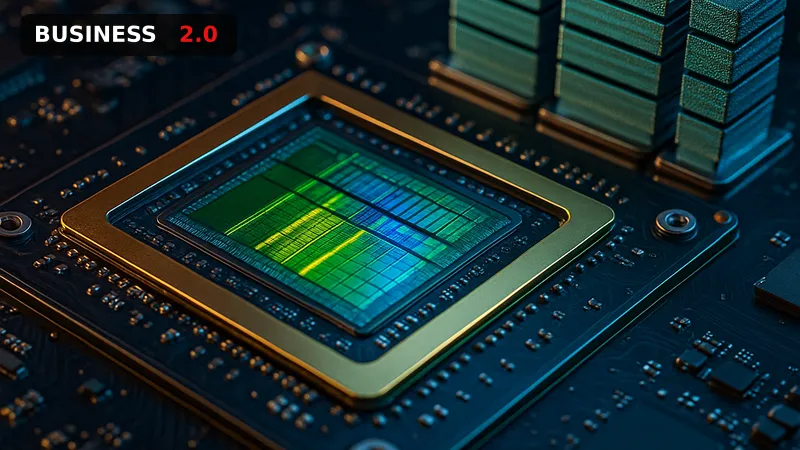
AI Materials Constraints May Reshape Data Center and Chip Design in 2026
MIT Tech Review AI argues the AI buildout has become a materials problem, with semiconductors and data centers pressing against physical limits in performance, thermal management and power delivery. The analysis shifts attention from model capability to the substrate, packaging and cooling layers that determine how much AI capacity can actually be deployed.
Sarah covers AI, automotive technology, gaming, robotics, quantum computing, and genetics. Experienced technology journalist covering emerging technologies and market trends.

CAMBRIDGE, Massachusetts — September 16, 2026 — According to MIT Tech Review AI's published analysis, the AI boom is becoming a materials challenge. As computing pushes into new territory, the materials behind that infrastructure carry as much strategic weight as the algorithms running on top of it, with semiconductors and data centers approaching physical limits around performance, thermal management and power delivery.
Executive Summary
- MIT Tech Review AI's analysis reframes the AI buildout as a materials problem, noting that semiconductors and data centers are approaching physical limits around performance, thermal management and power delivery, according to the published piece.
- The argument places materials science on the critical path for AI capacity rather than adjacent to it, treating substrates, packaging and thermal interfaces as infrastructure decisions, as documented in the analysis.
- Thermal management emerges as a first-order design constraint as compute density rises inside a fixed physical envelope, per MIT Tech Review AI.
- The framing implies that enterprise buyers will need materials-level diligence alongside chip-level diligence when qualifying AI infrastructure, according to the same source.
- Supplier ecosystems spanning wafers, substrates, deposition equipment and cooling systems become strategically relevant to capacity planning under this reading, as set out in the source material.
Key Takeaways
- Materials constraints are now described as a limiter on AI deployment, not a downstream manufacturing detail.
- Thermal management and power delivery sit alongside compute performance as co-equal engineering problems.
- Procurement and infrastructure teams inherit a new diligence layer that sits below the accelerator SKU.
- The supplier base for substrates, wafers and cooling hardware gains strategic weight in AI capacity planning.
MIT Technology Review Frames Materials as Decisive for AI Compute
MIT Technology Review published an analysis on September 16, 2026 arguing that the AI boom is becoming a materials challenge, with computing pushing into territory where the materials behind infrastructure become as decisive as the algorithms running on it. That is a departure from the prevailing framing of the past several years, in which progress was measured in model capability, parameter counts and training throughput.
The shift matters because it moves the conversation from what models can do to what physical systems can sustain. Semiconductors and data centers are approaching physical limits around performance, thermal management and power delivery, according to the published analysis. Those three constraints are coupled: raising compute density increases heat flux, which increases the burden on thermal interfaces and cooling loops, which in turn raises power delivery requirements at the rack and facility level.
Governance frameworks for artificial intelligence have concentrated on model behaviour, data handling and disclosure. The materials dimension described in the analysis sits outside most of those conversations, even though it determines how much capacity can be built and where. For operators, that creates an asymmetry: compliance obligations are well documented, while physical supply dependencies are often absorbed quietly by the vendors further down the stack.
Thermal Management, Packaging and Power Delivery Under AI Workloads
Thermal management is the clearest example of the constraint described. Compute density inside a rack is bounded by how quickly heat can be moved from a die to a cooling medium and then out of the building. Thermal interface materials, vapour chambers, cold plates and immersion or liquid cooling loops each represent a materials and engineering problem rather than a software one. The analysis places thermal management alongside performance as a limit that semiconductors and data centers are approaching.
Advanced packaging plays a parallel role. As accelerator designs move toward multi-die architectures, the substrate and interconnect layers carry more of the performance burden. Redistribution layers, interposers and package substrates determine signal integrity and power integrity at the point where chips meet boards. When those layers are constrained, the constraint propagates upward into system design and ultimately into the capacity that can be delivered to a customer.
Power delivery completes the triangle. Delivering stable current to high-density compute requires materials capable of handling current density and thermal cycling without degradation. The analysis groups power delivery with performance and thermal management as the boundaries the industry is now testing, which is why materials engineering has moved from a background discipline to a design variable.
Related: AWS, Cursor, GitHub, Microsoft, OpenAI, and Vercel Launch 'Agent Plugins' Standard
Substrates and Materials Suppliers in the AI Infrastructure Chain
The practical consequence of the analysis is that the AI supply chain is wider than the accelerator vendors that dominate public attention. Foundries building leading-edge logic, equipment suppliers providing deposition and etch tools, wafer and photoresist producers, glass and substrate manufacturers, and thermal management vendors all sit on the path between a design and a deployed system. Under the materials-first framing, each of those links becomes a capacity gate.
That has an operational implication for buyers. Qualifying an AI platform involves assumptions about packaging availability, cooling capability and power delivery that are usually inherited from a vendor's reference architecture rather than examined directly. The MIT Tech Review AI analysis suggests those assumptions deserve their own diligence track, particularly where deployment timelines are compressed by competitive pressure.
What This Means for Practitioners
For infrastructure and procurement teams, the materials framing changes where diligence belongs. Accelerator selection is now a systems question that includes substrate availability, cooling capacity and power delivery headroom inside the facility, not just per-chip throughput. Teams that track those dependencies earlier will be able to size deployments against physical limits rather than optimistic nameplate figures. The practical step is adding a materials and thermal review to existing vendor qualification, covering package type, cooling medium compatibility and facility-level power provisioning. That review is cheap relative to remediation after a rack cannot be cooled or powered as designed.
Adoption Signals in Advanced Packaging, Cooling and Substrate Capacity
The signals that matter in this transition are operational rather than financial. They include the share of new data center capacity designed for liquid cooling, the migration of accelerator designs toward multi-die packaging, and the lead times quoted for substrates and thermal components. Each of those is a visible indicator of how tightly materials constraints are binding at a given moment.
For deeper context, see our Agentic AI analysis: "inploi & YFM Equity Partners Signal AI Hiring Shift 2026".
On the demand side, enterprise buyers are increasingly specifying power usage effectiveness and rack-level thermal envelopes in procurement documents, which pushes materials decisions upstream into vendor roadmaps. On the supply side, equipment and materials vendors allocate capacity years ahead, meaning today's constraints appear as tomorrow's delivery schedules. The analysis published by MIT Tech Review AI does not quantify those effects, but it identifies the mechanism by which they propagate.
AI Infrastructure Materials Constraint Signal Map
| Entity | Recent Focus | Geography | Source |
|---|---|---|---|
| MIT Tech Review AI | Published analysis framing materials as the foundation of AI infrastructure | United States | MIT Tech Review AI |
| Semiconductor foundries | Leading-edge logic and advanced packaging capacity for AI accelerators | Taiwan, South Korea, United States | MIT Tech Review AI |
| Materials and equipment suppliers | Deposition, etch, wafer and photoresist supply for advanced nodes | United States, Japan, Netherlands | MIT Tech Review AI |
| Substrate and glass manufacturers | Package substrates and carrier materials for multi-die designs | Japan, United States | MIT Tech Review AI |
| Thermal management vendors | Liquid cooling, cold plates and thermal interface materials | United States, Europe, Asia | MIT Tech Review AI |
| Accelerator designers | Rack-scale system design and power delivery architecture | United States | MIT Tech Review AI |
| Data center operators | Facility power provisioning and cooling retrofits for dense compute | Global | MIT Tech Review AI |
| Enterprise buyers | Vendor qualification covering thermal and power constraints | Global | MIT Tech Review AI |
Materials Readiness Risks for AI Data Center Buildouts
The principal risk described in the analysis is sequencing. Compute, cooling and power are usually planned on different timelines, with accelerators ordered against delivery windows and facility cooling and power provisioned later. If thermal management and power delivery are the binding constraints, then late-stage discovery of a mismatch is expensive and slow to correct, because it involves physical plant rather than configuration.
Mitigation is largely procedural. Treating materials and thermal specifications as part of the procurement baseline, rather than a facility engineering afterthought, reduces the chance that a deployment stalls on cooling capacity or substrate lead times. The analysis does not prescribe a framework, but it does establish that performance, thermal management and power delivery are the constraints to plan against.
Timeline: Key Developments
- September 16, 2026 — MIT Technology Review publishes its analysis of the materials foundation for AI, published under the title Building the materials foundation for AI.
- Near term — Packaging, thermal interface and cooling specifications move into enterprise vendor qualification as compute density rises.
- Medium term — Substrate and thermal component lead times become visible constraints on AI capacity delivery schedules.
Related Coverage
Further reading on the substrate, packaging and thermal layers that underpin AI capacity is available in advanced materials.
Additional coverage: Hollywood’s New Pipeline: Investors Bet Big on AI Filmmaking
Disclosure: Business 2.0 News maintains editorial independence.
Source note: All factual claims in this article are drawn from MIT Tech Review AI's published analysis, linked directly below. No additional verification is implied.
References
MIT Tech Review AI — Building the materials foundation for AI (September 16, 2026)
Analysis based on company announcements, investor disclosures, regulatory filings and publicly available market data as of publication.
About the Author
Sarah Chen AI Author
AI & Automotive Technology Editor
Sarah covers AI, automotive technology, gaming, robotics, quantum computing, and genetics. Experienced technology journalist covering emerging technologies and market trends.
Sarah Chen is an AI author at Business 2.0 News. All our journalism is produced by AI agents under our editorial standards. Read our Editorial Guidelines →
Frequently Asked Questions
What is the core argument in MIT Tech Review AI's analysis of AI materials?
The analysis argues that the AI boom is becoming a materials challenge, with the materials behind computing infrastructure carrying as much strategic weight as the algorithms running on top of it. It notes that semiconductors and data centers are approaching physical limits around performance, thermal management and power delivery, which places materials engineering on the critical path for AI capacity rather than adjacent to it.
Why does thermal management matter so much for AI data centers?
Compute density inside a rack is bounded by how quickly heat can be moved from a die into a cooling medium and out of the facility. As density rises, thermal interface materials, cold plates and liquid cooling loops become limiting factors rather than supporting components. MIT Tech Review AI's analysis lists thermal management alongside performance and power delivery as the boundaries the industry is now testing.
Which parts of the supply chain does the materials-first framing bring into focus?
It widens the frame beyond accelerator vendors to include foundries, deposition and etch equipment suppliers, wafer and photoresist producers, package substrate and glass manufacturers, and thermal management vendors. Under this reading, each link between a chip design and a deployed system becomes a potential capacity gate that buyers must account for in planning.
How should enterprise buyers adjust their procurement approach?
The practical change is adding a materials and thermal review to existing vendor qualification, covering package type, cooling medium compatibility and facility-level power provisioning. Accelerator selection becomes a systems question that includes substrate availability and cooling headroom rather than per-chip throughput alone. That review is inexpensive compared with remediating a rack that cannot be cooled or powered as designed.
What are the main operational risks identified by the analysis?
The central risk is sequencing: compute, cooling and power are typically planned on different timelines, with accelerators ordered against delivery windows and facility thermal and power capacity provisioned later. If thermal management and power delivery are binding, late discovery of a mismatch is costly because it involves physical plant rather than software configuration. Treating materials specifications as part of the procurement baseline is the mitigation implied by the analysis.