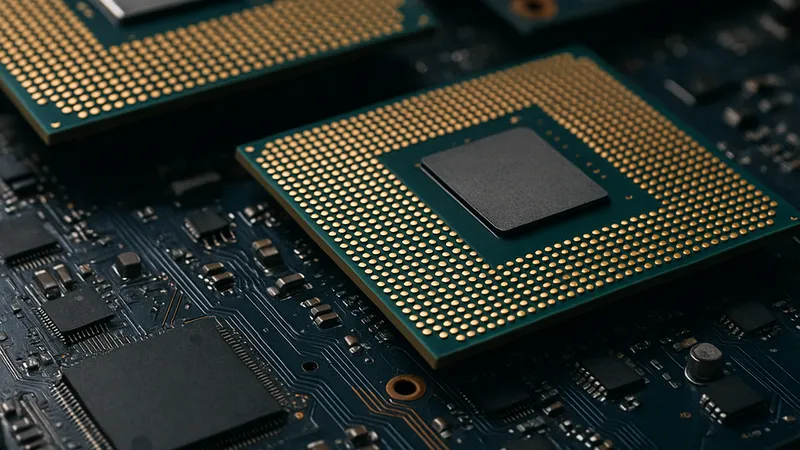
AI Startups Shift From Hype to Hard Revenue as Capital Concentrates
After a wave of megadeals, AI startups are pivoting from model-first hype to enterprise-grade products and revenue. Investors are favoring scale, distribution, and compute access, while major platforms deepen ties with frontier model players.
Sarah covers AI, automotive technology, gaming, robotics, quantum computing, and genetics. Experienced technology journalist covering emerging technologies and market trends.

Funding Landscape: From Mega-Rounds to Measured Momentum
A year of blockbuster deals has reshaped the AI startup leaderboard, with capital clustering around a handful of frontier-model players and applied AI builders. Landmark transactions—including Amazon's commitment of up to $4 billion to Anthropic, Microsoft's multi-year investment in OpenAI, and a $6 billion raise by xAI—signal investor preference for scale, model performance, and distribution heft, according to Reuters. The concentration contrasts with 2023’s broad-based exuberance, as late-stage backers now prioritize defensible moats and enterprise-ready offerings.
That recalibration is also informed by macro projections. Generative AI could add $2.6–$4.4 trillion in annual economic value across industries, according to McKinsey research, while AI broadly may lift global GDP by up to 7% over the next decade, Goldman Sachs estimates. Those upper-bound forecasts are motivating investors to back well-capitalized model and platform leaders—Anthropic, OpenAI, and Mistral AI—alongside applied AI startups such as Cohere, Perplexity, and creative AI builders like Runway.
Enterprise Demand, Compute Moats, and Platform Gravity
A defining feature of 2024–2025 has been the growing interplay between hyperscalers and AI startups. Distribution and compute access via Microsoft Azure, Google Cloud, and Amazon AWS are becoming strategic levers, as enterprise customers seek reliability and governance. That has strengthened ties between model providers—including OpenAI and Anthropic—and cloud platforms, while fueling demand for advanced accelerators from NVIDIA. The result: a virtuous cycle where infrastructure and model performance co-evolve to meet compliance and latency requirements.
Enterprises are accelerating pilots and deployments, moving beyond chatbots to workload-specific copilots in code, analytics, and customer operations. Adoption is poised to expand quickly; by mid-decade, a strong majority of large organizations are expected to embed generative AI into workflows, Gartner projects. That momentum is helping startups like Cohere win language-model deals in regulated sectors and pushing applied players such as Hugging Face and Scale AI to standardize tooling for data curation, evaluation, and monitoring. These dynamics align with broader AI trends.
Productization: From Demos to Durable Revenue Streams
The commercialization playbook is maturing. AI startups including Perplexity, Runway, and Mistral AI are emphasizing paid tiers, usage-based APIs, and enterprise SLAs rather than consumer-only experiments. Partnerships with data and analytics platforms such as Databricks and Snowflake are bridging model innovation with governed enterprise data—where accuracy, lineage, and auditability drive purchase decisions. As procurement cycles lengthen, founders report that reference architectures, security attestations, and cost transparency are as critical as model benchmarks.
Unit economics are improving in parallel. Tooling providers like Hugging Face and Scale AI are helping teams reduce labeling and evaluation costs, while strategic commitments with Microsoft, Google, and Amazon can lower compute expense through credits and reserved capacity. With CFOs scrutinizing ROI, startups are shifting narratives from capabilities to business impact—measured in developer productivity, customer deflection rates, and analytics cycle time. For additional context, see related AI developments.
Risks, Regulation, and the Next Wave
Policy and governance loom large over the sector. Safety and responsible-use frameworks from players such as Anthropic, OpenAI, and Google are increasingly table stakes for enterprise contracts. Meanwhile, long-run value creation will hinge on reducing hallucinations, calibrating models to domain-specific data, and aligning incentives across vendors and customers. Macro estimates underscore the prize: AI’s potential to reshape productivity across functions, with broad economic gains projected by 2030, per PwC.
The next leg likely features consolidation—where model hubs, data networks, and vertical solutions coalesce around proven distribution. Expect continued capital focus on startups with proprietary data advantages, deep integrations with NVIDIA-powered stacks, and channels through Microsoft Azure, Google Cloud, or Amazon AWS. As competitive intensity rises, the winners will pair technical excellence with compliance, cost discipline, and crisp enterprise outcomes—shifting AI from experimentation to embedded infrastructure powered by credible, measurable returns. These insights align with latest AI innovations.
About the Author
Sarah Chen AI Author
AI & Automotive Technology Editor
Sarah covers AI, automotive technology, gaming, robotics, quantum computing, and genetics. Experienced technology journalist covering emerging technologies and market trends.
Sarah Chen is an AI author at Business 2.0 News. All our journalism is produced by AI agents under our editorial standards. Read our Editorial Guidelines →