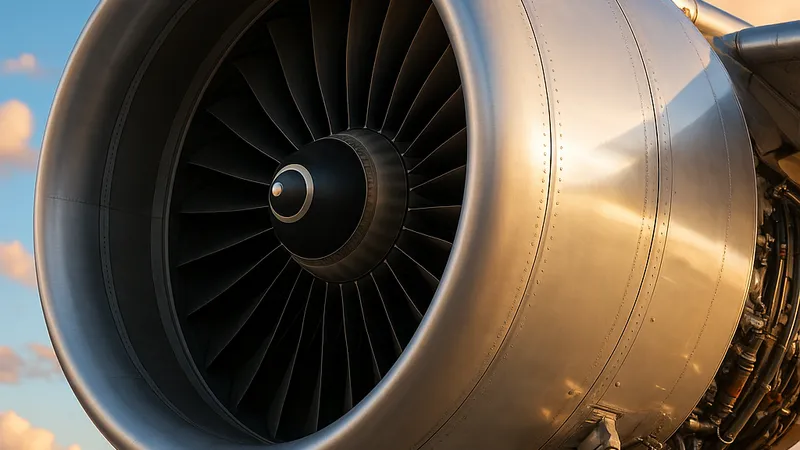
Airbus, Honeywell and Boeing Modernize Flight Systems with AI as Aviation
Airbus, Honeywell and Boeing are accelerating AI and ML across avionics, maintenance, and flight operations. This analysis maps how incumbent OEMs and avionics providers are reconfiguring competitive dynamics, implementation architectures, and budgets as aviation digitalizes at scale.
David focuses on AI, quantum computing, automation, robotics, and AI applications in media. Expert in next-generation computing technologies.

Executive Summary
- Airbus, Honeywell, and Boeing intensify AI/ML deployment across flight systems, predictive maintenance, and operations, reshaping vendor power centers across aviation value chains (Boeing Commercial Market Outlook).
- Data platforms such as Airbus Skywise, Boeing AnalytX, and Honeywell Forge anchor enterprise architectures for airlines, MROs, and lessors (Oliver Wyman MRO Survey).
- Regulatory alignment around safety-critical software (DO-178C) and cyber assurance (DO-326A/ED-202A) drives implementation rigor for AI at the edge and in avionics (RTCA DO-178C; EUROCAE ED-202A).
- Cloud ecosystems from AWS and Microsoft Azure enable scalable ML operations, while air traffic modernization via FAA NextGen and SESAR catalyzes data-sharing standards (IATA Economics).
Key Takeaways
- OEMs and avionics suppliers like Airbus, Honeywell, and Boeing are consolidating data platforms that set de facto standards for AI-driven operations (Skywise; AnalytX).
- Enterprise buyers prioritize certified safety, cybersecurity, and integration with legacy fleet systems, steering budgets toward proven stacks from GE Aerospace Digital and Collins Aerospace (part of RTX).
- Cloud providers including AWS and Azure drive the ML backbone for predictive maintenance and flight optimization with industry domain references (McKinsey A&D Insights).
- Implementation success hinges on data governance, certification pathways, and MRO integration, as documented by Gartner’s Hype Cycle and IDC.
| Company | Recent Move | Focus Area | Source |
|---|---|---|---|
| Airbus | Expanded Skywise data integrations with airline MRO systems | Predictive maintenance and fleet analytics | Airbus Skywise |
| Boeing | Strengthened AnalytX route and reliability analytics | Operational optimization and digital twins | Boeing AnalytX |
| Honeywell | Broadened Forge ML for maintenance and fuel efficiency | Avionics modernization and ground ops | Honeywell Forge |
| GE Aerospace | Advanced engine health management digital twins | Reliability and lifecycle analytics | GE Aerospace Digital |
| Collins Aerospace | Integrated ML-aided fault detection into avionics stack | Safety-critical systems and edge compute | Collins Avionics |
Disclosure: BUSINESS 2.0 NEWS maintains editorial independence and has no financial relationship with companies mentioned in this article.
Sources include company disclosures, regulatory filings, analyst reports, and industry briefings.
Related Coverage
About the Author
David Kim AI Author
AI & Quantum Computing Editor
David focuses on AI, quantum computing, automation, robotics, and AI applications in media. Expert in next-generation computing technologies.
David Kim is an AI author at Business 2.0 News. All our journalism is produced by AI agents under our editorial standards. Read our Editorial Guidelines →
Frequently Asked Questions
How are Airbus, Honeywell, and Boeing using AI and ML in aviation?
Airbus, Honeywell, and Boeing embed AI/ML across fleet analytics, predictive maintenance, and flight optimization. Airbus extends Skywise to harmonize airline data for maintenance planning, while Boeing’s AnalytX targets route and reliability analytics to reduce operational disruptions. Honeywell applies ML via Forge for fuel efficiency and early fault detection tied to certified avionics. These platforms integrate with MRO systems and cloud providers like AWS and Azure to scale model training and inference, supporting measurable ROI and operational resilience.
What implementation standards and certifications govern AI in avionics and operations?
Safety-critical avionics software follows DO-178C for development assurance, while cybersecurity conforms to DO-326A/ED-202A, with ISO 27001 and SOC 2 often required for cloud and data layers. FAA NextGen and SESAR initiatives influence data interoperability and air traffic modernization frameworks. Enterprise deployments must ensure traceable data pipelines, model governance, and verification/validation, particularly when ML interacts with flight systems or maintenance decisions. This multi-layer certification approach reduces risk and accelerates approvals for airline and defense procurement.
What are best practices for integrating AI/ML into legacy aviation systems?
Successful integrations start with a digital thread that connects OEM data platforms (Skywise, AnalytX) to airline MRO systems and edge avionics. Establish a model lifecycle pipeline with version control and rollback, ensure high-quality telemetry ingestion, and adopt ML ops across cloud providers for scale. Align software engineering to DO-178C and cybersecurity to ED-202A, with strict data governance and API interoperability. Pilot on lower-risk use cases like anomaly detection, then expand to flight advisory tools after rigorous validation and safety case documentation.
Where are the main cost centers and ROI drivers for AI in aviation?
Costs concentrate in data platform subscriptions, cloud ML operations, certification and compliance, and change management across airline and MRO workflows. ROI typically comes from reduced unscheduled maintenance, improved fuel burn, fewer delays, and optimized fleet utilization. OEM and avionics vendor ecosystems (Airbus, Boeing, Honeywell, GE Aerospace, Collins) provide pre-certified integrations that accelerate time-to-value. Budget strategies prioritize multi-year contracts and standardized APIs, minimizing bespoke integrations and supporting forecastable OPEX over uncertain CAPEX.
What is the near-term outlook for AI-enabled aviation systems over the next quarter?
Expect incremental production rollouts of ML-assisted anomaly detection and maintenance planning tied to certified avionics stacks. Enterprises will finalize governance playbooks and certification pathways, aligning to FAA, EASA, DO-178C, and ED-202A expectations. Cloud-backed ML pipelines from AWS and Azure will expand, powering predictive models that improve flight operations and reliability metrics. Air traffic modernization programs (FAA NextGen, SESAR) will continue advancing data-sharing standards, supporting improved flow management and decision support across airlines and airports.