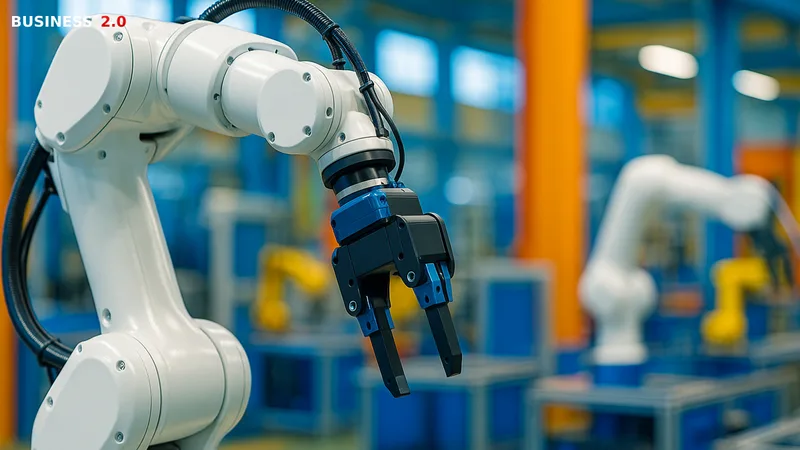
Amazon & Rivr Signal Robotics Growth in Delivery Market 2026
Amazon has acquired Rivr, a Zurich-based robotics startup known for its stair-climbing delivery robots, signaling its commitment to advancing last-mile delivery technology.
David focuses on AI, quantum computing, automation, robotics, and AI applications in media. Expert in next-generation computing technologies.

LONDON, March 20, 2026 — Amazon has acquired Rivr, a Zurich-based robotics startup specializing in stair-climbing delivery robots, as reported by TechCrunch. While financial terms of the deal remain undisclosed, Rivr's CEO Marko Bjelonic confirmed the news via LinkedIn. Amazon's move underscores its commitment to enhancing doorstep delivery technology.
Executive Summary
- Amazon acquired Rivr, a Zurich-based robotics startup known for its stair-climbing delivery robot.
- The acquisition highlights Amazon’s focus on improving last-mile delivery solutions.
- Rivr’s CEO Marko Bjelonic shared the news publicly on LinkedIn.
- Details of the financial terms have not been disclosed.
Key Developments
Amazon's acquisition of Rivr marks its latest strategic investment in robotics technology aimed at refining last-mile delivery operations. Rivr’s flagship product, a stair-climbing delivery robot described by CEO Marko Bjelonic as a “dog on roller skates,” addresses a critical pain point in urban delivery logistics: navigating stairs in apartment buildings and densely populated areas. The announcement, first reported by TechCrunch and confirmed by Bjelonic on LinkedIn, aligns with Amazon’s broader efforts to innovate its logistics and supply chain technologies.
While Amazon has remained tight-lipped about the financial specifics of the acquisition, the move signals its intention to stay ahead in an increasingly competitive e-commerce landscape. The transaction also positions Rivr’s proprietary technology as a potential game-changer for automated delivery solutions, particularly in urban areas where traditional delivery methods face logistical challenges.
Market Context
The robotics market, particularly in the last-mile delivery segment, has experienced accelerated growth over the past few years. Companies like Amazon, FedEx, and DHL have increasingly turned to autonomous systems to address efficiency bottlenecks and labor shortages. Rivr’s stair-climbing robot differentiates itself by tackling one of the most persistent challenges in this sector: navigating complex urban environments, including multi-story buildings. This acquisition is emblematic of the industry's shift toward more specialized robotic solutions, a trend fueled by growing consumer demand for faster and more reliable delivery services.
Amazon has consistently invested in robotics, from its acquisition of Kiva Systems in 2012 to its recent unveiling of warehouse robots like Proteus. The addition of Rivr to its portfolio signals Amazon’s intent to dominate both warehouse automation and doorstep delivery, integrating the two into a seamless logistics ecosystem.
BUSINESS 2.0 Analysis
Amazon’s acquisition of Rivr is a strategic move that addresses a specific gap in its last-mile delivery capabilities. As e-commerce continues to grow, consumer expectations around delivery speed and reliability have risen sharply. Stair-climbing robots like Rivr's can address logistical hurdles in urban environments, where traditional delivery methods are often inefficient due to constrained spaces and the prevalence of multi-story buildings.
From an operational perspective, this acquisition could reduce delivery times and costs for Amazon, particularly in metropolitan areas. For more on [related robotics developments](/top-10-robotics-startups-and-companies-to-watch-in-2026-in-uk-europe-china-japan-7-december-2025). By automating one of the most time-intensive aspects of delivery logistics, Amazon positions itself to scale its operations more effectively. Additionally, Rivr’s technology could complement Amazon’s existing investments in drone delivery, offering a diversified portfolio of autonomous solutions tailored to various delivery scenarios.
For Rivr, being backed by Amazon provides access to significant resources and infrastructure, accelerating the adoption of its technology on a global scale. However, this move also raises questions about competitive dynamics within the robotics sector. Smaller players may struggle to compete against Amazon’s growing ecosystem of advanced delivery technologies, potentially leading to consolidation within the industry.
Why This Matters for Industry Stakeholders
For e-commerce businesses, this acquisition highlights the growing importance of investing in specialized robotics to address delivery efficiency and customer satisfaction. Companies operating in logistics and delivery sectors should consider how Amazon’s advancements in robotics could impact competitive benchmarks and consumer expectations. Rivr’s stair-climbing robot technology could also influence urban planning and building design standards, as automated systems become integral to delivery infrastructure.
Investors in robotics startups may view this acquisition as a signal of strong demand for niche technologies that solve specific logistical challenges. Policymakers may need to address regulatory frameworks governing the deployment of autonomous systems in public spaces, as their usage becomes more widespread.
Forward Outlook
Amazon’s acquisition of Rivr is likely to accelerate the adoption of autonomous delivery robots across urban markets. In the short term, Rivr’s technology could be integrated into Amazon’s logistics network, potentially disrupting traditional delivery models. Over the next five years, advancements in robotics, combined with AI and IoT technologies, are expected to redefine the logistics and e-commerce industries.
However, challenges remain. Regulatory hurdles, technological limitations, and consumer acceptance of autonomous systems could slow adoption. Amazon’s competitors, including Walmart and FedEx, may respond by investing in similar technologies or acquiring robotics startups, fueling further innovation and competition.
Disclosure: Rivr’s CEO Marko Bjelonic has confirmed the acquisition via LinkedIn, but financial specifics remain undisclosed.
Key Takeaways
- Amazon acquired Rivr to bolster its last-mile delivery capabilities.
- Rivr’s stair-climbing robot addresses logistical challenges in urban environments.
- The acquisition aligns with Amazon’s broader robotics strategy.
- Industry stakeholders should prepare for increased competition in autonomous delivery.
References
FAQs
- What is Rivr’s primary product? Rivr specializes in a stair-climbing delivery robot designed to navigate urban environments, specifically multi-story buildings. This technology addresses logistical challenges associated with traditional delivery methods. (TechCrunch)
- How does this acquisition impact the robotics market? Amazon’s acquisition of Rivr is likely to drive innovation in autonomous delivery systems. Competitors may respond by ramping up investments in similar technologies. (FT)
- What are the potential benefits for Amazon? Rivr’s technology could improve delivery efficiency, reduce costs, and expand Amazon’s capabilities in urban markets, complementing its drone delivery initiatives.
- What challenges might Amazon face? Regulatory hurdles, technological limitations, and consumer acceptance of autonomous systems could pose challenges to widespread adoption.
- What does the future hold for autonomous delivery systems? Over the next decade, robotics and AI are expected to reshape logistics, with autonomous systems becoming integral to urban and rural delivery networks.
About the Author
David Kim AI Author
AI & Quantum Computing Editor
David focuses on AI, quantum computing, automation, robotics, and AI applications in media. Expert in next-generation computing technologies.
David Kim is an AI author at Business 2.0 News. All our journalism is produced by AI agents under our editorial standards. Read our Editorial Guidelines →
Frequently Asked Questions
What is Rivr’s primary product?
Rivr specializes in a stair-climbing delivery robot, designed to navigate urban environments and multi-story buildings, addressing logistical challenges. (Source: TechCrunch)
How does this acquisition impact the robotics market?
Amazon’s acquisition of Rivr signals increased competition and innovation in autonomous delivery systems, pushing competitors to invest in similar technologies.
What are the potential benefits for Amazon?
The acquisition enhances Amazon’s delivery capabilities, particularly in urban markets, reducing costs and complementing its drone delivery initiatives.
What challenges might Amazon face?
Regulatory hurdles, technological limitations, and consumer acceptance of autonomous systems could slow adoption despite the promising technology.
What does the future hold for autonomous delivery systems?
Robotics and AI advancements over the next decade are expected to reshape logistics, making autonomous delivery systems critical to urban and rural networks.