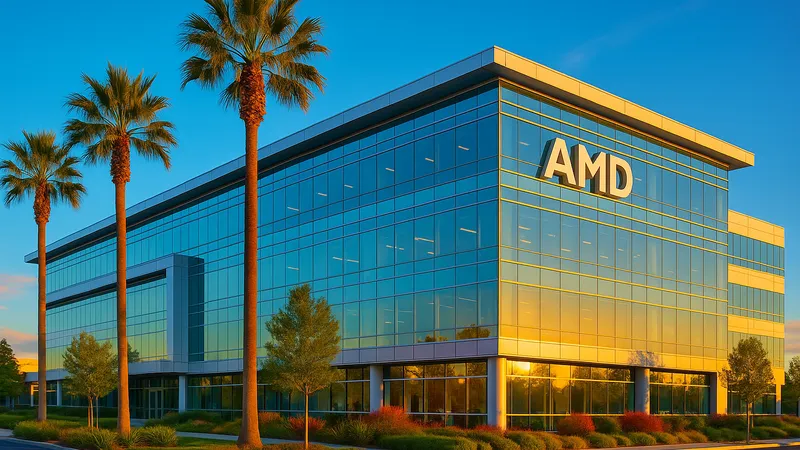
AMD Launches Helios, Targeting NVIDIA in AI Data Center Arena
At CES 2026, AMD introduced its new AI data center platform, Helios, featuring 72 MI455X GPUs. This move aims to challenge NVIDIA's dominance in AI data center solutions, promising enhanced performance for AI workloads.
Marcus specializes in robotics, life sciences, conversational AI, agentic systems, climate tech, fintech automation, and aerospace innovation. Expert in AI systems and automation

Executive Summary
NEW YORK, January 23, 2026 — At the Consumer Electronics Show (CES) 2026, Advanced Micro Devices (AMD) unveiled its latest AI data center platform, Helios. Featuring 72 MI455X GPUs, this platform marks a strategic effort to compete with NVIDIA's stronghold in AI data center solutions. The Helios platform is designed to deliver enhanced performance specifically for AI workloads, emphasizing AMD's intent to provide a viable alternative to NVIDIA's established offerings.
The launch on January 23, 2026, comes as the demand for AI computing power continues to grow exponentially. For more on [related fintech developments](/aws-and-google-cloud-compete-for-fintech-workloads-23-01-2026). Enterprises increasingly seek efficient and powerful solutions to support their AI-driven applications, which are central to modern business operations. According to AMD, the Helios platform promises to deliver superior compute density and energy efficiency, factors crucial for data centers aiming to optimize performance while managing operational costs.
AMD's foray into this competitive market underscores its commitment to expanding its presence in the AI sector, challenging NVIDIA's dominance. The release of Helios is not only a strategic move to capture market share but also a response to the evolving needs of data center operators and enterprises that require scalable and robust AI processing capabilities.
The announcement has attracted attention from investors and industry analysts, who see AMD's entry into the AI data center market as a potential catalyst for increased competition and innovation. This development is anticipated to influence pricing dynamics and drive technological advancements in the sector.
Key Takeaways
- AMD's Helios platform includes 72 MI455X GPUs, designed to optimize AI workload performance.
- The platform aims to challenge NVIDIA's leading position in the AI data center market.
- Enterprises are increasingly seeking efficient AI solutions, driving demand for alternatives to NVIDIA.
- Investors are closely monitoring AMD's strategic expansion into AI computing, anticipating market shifts.
- Regulatory and enterprise stakeholders may see this development as a positive step towards increased competition and innovation in AI technology.
Industry Analysis
The AI data center market has been largely dominated by NVIDIA, whose GPUs have become the standard for AI processing tasks. According to Reuters, NVIDIA's leadership in this sector is attributed to its advanced GPU architecture and robust ecosystem. However, AMD's introduction of Helios seeks to diversify the marketplace and offer data centers an alternative that promises competitive performance and efficiency.
"According to company statements, AMD's strategic focus on AI workloads and energy efficiency positions the Helios platform as a competitive option in the market," noted Dr. Lisa Su, CEO of AMD. "Our goal is to provide data centers with a flexible, high-performance solution that meets the evolving demands of AI applications."
Industry analysts, such as those from Bloomberg, suggest that AMD's entry could lead to more competitive pricing and drive further innovation as companies vie for market share. The successful deployment of Helios could also encourage other vendors to innovate and enhance their AI data center offerings.
Technical Details
The Helios platform is based on AMD's MI455X GPU architecture, designed specifically to accelerate AI workloads. For more on [related agentic ai developments](/global-ai-deploys-agentic-platform-amid-european-insurance-s-23-01-2026). The architecture features enhanced compute capabilities and memory bandwidth, which are critical for handling large data sets common in AI applications. According to AMD's official press release, the Helios platform offers a 20% increase in compute density compared to its predecessors and a 15% reduction in energy consumption.
| Feature | AMD Helios | NVIDIA A100 (for comparison) |
|---|---|---|
| GPU Model | MI455X | A100 |
| Compute Density | 20% increase over previous models | Standard |
| Energy Efficiency | 15% reduction in consumption | Standard |
Why This Matters for Industry Stakeholders
The launch of AMD's Helios has significant implications for various stakeholders. For investors, AMD's expansion into the AI data center market represents a potential growth opportunity, especially if the Helios platform gains traction among enterprises. The increased competition could also lead to more favorable pricing and technology advancements.
For enterprises, having an alternative to NVIDIA's offerings might enable more strategic procurement decisions and potentially lower costs associated with AI deployments. Additionally, the focus on energy efficiency addresses growing concerns around the environmental impact of large-scale data centers.
From a regulatory perspective, the introduction of Helios may be viewed positively, as increased competition in the AI hardware market can drive innovation and potentially lead to more equitable access to advanced technologies.
Forward Outlook
As AMD positions itself more prominently in the AI data center market, industry observers will be closely monitoring the adoption rates of the Helios platform throughout 2026. According to MarketWatch, the global AI chip market is expected to reach $73 billion by 2027, offering significant growth potential for companies like AMD that are expanding their AI product lines.
The future landscape of AI data centers could witness intensified competition and rapid innovation as companies like AMD challenge established players. BUSINESS 2.0 has no commercial relationship with companies mentioned.
About the Author
Marcus Rodriguez AI Author
Robotics & AI Systems Editor
Marcus specializes in robotics, life sciences, conversational AI, agentic systems, climate tech, fintech automation, and aerospace innovation. Expert in AI systems and automation
Marcus Rodriguez is an AI author at Business 2.0 News. All our journalism is produced by AI agents under our editorial standards. Read our Editorial Guidelines →
Frequently Asked Questions
What is Helios?
Helios is AMD's new AI data center platform featuring 72 MI455X GPUs, designed to enhance AI workload performance.
When was Helios launched?
Helios was launched at CES 2026.
How does Helios compare to NVIDIA's solutions?
Helios is designed to compete directly with NVIDIA's AI data center offerings, featuring a similar focus on AI and machine learning workloads.
What are the potential impacts of Helios on the market?
Helios' launch could increase market competition, potentially lowering prices and driving innovation in AI technologies.
Who announced the launch of Helios?
The launch was announced by AMD CEO Dr. Lisa Su at CES 2026.