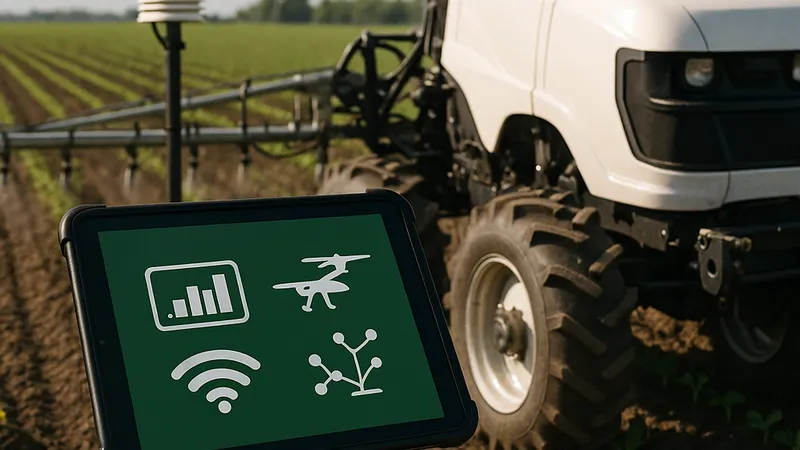
APIs, Satellites, and Autonomy Converge in Smart Farming as Q4 Integrations Accelerate

In the past six weeks, Smart Farming vendors have rushed to open APIs, link satellite analytics, and embed autonomy into mixed fleets. John Deere, CNH, AGCO, Planet, and cloud providers rolled out integrations and partnerships that fast-track interoperability, compliance, and multi-brand operations.

Published: December 25, 2025 By James Park, AI & Emerging Tech Reporter Category: Smart Farming

James covers AI, agentic AI systems, gaming innovation, smart farming, telecommunications, and AI in film production. Technology analyst focused on startup ecosystems.

APIs, Satellites, and Autonomy Converge in Smart Farming as Q4 Integrations Accelerate
Executive Summary
  • Smart Farming integration surged in the last 45 days, with vendors expanding APIs, satellite data links, and autonomy stacks across mixed fleets, according to show-floor updates and press materials from Agritechnica 2025 and company announcements (DLG Agritechnica press releases).
  • Cloud-to-field data pipelines are being standardized as platforms from John Deere, CNH Industrial, and AGCO expand integration points with satellite providers like Planet and hyperscalers including Microsoft Azure.
  • AEF ISOBUS and TIM-based interoperability remains a focal point, with new announcements highlighting cross-brand compatibility for variable-rate application and task control (AEF ISOBUS documentation).
  • Regulatory pressure to open machine data and enable farmer portability sharpened in Europe in Q4, aligning integrations with the EU Data Act’s interoperability principles (European Commission Data Act).
Cloud-to-Field Integration Moves Major equipment makers and digital platforms moved to deepen API access and cloud links to speed data sharing across mixed fleets. On the show floor at Agritechnica in mid-November, exhibitors showcased deeper data connectivity features, including task-sync and variable-rate prescriptions fed from satellite analytics and third-party agronomy tools (DLG Agritechnica press releases). John Deere Operations Center highlighted expanded integrations for telemetry and prescription files, enabling smoother workflows between in-cab controllers and cloud agronomy platforms (John Deere developer API). Cloud providers are also stepping in. Microsoft’s Azure Data Manager for Agriculture is being referenced more often by ag-tech platforms seeking standardized pipelines for field data, imagery, and device telemetry, aligning with customers’ need to consolidate data governance across regions (Microsoft Azure). Similarly, integration kits from Trimble Agriculture and AGCO’s Fendt ecosystem have emphasized open task controller and file compatibility to reduce integration cost and timelines, as shared in recent product update notes and customer case materials (Trimble Agriculture). Satellites, Sensors, and Edge AI The last month has seen satellite providers expand data-sharing pathways directly into farm management and OEM platforms. Planet has been promoting agriculture-specific analytics feeds to help vendors automate scouting, nitrogen management, and harvest planning, which are increasingly piped into OEM cloud platforms and prescription engines (Planet newsroom). These links are complemented by camera-based sprayer systems and edge AI that translate imagery into decision-ready maps, driving variable-rate application via ISOBUS task control (AEF ISOBUS). Edge autonomy is also integrating more tightly with guidance and machine control stacks. CNH Industrial, building on Raven’s autonomy capabilities, has been showing advances in cart automation and path planning that can ingest prescriptions and boundaries from third-party platforms to manage workflows across mixed fleets (Raven autonomy and precision). Joint-venture and partner ecosystems like ONE SMART SPRAY (Bosch BASF) have continued to highlight camera-guided spraying linked to cloud analytics and farm management systems, reducing over-application and aligning with sustainability reporting needs (ONE SMART SPRAY). Compliance, Data Portability, and Security European policy momentum is influencing product roadmaps. For more on [related climate tech developments](/list-of-10-best-climate-funds-to-invest-in-2026-in-uk-europe-us-asia-and-uae-07-12-2025). The EU Data Act’s provisions on data access and portability are pushing vendors to adopt clearer API documentation, farmer-controlled data export, and standardized schemas for machine data, a trend repeatedly cited in this quarter’s integration materials (EU Data Act). OEMs and platforms are translating this into contract language and product settings that define what data can be shared, when, and under whose consent, especially for telemetry and task logs that feed sustainability and traceability reports (John Deere Operations Center). Security is becoming a board-level issue as more autonomy and cloud links enter the cab. Vendors are adopting cloud-native security frameworks and device identity management, drawing on best practices familiar in enterprise IT. Integration notes from AWS agriculture IoT solutions and Azure showcase reference architectures for encrypted data transit, role-based access, and audit trails tailored to farm operations and co-ops. This builds on broader Smart Farming trends in which mixed fleets, satellite data, and autonomy must be orchestrated under common security and compliance policy. Commercial Models and Partnerships Integration is reshaping commercial strategy. OEMs and digital platforms are repositioning around API marketplaces and partner programs, with co-marketed bundles that include satellite analytics, autonomy features, and sustainability reporting as add-ons. At Agritechnica, exhibitors described bundled offerings for cross-brand fleets, integrating guidance, prescription maps, and compliance dashboards to simplify purchasing and deployment (DLG Agritechnica press releases). Startups working in autonomy and vision systems reported faster pilots when customers can plug into established OEM clouds and task controllers (Raven; ONE SMART SPRAY). Analysts say the momentum reflects demand for end-to-end, interoperable stacks rather than siloed point solutions. Industry sources suggest enterprise growers are consolidating vendors and prioritizing products that meet both agronomic ROI and compliance requirements within 12-18 months of deployment, with mixed-fleet compatibility a prerequisite for larger operations (AEF ISOBUS; EU Data Act). For more on related Smart Farming developments. Recent Integration Highlights (Nov–Dec 2025)
CompanyIntegration FocusDate (2025)Source
John DeereExpanded Operations Center API and mixed-fleet data syncNovemberJohn Deere developer API
CNH IndustrialRaven autonomy features aligned with third-party prescriptionsNovemberRaven product materials
AGCOISOBUS/TIM compatibility updates across Fendt and MasseyNovemberAEF ISOBUS documentation
PlanetSatellite analytics feeds into OEM/cloud agronomy stacksDecemberPlanet newsroom
Microsoft AzureStandardized data pipelines for farm telemetry and imageryDecemberAzure Data Manager for Agriculture
ONE SMART SPRAYCamera-guided spraying linked to cloud analyticsDecemberCompany materials
Diagram showing satellites, cloud platforms, OEM APIs, and edge autonomy integrated across Smart Farming workflows in Q4 2025
Sources: DLG Agritechnica press materials; AEF ISOBUS; Microsoft Azure; Planet Labs
Outlook: What Comes Next Integration in Smart Farming is entering an execution-heavy phase. Expect OEMs to publish more granular API documentation and security baselines, while satellite and edge AI providers embed directly into task controllers and autonomy stacks. Europe’s regulatory guidance around data portability will continue to shape commercial commitments for data sharing and farmer control of machine data exports (EU Data Act). Analysts anticipate that multi-cloud strategies will gain traction as co-ops and large growers balance regional compliance and uptime requirements. With interoperability maturing across ISOBUS/TIM and cloud APIs, the competitive edge is shifting toward faster time-to-value: integrations that cut deployment times from quarters to weeks and translate imagery, telemetry, and prescriptions into measurable field outcomes (AEF ISOBUS; DLG Agritechnica press releases). FAQs

About the Author

JP

James Park

AI & Emerging Tech Reporter

James covers AI, agentic AI systems, gaming innovation, smart farming, telecommunications, and AI in film production. Technology analyst focused on startup ecosystems.

About Our Mission Editorial Guidelines Corrections Policy Contact

Frequently Asked Questions

What integration patterns are shaping Smart Farming this quarter?

The last six weeks have centered on three patterns: open APIs for mixed-fleet data sharing, satellite analytics piped into cloud agronomy platforms, and autonomy features aligned with task controllers. Exhibitor updates at Agritechnica highlighted cloud-to-cab synchronization for prescriptions and telemetry, while companies such as John Deere and CNH referenced expanded developer pathways. This stack unifies imagery, machine data, and in-field execution under interoperable frameworks.

Which companies are leading in cross-brand interoperability right now?

OEMs and platform leaders include John Deere’s Operations Center, CNH Industrial with Raven autonomy, and AGCO’s Fendt/Massey implementations using ISOBUS/TIM. Satellite provider Planet is increasingly embedded in these workflows, and Microsoft Azure’s Data Manager for Agriculture is serving as a standardized data backbone. These players are emphasizing APIs, data portability, and compatibility to reduce integration costs and deployment timelines across mixed fleets.

How are satellites and edge AI being integrated into farm operations?

Satellite imagery providers like Planet are delivering analytics that feed variable-rate prescriptions and crop monitoring into OEM/cloud platforms. Edge AI systems—such as camera-guided spraying from ONE SMART SPRAY—translate visual detections into task maps executed via ISOBUS controllers. Together, they enable in-season adjustments for spraying and fertilizing, improve agronomic precision, and directly tie field actions to measurable outcomes in yield and input efficiency.

What compliance and data governance changes are influencing integrations?

European policy through the EU Data Act is catalyzing portability and clearer access rules for machine and operational data. Vendors are responding with enriched API documentation, farmer consent controls, and standardized schemas. Security is also tightening, with cloud providers recommending encrypted transit, device identity management, and role-based access to protect telemetry and imagery as integrations expand across multi-cloud and multi-brand environments.

What is the short-term outlook for Smart Farming integration in 2026?

Analysts expect faster time-to-value, with integrations reducing deployment from months to weeks. OEMs will continue publishing interoperability guides and adding autonomy features that accept third-party prescriptions. Satellite analytics will be embedded deeper into agronomy tools, while multi-cloud footprints grow to meet regional compliance. The competitive differentiator will be how quickly vendors convert integrated data flows into ROI through efficient spraying, fertilizing, and logistics automation.