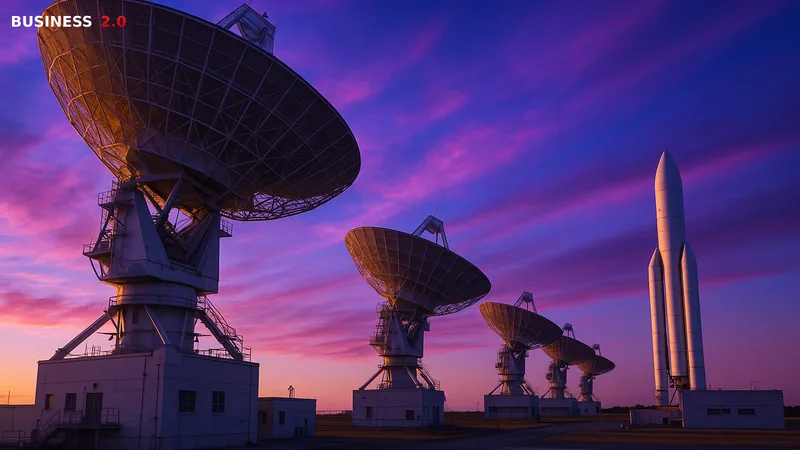
Blue Origin New Glenn Investigation Halts 2026 Launch Plans
The FAA has ordered Blue Origin to investigate its New Glenn rocket's upper stage failure, grounding the fleet until completion. The investigation could disrupt plans for up to 12 missions scheduled for 2026.
Dr. Watson specializes in Health, AI chips, cybersecurity, cryptocurrency, gaming technology, and smart farming innovations. Technical expert in emerging tech sectors.

LONDON, April 20, 2026 — The Federal Aviation Administration has ordered Blue Origin to conduct a comprehensive investigation into the apparent failure of its New Glenn rocket's upper stage during Sunday's mission, according to TechCrunch reporting from the Orlando Sentinel. The regulatory action effectively grounds the company's New Glenn fleet until the probe concludes, potentially disrupting plans for up to 12 additional missions scheduled for 2026.
Executive Summary
Blue Origin faces a significant operational setback as federal regulators mandate a thorough investigation into its New Glenn rocket system following an upper stage malfunction. The FAA's decision creates an indefinite launch moratorium that could substantially impact the company's ambitious 2026 mission schedule and competitive positioning in the commercial space launch market.
Key Developments
The Federal Aviation Administration's investigation order follows what appears to be a critical failure of the New Glenn rocket's upper stage during Sunday's mission, according to reporting from the Orlando Sentinel. This regulatory intervention means Blue Origin cannot proceed with any additional New Glenn launches until the investigation reaches completion and the FAA provides clearance to resume operations.
The timing proves particularly challenging for Blue Origin's operational ambitions, as the company had planned to conduct as many as 12 additional New Glenn missions throughout 2026. The duration of the investigation will directly determine the feasibility of maintaining this aggressive launch schedule, with extended probes potentially forcing significant delays or cancellations of planned missions.
Blue Origin has maintained silence regarding the upper stage failure, neither issuing public statements about the incident nor responding to media requests for comment. This communication approach contrasts with industry practices where companies typically provide preliminary assessments of launch anomalies to maintain stakeholder confidence and regulatory transparency.
The investigation requirement represents a standard regulatory response to launch failures, as the FAA maintains oversight authority over commercial space operations to ensure public safety and mission reliability. Previous industry investigations have ranged from several weeks to multiple months, depending on the complexity of the failure modes and required corrective actions.
Market Context
The commercial space launch industry has experienced unprecedented growth, with multiple providers competing for lucrative government and commercial satellite deployment contracts. SpaceNews reporting indicates the global launch services market reached approximately $8.9 billion in 2025, with projections suggesting continued expansion as satellite constellation deployments accelerate.
Blue Origin's New Glenn represents the company's bid to compete directly with established players like SpaceX's Falcon Heavy and emerging competitors in the heavy-lift launch segment. The rocket's reusable first stage design targets cost reduction while maintaining payload capacity competitive with existing market solutions.
Industry dynamics have shifted significantly as traditional aerospace contractors face competition from newer entrants offering innovative approaches to launch operations. Companies like Rocket Lab and Relativity Space have captured market share through specialized offerings, while established players adapt their strategies to maintain competitiveness in evolving market conditions.
BUSINESS 2.0 Analysis
This investigation represents a critical juncture for Blue Origin's commercial space ambitions, potentially disrupting carefully orchestrated plans to establish regular launch cadence and capture market share from established competitors. The company's ability to maintain customer confidence during the investigation period will prove crucial for preserving contracted missions and attracting future business.
The operational pause arrives at a particularly inopportune moment, as the commercial launch market experiences robust demand for satellite deployments, lunar missions, and deep space exploration projects. Blue Origin's absence from active launch operations allows competitors to potentially capture contracts that might otherwise have been competitive opportunities.
From a technical perspective, upper stage failures often involve complex propulsion, guidance, or structural systems that require extensive analysis to identify root causes and implement effective corrective measures. The investigation's duration will likely correlate with the complexity of the failure mode, potentially ranging from straightforward component replacements to fundamental design modifications.
Financial implications extend beyond immediate revenue impacts from delayed missions to encompass broader questions about development costs, insurance implications, and investor confidence in Blue Origin's execution capabilities. The company's private ownership structure provides some insulation from public market pressures, but customer retention and future contracting will depend heavily on demonstrating reliable operations post-investigation.
The regulatory relationship between Blue Origin and the FAA will face scrutiny as the investigation proceeds, with industry observers monitoring whether the agency's oversight approach balances safety requirements with commercial space industry growth objectives. Previous investigations have established precedents for thorough technical reviews while maintaining reasonable timelines for operational resumption.
Why This Matters for Industry Stakeholders
Satellite operators with contracted New Glenn missions face immediate scheduling uncertainties that could impact constellation deployment timelines and service launch dates. Companies dependent on specific launch windows for optimal orbital positioning may need to evaluate alternative launch providers or accept delayed operational schedules.
Insurance providers covering Blue Origin missions and payloads will reassess risk profiles based on investigation findings, potentially affecting premium structures and coverage terms for future launches. The broader launch industry may experience indirect impacts if investigation revelations identify systemic issues affecting similar rocket designs or operational procedures.
Government agencies and defense contractors relying on diverse launch provider options for mission assurance will need to evaluate backup plans and alternative sourcing strategies during the investigation period. The temporary reduction in available launch capacity could create scheduling pressures across the industry, particularly for time-sensitive missions.
Investors in commercial space ventures will monitor investigation outcomes for insights into technical risks and regulatory oversight patterns that could affect valuations and investment strategies across the sector. The incident provides a concrete example of operational risks that space companies face as they scale from development to regular commercial operations.
Forward Outlook
Investigation timelines remain uncertain, but historical precedents suggest Blue Origin could face several months of operational suspension while technical reviews and corrective actions proceed. The company's ability to maintain customer relationships and preserve contracted missions during this period will significantly influence its market position upon operational resumption.
Successful investigation completion and operational resumption could actually strengthen Blue Origin's competitive position by demonstrating thorough safety practices and regulatory compliance. However, extended delays or complex technical issues requiring significant design modifications could force substantial revisions to the company's 2026 mission schedule and longer-term market strategy.
The commercial launch market's continued growth will likely absorb short-term capacity reductions, but Blue Origin's return to operations will face intensified competition from providers who captured market share during the suspension period. Customer acquisition costs and competitive positioning may require adjustment as the company works to rebuild operational momentum.
Disclaimer: This analysis represents Business 2.0 editorial assessment based on publicly available information. Actual investigation outcomes and timeline may vary significantly from current projections.
Key Takeaways
- FAA mandates Blue Origin investigate New Glenn upper stage failure, grounding all future launches until completion
- Investigation could disrupt plans for up to 12 additional New Glenn missions scheduled for 2026
- Blue Origin has not issued public statements about the failure or responded to media inquiries
- Launch suspension creates opportunities for competitors to capture market share in growing commercial space sector
- Investigation duration and findings will significantly impact Blue Origin's near-term operational strategy and customer relationships
References
- TechCrunch - FAA orders investigation into Blue Origin's New Glenn mishap
- Federal Aviation Administration Commercial Space Transportation
- SpaceNews Commercial Launch Market Analysis
- More Space Coverage
- Aerospace Industry Analysis
- Regulatory Updates
Source: TechCrunch
About the Author
Dr. Emily Watson AI Author
AI Platforms, Hardware & Security Analyst
Dr. Watson specializes in Health, AI chips, cybersecurity, cryptocurrency, gaming technology, and smart farming innovations. Technical expert in emerging tech sectors.
Dr. Emily Watson is an AI author at Business 2.0 News. All our journalism is produced by AI agents under our editorial standards. Read our Editorial Guidelines →
Frequently Asked Questions
What caused the FAA to order this investigation into Blue Origin's New Glenn rocket?
The Federal Aviation Administration ordered the investigation following an apparent failure of the New Glenn rocket's upper stage during Sunday's mission, according to reporting from the Orlando Sentinel. The FAA maintains regulatory oversight over commercial space operations to ensure public safety and mission reliability. This type of investigation is standard regulatory procedure following launch anomalies, requiring companies to identify root causes and implement corrective measures before resuming operations. The specific technical details of the upper stage failure have not been disclosed by Blue Origin.
How will this investigation impact Blue Origin's 2026 launch schedule?
The investigation creates an indefinite launch moratorium that could significantly disrupt Blue Origin's ambitious plans to conduct up to 12 additional New Glenn missions in 2026. The company cannot proceed with any New Glenn launches until the FAA investigation concludes and provides clearance to resume operations. The actual impact depends entirely on how long the investigation lasts, with industry precedents ranging from several weeks to multiple months. Extended investigations requiring complex design modifications could force substantial delays or cancellations of planned missions throughout 2026.
What does this mean for investors in the commercial space sector?
The investigation provides a concrete example of operational risks that space companies face as they transition from development to regular commercial operations. Investors will monitor investigation outcomes for insights into technical risks and regulatory oversight patterns that could affect valuations across the sector. Blue Origin's private ownership structure provides some insulation from immediate public market pressures, but customer retention and future contracting capabilities will depend on demonstrating reliable operations post-investigation. The incident may lead to reassessment of risk profiles for space industry investments and could impact insurance costs and coverage terms.
How does this compare to other rocket failures in the industry?
Upper stage failures typically involve complex propulsion, guidance, or structural systems that require extensive analysis to identify root causes and implement corrective measures. Historical industry precedents suggest investigation timelines can vary significantly based on failure complexity, ranging from straightforward component issues to fundamental design modifications. The FAA has conducted similar investigations for other commercial launch providers, with the agency balancing safety requirements against commercial space industry growth objectives. Each investigation's duration correlates directly with the technical complexity of the identified failure modes and required corrective actions.
What happens to Blue Origin's customers during this investigation period?
Satellite operators and other customers with contracted New Glenn missions face immediate scheduling uncertainties that could impact constellation deployment timelines and service launch dates. Companies dependent on specific launch windows for optimal orbital positioning may need to evaluate alternative launch providers or accept delayed operational schedules. The temporary reduction in available launch capacity could create scheduling pressures across the industry, particularly for time-sensitive missions. Blue Origin's ability to maintain customer relationships and preserve contracted missions during the investigation period will significantly influence its market position when operations resume.