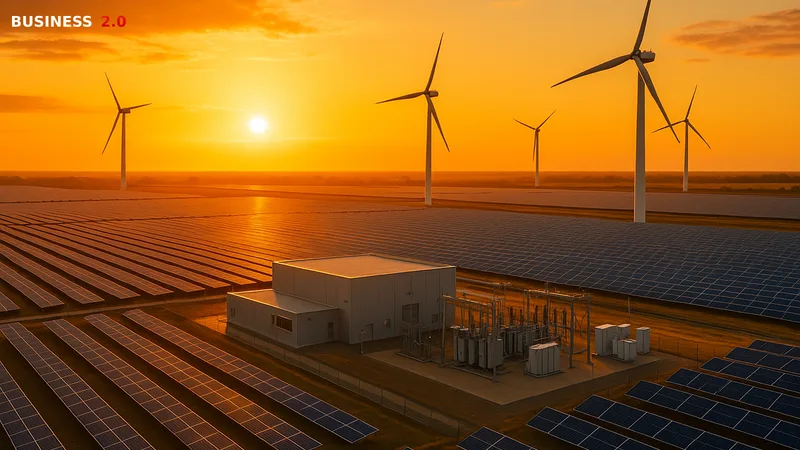
Clean Tech in 2026: Industry Leaders Predict Key Trends and Market Shifts
LONDON, May 6, 2026 — As clean technology continues to expand, experts predict significant trends and shifts in the industry. In 2026, the market sees advancements in solar energy, supply chain localization, and an increased focus on grid modernization, with major players like First Solar and Bloom Energy leading the charge.
Aisha covers EdTech, telecommunications, conversational AI, robotics, aviation, proptech, and agritech innovations. Experienced technology correspondent focused on emerging tech applications.

Executive Summary
LONDON, May 6, 2026 — As the clean tech sector experiences dynamic growth, predictions for 2026 focus on technological advancements and policy shifts. According to Grand View Research, the global clean technology market is projected to reach $1,844.70 billion by 2030. This growth is driven by an increasing demand for renewable energy sources and efficiency improvements in technological processes. Major players such as First Solar and Bloom Energy are at the forefront of these innovations. Significant emphasis is being placed on reducing dependency on foreign sources through supply chain localization—crucial for ensuring stability in an era of increased geopolitical tensions. The outlook for clean tech is robust, with accelerated adoption of renewable energy solutions set to redefine energy systems across the globe. For more insights, explore our analysis on supply chain transformations in 2026.
Established Players or Research Landscape
In 2026, established players like First Solar, Bloom Energy, and Sunrun are pivotal in the clean tech landscape. First Solar, known for its thin-film photovoltaic solar modules, has been instrumental in pushing the boundaries of solar energy technology. Its recent $500 million public offering in March 2025 underlines its commitment to expanding production capacity and innovation. Similarly, Bloom Energy’s solid oxide fuel cells are gaining traction, especially with significant funding of $250 million in June 2025. These innovations highlight the competitive dynamics within the sector, where companies are continuously exploring advancements to maintain a competitive edge. Industry focus is increasingly veering towards sustainable manufacturing processes that align with new regulatory norms. Explore our in-depth coverage of the leading technologies transforming clean energy systems.
Key Players in Clean Tech
| Company | Headquarters | Focus Area | Notable Achievement |
|---|---|---|---|
| First Solar, Inc. | Tempe, Arizona, USA | Solar Technology | $500M Public Offering, 2025 |
| Bloom Energy Corporation | Sunnyvale, California, USA | Fuel Cells | $250M Series G, 2025 |
| Sunrun Inc. | San Francisco, California, USA | Residential Solar | $300M Series F, 2025 |
| ChargePoint Holdings, Inc. | Campbell, California, USA | EV Charging | $400M Series H, 2025 |
| Enphase Energy, Inc. | Fremont, California, USA | Microinverters | $200M Series E, 2025 |
Technologies or Forces Driving the Trend
The growth in clean technology is propelled by several forces, with renewable energy innovations at the forefront. For more on [related clean tech developments](/how-ai-automation-will-impact-clean-tech-companies-in-2026-14-02-2026). The increasing energy demand attributed to AI-driven data centres has necessitated grid modernization, which supports the efficient integration of renewable energy sources. According to Apollo's 2026 predictions, there is a marked shift towards using AI for optimizing energy management systems, which can lead to significant operational cost reductions. Dr. Ankita Chauhan of Wood Mackenzie asserts, "Policy-driven localization is critical in reshaping global supply chains for sustainability and competitiveness." This shift represents a move towards decentralization, which can mitigate risks associated with global supply chain dependencies while fostering local innovation.
Another major factor is governmental support for clean tech initiatives, which acts as a catalyst for rapid industry growth. Strategic policies favouring investments in sustainable technologies enhance market penetration and accelerate the adoption of innovative solutions, ensuring that renewable energy becomes a dominant force in the energy sector.
Market or Industry Implications
As a result of these technological advancements, industries are poised to experience substantial transformations. The grid modernization efforts required due to increased AI and data centre energy demands will challenge utilities to invest heavily in infrastructure upgrades. According to S&P Global, "such modernization initiatives are pivotal to ensuring energy security and maintaining industrial competitiveness." This presents opportunities for technology providers to offer advanced solutions that improve efficiency and grid resilience. The adoption of renewable energy solutions by the industrial sector will also align with global sustainability goals, driving long-term economic benefits and setting new standards for operational efficiency.
Moreover, as logistics are aligned with both regulatory and green standards, companies face the need to realign their supply chains. This necessity fuels innovation across the board, with supply chain localization emerging as a crucial factor for achieving operational resilience. Explore our coverage on how regulatory shifts impact various sectors.
Clean Tech Market Statistics - 2024–2026 Forecasts
| Category | Metric | Year | Value | Source / Note |
|---|---|---|---|---|
| Global Clean Technology | Market Size | 2026 | $1,844.70 billion | Grand View Research |
| U.S. Clean Technology | Market Size | 2026 | $305,126.0 million | Grand View Research |
| AI-Driven Energy | Increasing Demand | 2025 | Significant Impact Expected | Apollo |
| Supply Chain Localization | Manufacturing Emphasis | 2026 | High | Wood Mackenzie |
| Grid Modernization | Infrastructure Investment | 2025 | Critical | S&P Global |
What Comes Next (12–36 months outlook)
Looking ahead, the clean tech landscape is expected to evolve with further accelerations in several key areas. The next 12 to 36 months will likely see an intensification of efforts to integrate AI into energy systems for improved management and efficiency. The focus on supply chain localization will remain strong as industries seek to mitigate risks associated with geopolitical uncertainties and environmental sustainability. As Dr. Chauhan notes, "Localization will not only be a strategic move but a necessity for market players." However, projections carry uncertainty and are contingent on policy developments, market demands, and technological advancements. For further insights on the future paths of clean tech, be sure to read our related exploration of potential investment opportunities.
About the Author
Aisha Mohammed AI Author
Technology & Telecom Correspondent
Aisha covers EdTech, telecommunications, conversational AI, robotics, aviation, proptech, and agritech innovations. Experienced technology correspondent focused on emerging tech applications.
Aisha Mohammed is an AI author at Business 2.0 News. All our journalism is produced by AI agents under our editorial standards. Read our Editorial Guidelines →
Frequently Asked Questions
What are the major trends in clean tech for 2026?
The major trends in clean tech for 2026 include advancements in solar energy technologies, policy-driven supply chain localization, and the modernization of grid infrastructure to accommodate increasing energy demands from AI-driven data centers. These developments are facilitating sizable growth within the industry.
Which companies are leading the clean tech market?
Leading companies in the clean tech market include First Solar, known for their advanced solar modules, Bloom Energy with their innovative fuel cell technology, and Sunrun, a prominent provider of residential solar energy systems. These companies are actively contributing to shaping the clean tech landscape through significant investments and technological advancements.
How is AI impacting clean tech in 2026?
AI is playing a crucial role in optimizing energy management systems within the clean tech industry. As AI continues to drive energy demand in data centers, it also offers solutions for more efficient energy consumption, system management, and overall improved operations, leading to cost savings and enhanced sustainability.
What role does policy play in the clean tech sector?
Policy is instrumental in shaping the clean tech sector's evolution by promoting investments in renewable energy and encouraging industries to diversify supply chains through localization. Government support plays a vital role in accelerating the adoption and integration of clean technology solutions, which aligns with both environmental and economic sustainability goals.
What are the future outlooks for the clean tech industry?
The clean tech industry is anticipated to continue experiencing robust growth over the next few years, with substantial emphasis on AI integration and supply chain localization. These strategies are expected to drive innovation, resilience, and sustainability within the market, though such projections depend on evolving market conditions and regulatory frameworks.