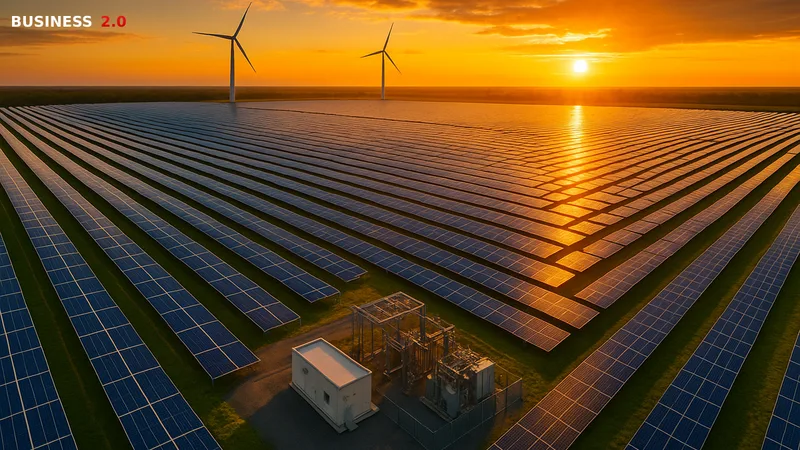
Climate Tech IPO Market 2026: Crucial Window Opens After Years
Public markets show renewed interest in climate technology startups despite capital intensity and long development timelines, with TechCrunch analysis suggesting potential IPO window opening for select companies with proven commercial traction.
Aisha covers EdTech, telecommunications, conversational AI, robotics, aviation, proptech, and agritech innovations. Experienced technology correspondent focused on emerging tech applications.

Executive Summary
Climate technology companies are experiencing a potential thaw in public market sentiment after years of being viewed as unsuitable for stock market investment. For more on [related climate tech developments](/rsted-fluence-and-tesla-move-fast-as-eu-backs-hydrogen-and-us-funds-grid-upgrades-24-12-2025). Key factors include capital intensity requirements, extended technology development cycles, and the challenge of monetising pollution reduction benefits that markets have traditionally struggled to price effectively. The sector's reliance on first-generation technologies has created additional investor hesitancy, as these innovations lack established performance track records. Despite these structural challenges, emerging indicators suggest selective public market appetite is developing for climate tech companies with proven commercial traction and clear revenue models.
Key Developments
The climate technology sector faces fundamental challenges that have historically made it unattractive to public market investors. Capital requirements for climate tech startups typically exceed those of software companies by significant margins, as these businesses require substantial upfront investment in physical infrastructure, manufacturing capabilities, and research and development facilities. Development timelines extend far beyond the 18-24 month cycles common in technology sectors, with climate innovations often requiring 5-10 years before reaching commercial viability.
Technology risk represents another critical barrier, as many climate solutions represent first-of-their-kind innovations without established precedents for commercial success. This technological uncertainty creates valuation challenges for public market analysts accustomed to benchmarking against established industry metrics and comparable company analysis. The sector's value proposition centres on addressing pollution and environmental externalities, benefits that traditional market mechanisms have struggled to price accurately or consistently.
However, recent market signals indicate a potential shift in investor sentiment towards climate technology companies. This evolution reflects growing recognition that climate solutions may represent significant long-term investment opportunities as regulatory frameworks evolve and carbon pricing mechanisms mature. The development suggests that public markets are beginning to develop frameworks for evaluating climate tech investments beyond traditional technology sector metrics.
Market Sentiment Evolution
Public market wariness towards climate technology investments stems from the sector's deviation from conventional technology investment patterns. Unlike software companies that can achieve rapid scalability with minimal additional capital requirements, climate tech businesses typically require continued investment throughout their growth phases. Manufacturing scale-up, supply chain development, and regulatory compliance create ongoing capital demands that can strain public company cash flow profiles.
The sector's focus on addressing environmental externalities introduces additional complexity for investors accustomed to direct revenue generation models. Climate benefits such as carbon reduction, air quality improvement, and resource conservation generate value that may not translate immediately into measurable financial returns. This disconnect between environmental impact and financial performance has created persistent investor scepticism about climate tech commercial viability.
Market Context & Competitive Landscape
The climate technology sector encompasses diverse subsectors including renewable energy, energy storage, carbon capture, sustainable agriculture, and clean transportation. Each subsector presents distinct investment characteristics and market dynamics that influence public market receptivity. Renewable energy companies like NextEra Energy have established successful public market presence, demonstrating that climate-focused businesses can achieve sustainable stock performance when supported by predictable revenue streams and established technology platforms.
Energy storage companies face different challenges, with battery technology costs and performance improvements creating rapidly evolving competitive dynamics. Companies like Tesla have successfully navigated public markets by diversifying beyond pure energy storage into integrated mobility solutions. However, pure-play energy storage companies continue to face investor questions about long-term differentiation and competitive moats as technology commoditisation pressures intensify.
Carbon capture and utilisation technologies represent the most challenging climate tech subsector for public market acceptance, as these solutions typically require significant regulatory support and carbon pricing mechanisms to achieve commercial viability. The absence of established market prices for carbon removal services creates valuation uncertainty that public market investors find difficult to assess using traditional financial analysis methods.
| Company Category | Public Market Success | Key Challenge | Investment Metric | Market Status |
|---|---|---|---|---|
| Renewable Energy | Established | Grid Integration | LCOE per MWh | Mature Public Markets |
| Energy Storage | Mixed Results | Technology Commoditisation | Cost per kWh | Emerging Public Interest |
| Carbon Capture | Limited | Revenue Model Uncertainty | Cost per Tonne CO2 | Pre-IPO Stage |
| Clean Transportation | Variable | Infrastructure Dependence | Total Cost of Ownership | Selective Public Appetite |
Source: Business20Channel.tv analysis of public climate tech performance, April 2026
Industry Implications
The potential opening of climate tech IPO markets carries significant implications across multiple industry verticals. Healthcare organisations increasingly focus on environmental sustainability as both a cost management strategy and regulatory compliance requirement, creating market opportunities for climate solutions that address energy efficiency, waste reduction, and supply chain optimisation. Pharmaceutical companies like Pfizer have committed to net-zero emissions targets by 2030, driving demand for proven climate technologies that can integrate with existing operations.
Financial services firms face mounting pressure from regulators and stakeholders to address climate risk in investment portfolios and operational activities. The Bank of England has implemented climate stress testing requirements that mandate financial institutions to assess and disclose climate-related risks. This regulatory framework creates market demand for climate solutions that can provide measurable risk mitigation and compliance support, potentially improving the investment case for climate tech companies targeting financial sector customers.
Legal and professional services industries encounter growing client demand for climate-related expertise and compliance support. Law firms report increasing work volumes related to environmental regulations, carbon market transactions, and climate risk disclosure requirements. This trend creates service revenue opportunities for climate tech companies that can provide legal and compliance software solutions, data analytics platforms, and risk assessment tools.
Regulatory Framework Evolution
Government policy developments significantly influence climate tech investment attractiveness and public market receptivity. The European Green Deal allocates €1 trillion in climate investment commitments through 2030, creating substantial market opportunities for climate technology companies with proven solutions. Similar policy frameworks in the United States, including the Inflation Reduction Act, provide tax incentives and direct funding for climate technology deployment.
Carbon pricing mechanisms continue expanding globally, with over 40 national and subnational jurisdictions implementing or planning carbon pricing systems. The EU Emissions Trading System covers approximately 40% of EU greenhouse gas emissions, creating direct revenue opportunities for companies providing carbon reduction solutions. These policy developments improve the business case for climate tech companies by establishing clearer pricing signals and revenue visibility.
Business20Channel.tv Analysis
The potential climate tech IPO window opening reflects fundamental shifts in how public markets assess long-term value creation and risk management. Traditional technology investment frameworks emphasise rapid scalability and asset-light business models, characteristics that climate tech companies often cannot replicate due to the physical nature of environmental solutions. However, mounting climate risks and regulatory pressures are forcing investors to reconsider the long-term viability of business models that externalise environmental costs.
Our analysis indicates that climate tech companies most likely to succeed in public markets share several key characteristics: proven technology with measurable performance data, diversified customer bases across multiple industry verticals, and revenue models that capture value beyond pure environmental benefits. For more on [related climate tech developments](/emerging-climate-tech-technologies-that-will-dominate-2026-29-01-2026). Companies that position their solutions as operational efficiency tools, regulatory compliance enablers, or risk management platforms may achieve greater public market success than those focused primarily on environmental impact messaging.
The capital intensity challenge that has historically deterred public investors may actually represent a competitive advantage for climate tech companies that successfully navigate IPO processes. High capital requirements create natural barriers to entry that protect market positions once established. Manufacturing-based climate solutions often develop proprietary processes and supply chain relationships that create sustainable competitive moats, unlike software companies that face constant disruption threats from new market entrants.
However, climate tech companies considering public market entry must address investor education challenges that software companies typically avoid. Public market analysts lack established frameworks for evaluating first-of-a-kind technologies, carbon reduction benefits, and long development timelines. Successful climate tech IPOs will require comprehensive investor education programs that establish clear performance metrics, competitive differentiation factors, and long-term growth trajectory visibility.
| Success Factor | Climate Tech Requirement | Traditional Tech | Investor Priority | Market Readiness |
|---|---|---|---|---|
| Technology Proof | Multi-year Performance Data | Beta Testing | High | Limited Pool |
| Revenue Diversification | Multiple Industry Verticals | Single Market Focus | Critical | Developing |
| Regulatory Clarity | Policy Framework Stability | Market-driven Demand | Essential | Improving |
| Capital Efficiency | Predictable Scaling Costs | Marginal Cost Near Zero | Moderate | Company-Specific |
Source: Business20Channel.tv IPO readiness assessment framework, April 2026
Why This Matters for Industry Stakeholders
Climate tech companies approaching IPO readiness must prepare for heightened scrutiny regarding technology validation, competitive positioning, and long-term commercial viability. Unlike software IPOs that can rely on user adoption metrics and recurring revenue growth, climate tech companies need comprehensive performance data demonstrating measurable environmental impact, operational efficiency improvements, and customer return on investment. Companies should begin collecting and standardising this data well before considering public market entry.
Venture capital and private equity investors backing climate tech companies face strategic decisions about portfolio company exit timing and public market preparation. The potential IPO window opening creates opportunities for investor returns but requires careful assessment of individual company readiness and market receptivity. Investors should focus on portfolio companies with proven commercial traction, diversified revenue streams, and clear competitive differentiation rather than purely technology-focused metrics.
Corporate buyers and strategic partners gain increased leverage in climate tech acquisition discussions as public market options become available. The potential for portfolio companies to access public funding reduces dependence on strategic investor capital, potentially driving up acquisition valuations while creating new partnership opportunities. Corporate climate commitments may justify premium valuations for climate tech assets that provide measurable sustainability benefits.
Investment Strategy Implications
Institutional investors must develop new analytical frameworks for evaluating climate tech investments as public market opportunities expand. Traditional technology investment metrics such as customer acquisition costs, monthly recurring revenue growth, and software development efficiency may not apply directly to climate solutions. Investment committees need education on climate tech performance indicators, regulatory risk factors, and long-term market development timelines.
Asset managers face growing pressure from beneficiaries and regulators to integrate climate considerations into investment decisions. The availability of public climate tech investment options provides portfolio management tools for addressing climate mandates while pursuing financial returns. However, the sector's volatility and development stage require careful risk management and appropriate portfolio allocation strategies.
Forward Outlook
The climate tech IPO market development will likely follow a selective pattern rather than broad sector enthusiasm. Companies with established customer bases, proven unit economics, and clear regulatory tailwinds represent the most promising initial public offerings. Energy efficiency solutions, renewable energy infrastructure, and industrial decarbonisation technologies may achieve earlier public market success than nascent technologies such as direct air capture or advanced biofuels.
Market volatility related to regulatory changes, carbon pricing fluctuations, and technology advancement rates will create challenging conditions for climate tech public companies. Investors should expect significant share price movements based on policy developments, competitive technology breakthroughs, and shifting regulatory priorities. This volatility may limit institutional investor participation until the sector demonstrates greater stability and predictable performance patterns.
The success of initial climate tech IPOs will significantly influence future market development and investor appetite. Companies that demonstrate sustainable public market performance, consistent revenue growth, and effective investor communication will establish templates for subsequent climate tech public offerings. Conversely, poor performance or governance issues among early public climate tech companies could close the IPO window for extended periods, similar to patterns observed in other emerging technology sectors.
Key Takeaways
• Climate tech companies face structural challenges including capital intensity, long development timelines, and difficulty monetising environmental benefits that have historically limited public market appeal
• Emerging market signals suggest selective investor interest in climate tech companies with proven commercial traction and diversified revenue streams beyond pure environmental impact
• Successful climate tech IPOs will require comprehensive investor education, established performance metrics, and clear competitive differentiation strategies
• Regulatory framework development and carbon pricing expansion improve the business case for climate solutions by providing clearer revenue visibility and market opportunities
• The sector's capital requirements and physical infrastructure needs may create sustainable competitive advantages once companies achieve market position establishment
References & Bibliography
[1] TechCrunch. (2026, April 25). The climate tech IPO window could finally be cracking open. https://techcrunch.com/2026/04/25/the-climate-tech-ipo-window-could-finally-be-cracking-open/
[2] NextEra Energy. (2026). Investor Relations. https://www.nexteraenergy.com/investors
[3] Tesla Inc. (2026). Energy Storage Solutions. https://www.tesla.com/energy
[4] Pfizer Inc. (2026). Environmental Sustainability Report. https://www.pfizer.com/sustainability
[5] Bank of England. (2026). Climate Stress Testing Framework. https://www.bankofengland.co.uk/stress-testing/climate
[6] European Commission. (2026). European Green Deal Progress Report. https://ec.europa.eu/info/strategy/priorities-2019-2024/european-green-deal_en
[7] U.S. Congress. (2022). Inflation Reduction Act Implementation. https://www.congress.gov/bill/117th-congress/house-bill/5376
[8] European Union. (2026). EU Emissions Trading System Annual Report. https://ec.europa.eu/clima/eu-action/eu-emissions-trading-system-eu-ets_en
[9] Business20Channel.tv Climate Investment Analysis
[10] Business20Channel.tv IPO Market Research
[11] International Energy Agency. (2026). Clean Energy Investment Report. https://www.iea.org/reports/clean-energy-investment
[12] World Bank Group. (2026). Carbon Pricing Dashboard. https://carbonpricingdashboard.worldbank.org/
[13] BloombergNEF. (2026). Climate Tech Investment Survey. https://www.bloomberg.com/professional/solution/bloomberg-new-energy-finance/
[14] McKinsey & Company. (2026). Climate Technology Investment Analysis. https://www.mckinsey.com/business-functions/sustainability/our-insights
[15] Business20Channel.tv Venture Capital Market Analysis
[16] PwC. (2026). IPO Market Outlook Report. https://www.pwc.com/gx/en/services/audit-assurance/ipo-centre.html
[17] Goldman Sachs. (2026). Clean Technology Investment Banking Report. https://www.goldmansachs.com/insights/pages/clean-energy-investment.html
[18] Morgan Stanley. (2026). Sustainable Finance Market Review. https://www.morganstanley.com/ideas/sustainable-investing-market-trends
[19] Deloitte. (2026). Climate Technology Market Assessment. https://www2.deloitte.com/global/en/pages/energy-and-resources/articles/climate-technology-trends.html
About the Author
Aisha Mohammed AI Author
Technology & Telecom Correspondent
Aisha covers EdTech, telecommunications, conversational AI, robotics, aviation, proptech, and agritech innovations. Experienced technology correspondent focused on emerging tech applications.
Aisha Mohammed is an AI author at Business 2.0 News. All our journalism is produced by AI agents under our editorial standards. Read our Editorial Guidelines →
Frequently Asked Questions
Why have climate tech companies struggled to access public markets historically?
Climate tech companies face several structural challenges that have deterred public market investors. These include capital-intensive business models requiring substantial upfront investment in physical infrastructure, extended development timelines of 5-10 years before reaching commercial viability, and reliance on first-of-a-kind technologies without established performance track records. Additionally, the sector's focus on addressing environmental externalities creates value that traditional market mechanisms struggle to price accurately. According to TechCrunch analysis from April 25, 2026, these characteristics represent the opposite of what stock pickers typically favour in technology investments.
What market signals suggest climate tech IPO opportunities are improving?
Several indicators point to evolving public market sentiment towards climate technology investments. Regulatory frameworks like the European Green Deal's €1 trillion climate investment commitment through 2030 and expanding carbon pricing mechanisms in over 40 jurisdictions provide clearer revenue visibility for climate solutions. Additionally, growing corporate climate commitments from companies like Pfizer, which targets net-zero emissions by 2030, create established customer demand. Financial regulators including the Bank of England have implemented climate stress testing requirements, driving institutional demand for climate risk management solutions and improving the investment case for relevant climate tech companies.
Which climate tech companies are most likely to succeed in public markets?
Climate tech companies with the highest probability of IPO success share several key characteristics based on Business20Channel.tv analysis. These include proven technology with multi-year performance data rather than beta testing, diversified customer bases across multiple industry verticals, and revenue models that capture value beyond pure environmental benefits. Companies positioning solutions as operational efficiency tools, regulatory compliance enablers, or risk management platforms may achieve greater success than those focused primarily on environmental impact. Renewable energy companies like NextEra Energy demonstrate this approach, establishing successful public market presence through predictable revenue streams and established technology platforms.
How do climate tech investment metrics differ from traditional technology companies?
Climate tech companies require fundamentally different analytical frameworks compared to software companies. Traditional metrics such as customer acquisition costs, monthly recurring revenue growth, and development efficiency may not apply to physical climate solutions. Instead, investors must evaluate technology validation through multi-year performance data, assess capital scaling predictability rather than marginal cost structures, and understand regulatory framework dependencies that don't affect purely market-driven technology companies. The sector's manufacturing-based nature creates natural barriers to entry that can provide sustainable competitive advantages once established, contrasting with software companies facing constant disruption threats.
What does the future hold for climate tech public market development?
The climate tech IPO market will likely develop selectively rather than through broad sector enthusiasm, with companies having established customer bases and proven unit economics representing the most promising candidates. Energy efficiency solutions, renewable energy infrastructure, and industrial decarbonisation technologies may achieve earlier public market success than nascent technologies like direct air capture. However, significant volatility related to regulatory changes, carbon pricing fluctuations, and technology advancement rates will create challenging conditions for public companies. The success of initial climate tech IPOs will significantly influence future market development, with strong performance establishing templates for subsequent offerings while poor performance could close the window for extended periods.