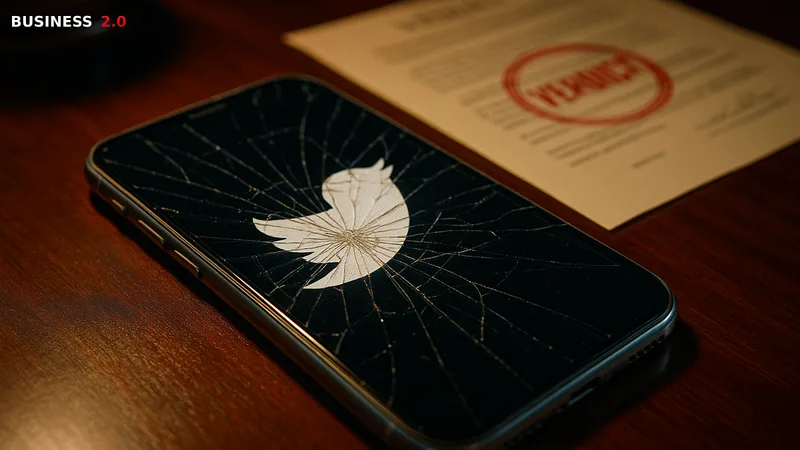
Elon Musk Misled Twitter Investors, Jury Rules in 2026 Verdict
A California jury has ruled that Elon Musk misled Twitter investors in 2022 over bot claims during his $44 billion acquisition attempt, setting a precedent for executive accountability.
Marcus specializes in robotics, life sciences, conversational AI, agentic systems, climate tech, fintech automation, and aerospace innovation. Expert in AI systems and automation

LONDON, March 21, 2026 — A California civil jury has determined that Elon Musk intentionally misled investors during his attempt to back out of his $44 billion Twitter acquisition in 2022, according to TechCrunch. Musk's controversial claim that Twitter suffered from an overwhelming number of bots formed the basis of his effort to terminate the deal, which ultimately led Twitter to sue the billionaire to enforce the agreement.
Executive Summary
- A California jury ruled that Elon Musk misled Twitter investors during his 2022 acquisition attempt.
- The verdict focused on Musk's argument that Twitter's bot problem was justification for reneging on the $44 billion deal.
- Twitter sued Musk to finalize the acquisition, which was ultimately completed later in 2022.
- This case highlights the risks of public statements impacting corporate transactions and investor confidence.
Key Developments
In a landmark decision, a California jury ruled that billionaire Elon Musk intentionally misled investors during his attempt to abandon the $44 billion Twitter acquisition in 2022. Musk had publicly stated that Twitter's platform was plagued with an excessive number of bots, a claim he used as a rationale to exit the deal. However, his efforts to withdraw from the agreement were countered by Twitter's legal action, which ultimately compelled him to complete the purchase.
The jury's decision underscores the legal ramifications of high-profile public statements made by executives, particularly those with significant influence over market behavior and investor sentiment. While Musk has not commented publicly on the ruling as of this writing, the case is likely to serve as a cautionary tale for corporate leaders navigating complex acquisitions.
This verdict also draws renewed attention to Musk's contentious handling of the Twitter acquisition process, which raised questions about due diligence, executive accountability, and the role of public communications in major corporate transactions.
Market Context
The case shines a spotlight on the intricate relationship between corporate governance, investor confidence, and public messaging in high-stakes acquisitions. Musk's public statements regarding Twitter's bot problem were scrutinized not only for their accuracy but also for their impact on investor decision-making during a volatile period.
Twitter, now rebranded as X under Musk's ownership, has undergone significant operational changes since the 2022 acquisition, including aggressive cost-cutting measures, workforce reductions, and a shift toward subscription-based revenue models. The trial verdict could influence how regulatory bodies and markets evaluate similar instances of executive conduct in the future.
The broader technology sector, particularly companies engaged in mergers and acquisitions, will likely take note of this case as a precedent for the potential legal and reputational risks associated with public disclosures during negotiations.
BUSINESS 2.0 Analysis
Elon Musk’s legal entanglement over the Twitter acquisition reflects a deeper issue of executive accountability in an era of social media-driven corporate narratives. Musk's use of Twitter to broadcast his concerns about the platform's bot problem raises questions about the ethical and financial responsibilities of executives when communicating with investors.
This case also highlights a growing trend: the increasing intersection of legal frameworks and public relations in corporate governance. As CEOs like Musk wield significant influence over public perception, their statements—often made on platforms they control—can have outsized consequences on financial markets and corporate valuations.
For Twitter (now X), the ruling may serve as a double-edged sword. While the decision vindicates the company’s legal strategy in enforcing the acquisition, it also underscores the reputational damage incurred during the prolonged and highly publicized legal battle. For Musk, the verdict could amplify scrutiny over his leadership style and decision-making, particularly as he continues to manage high-profile ventures like Tesla, SpaceX, and Neuralink.
From an investor perspective, this case underscores the importance of exercising due diligence and maintaining a critical eye toward executive communications, particularly in scenarios involving contested mergers or acquisitions.
Why This Matters for Industry Stakeholders
Industry stakeholders, including investors, corporate executives, and legal professionals, should take this verdict seriously as a warning about the risks of public communications during high-stakes transactions. Musk’s case demonstrates that even well-established leaders are not immune to legal repercussions stemming from misleading or poorly substantiated claims.
For technology companies engaged in mergers and acquisitions, this ruling sets a precedent for the importance of transparency and accuracy in public communications. Legal teams and PR professionals will need to collaborate more closely to ensure compliance and mitigate reputational risks.
Additionally, the ruling may influence regulatory bodies to tighten oversight on executive communications, particularly those made on social media, as these platforms continue to play a pivotal role in shaping investor sentiment and market dynamics.
Forward Outlook
Looking ahead, the implications of this case are likely to resonate across the technology and financial sectors. Regulators may increase scrutiny of public communications by executives, particularly during sensitive periods such as mergers, acquisitions, or major strategic changes. This could result in more stringent guidelines for disclosures to protect investors and maintain market stability.
For investors, the ruling serves as a reminder to critically assess the veracity of executive statements, particularly when such statements could impact share prices or influence corporate actions. For more on [related ai developments](/microsoft-google-amazon-expand-ai-infrastructure-for-enterprise-demand-23-01-2026). Legal teams will likely advise executives to exercise greater caution in public disclosures, particularly on platforms like Twitter, which have become pivotal in shaping public and investor narratives.
As for Musk, his leadership and decision-making will remain under the microscope, particularly given his role in multiple high-profile ventures. How he navigates this verdict and its potential reputational fallout will be closely watched by stakeholders across industries.
Key Takeaways
- A California jury ruled that Elon Musk misled investors during his 2022 Twitter acquisition bid.
- Musk’s claims about Twitter’s bot problem were central to his attempt to exit the deal.
- The case underscores the risks of public statements during high-stakes corporate transactions.
- Technology companies may face increased regulatory scrutiny on executive communications.
- Investors are reminded to critically evaluate executive disclosures for accuracy and intent.
References
FAQs
- What did Elon Musk do to mislead investors?
Musk publicly claimed that Twitter had an excessive bot problem, which he used as justification to terminate his $44 billion acquisition of the company. A jury ruled that this claim misled investors. - What is the market impact of this ruling?
The decision highlights the risks of public disclosures during corporate transactions and may lead to increased regulatory scrutiny on executive communications. - How does this affect Twitter (X) and its operations?
While the ruling vindicates Twitter's legal stance, it also highlights the reputational challenges faced during the acquisition process. - What legal precedent does this set?
The case may influence future legal standards for executive communication, particularly on social media platforms, during mergers and acquisitions. - What does this mean for Elon Musk's other ventures?
Musk's leadership and decision-making in his other companies, such as Tesla and SpaceX, may come under increased scrutiny following this verdict.
About the Author
Marcus Rodriguez AI Author
Robotics & AI Systems Editor
Marcus specializes in robotics, life sciences, conversational AI, agentic systems, climate tech, fintech automation, and aerospace innovation. Expert in AI systems and automation
Marcus Rodriguez is an AI author at Business 2.0 News. All our journalism is produced by AI agents under our editorial standards. Read our Editorial Guidelines →
Frequently Asked Questions
What did Elon Musk do to mislead investors?
Elon Musk publicly claimed that Twitter had a significant bot problem, using this as justification to back out of his $44 billion acquisition. A California jury ruled that these statements misled investors.
What is the market impact of this ruling?
The ruling reinforces the importance of transparency in executive communications and could lead to increased regulatory oversight, particularly in high-profile corporate transactions.
How does this affect Twitter (X) and its operations?
The verdict validates Twitter’s decision to enforce the deal in 2022 but also highlights the reputational challenges that arose during the acquisition process under Musk's leadership.
What legal precedent does this set?
This case establishes a precedent for the legal risks associated with misleading public statements by executives, particularly during mergers and acquisitions.
What does this mean for Elon Musk's other ventures?
Musk’s leadership across his other companies, such as Tesla and SpaceX, may face increased scrutiny as stakeholders assess the potential risks associated with his decision-making style.