Enterprise Robotics Shifts From Pilots to Production Infrastructure
As industrial and service robotics mature, enterprises are moving beyond proof-of-concept deployments toward integrated production systems. The shift is reshaping vendor competition, capital allocation, and operational strategy across manufacturing, logistics, and healthcare.
Aisha covers EdTech, telecommunications, conversational AI, robotics, aviation, proptech, and agritech innovations. Experienced technology correspondent focused on emerging tech applications.
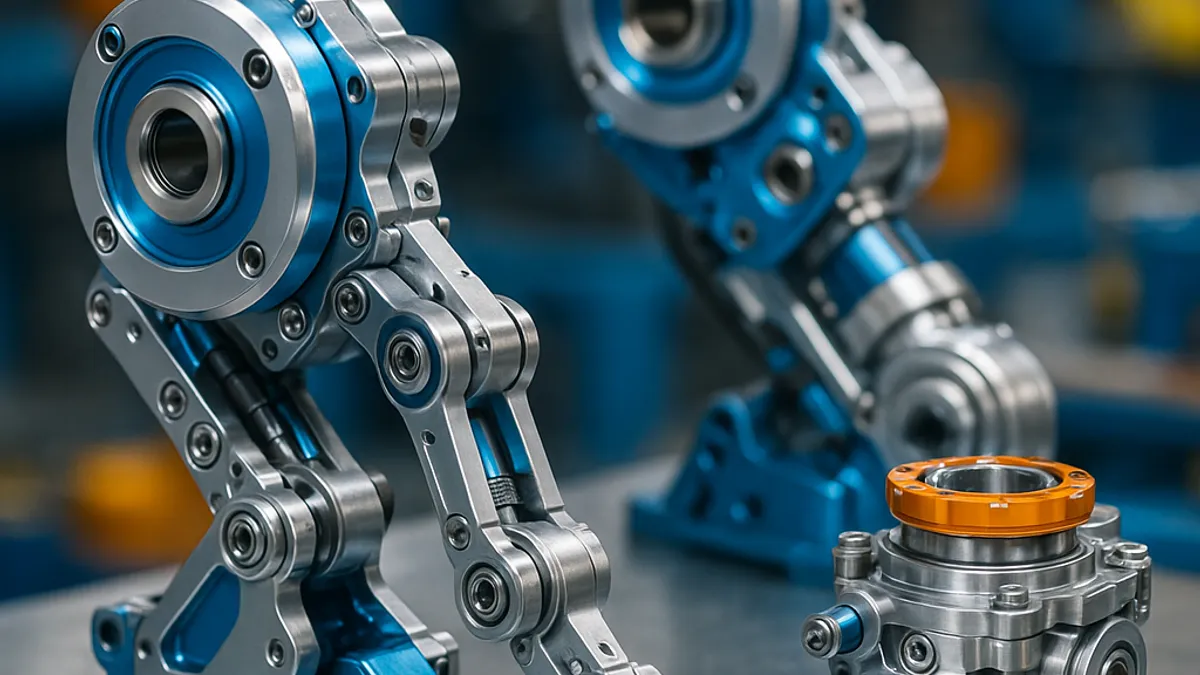
LONDON — May 23, 2026 — Enterprise robotics is entering a structural transition as buyers move from isolated pilots to fleet-scale deployments, reshaping how vendors, integrators, and operators approach the market.
Executive Summary
- Robotics adoption is shifting from departmental pilots to enterprise-wide production deployments across logistics, manufacturing, and healthcare.
- The integration of foundation models with robotic control systems is compressing development cycles for perception and manipulation tasks.
- Humanoid and general-purpose platforms remain capital-intensive but are gaining traction in structured industrial environments.
- Vendor differentiation is moving from hardware specifications toward software stacks, fleet orchestration, and data infrastructure.
- Regulatory frameworks in the EU and US are beginning to address safety, liability, and workforce implications of large-scale robotic deployment.
- Market dynamics in Robotics continue to evolve with accelerating enterprise adoption
- Leading vendors are differentiating through integration capabilities and security certifications
- Regulatory compliance requirements are shaping product development priorities
- Enterprise buyers are prioritizing total cost of ownership alongside feature innovation
Key Takeaways
- Software and AI layers, not hardware, are emerging as the primary basis of competitive advantage in enterprise robotics.
- Total cost of ownership — not unit price — determines deployment viability at scale.
- Workforce redesign and change management remain the most underestimated implementation challenges.
- Buyers are consolidating around platforms with proven fleet management and integration capabilities.
Reported from London — In a May 2026 industry briefing, analysts tracking the sector noted that the robotics conversation has matured beyond demonstrations of dexterity toward operational economics: throughput per dollar, mean time between interventions, and integration cost with existing warehouse management or manufacturing execution systems. For our esg market analysis, According to the International Federation of Robotics, the installed base of industrial robots has continued to expand, with Asia-Pacific accounting for the majority of new installations.
Market Structure and Competitive LandscapeThe enterprise robotics market is segmenting along three layers: hardware platforms, autonomy software, and orchestration infrastructure. Established industrial vendors including ABB, Fanuc, KUKA, and Yaskawa continue to dominate fixed industrial automation, while newer entrants are competing in mobile manipulation, humanoid form factors, and AI-driven perception.
In logistics, Amazon Robotics operates one of the largest mobile robot fleets globally, while Symbotic and Locus Robotics have built businesses around warehouse automation for third-party operators. In the humanoid category, Figure, Agility Robotics, Boston Dynamics, and Tesla are pursuing different paths toward general-purpose deployment, with early commercial pilots concentrated in automotive manufacturing and structured logistics.
"The economics of robotics deployment have fundamentally changed as foundation models reduce the engineering cost of new skills," said Marc Raibert, founder of Boston Dynamics, in commentary referenced by IEEE Spectrum. According to Gartner analyst commentary, smart robots will be deployed in more than half of large enterprise warehouses within the next several years, up from a small fraction today.
Key Market Trends for Robotics in 2026| Segment | Primary Use Case | Maturity | Key Vendors |
|---|---|---|---|
| Industrial arms | Welding, assembly, palletizing | Mature | Fanuc, ABB, KUKA, Yaskawa |
| Autonomous mobile robots | Warehouse fulfillment | Scaling | Amazon Robotics, Locus, Symbotic |
| Surgical and medical | Minimally invasive procedures | Scaling | Intuitive Surgical, Medtronic |
| Humanoid platforms | General manipulation pilots | Early | Figure, Agility, Tesla, 1X |
| Autonomous vehicles | Ride-hail, freight | Regional rollout | Waymo, Aurora, Zoox |
| Agricultural robotics | Harvesting, weeding, monitoring | Scaling | John Deere, Carbon Robotics |
The convergence of large multimodal models with robotic control represents the most consequential technical shift in the sector. Vision-language-action models — trained on combinations of internet-scale image and text data alongside teleoperated robot demonstrations — are reducing the engineering effort required to teach robots new tasks. Google DeepMind has published research on robotics foundation models, and Nvidia has positioned its Isaac platform as the infrastructure layer for robot training, simulation, and deployment. The approach aligns with frameworks recommended by leading consultancies. As highlighted in annual shareholder communications, that market conditions support continued investment.
"The bottleneck in robotics has moved from hardware capability to data and software," noted Rev Lebaredian, Vice President of Omniverse and Simulation Technology at Nvidia, in remarks reported by Reuters. For energy sector intelligence, Synthetic data generation and physics-accurate simulation are allowing developers to train policies on millions of virtual scenarios before deployment, compressing iteration cycles that previously required months of physical testing.
This shift has implications for vendor strategy. Hardware-only differentiation is eroding as contract manufacturers in Asia produce capable platforms at falling prices. The defensible layer is increasingly the software stack — perception, planning, fleet orchestration, and the data pipelines that improve policies over time. These developments connect to broader Robotics trends reshaping the industrial automation landscape.
Enterprise Adoption Patterns and ROI RealitiesBased on analysis of enterprise deployments across logistics, automotive, and healthcare verticals, several adoption patterns are emerging. First, buyers are increasingly demanding integration with existing enterprise systems — warehouse management, manufacturing execution, and ERP platforms — rather than standalone robotic islands. Second, total cost of ownership is displacing unit price as the primary procurement metric, with service contracts, software updates, and integration costs often exceeding hardware costs over a five-year horizon.
"Enterprises that succeed with robotics treat it as an operational transformation, not a technology purchase," observed Susan Lund, a researcher who has written for the McKinsey Global Institute on automation and workforce transitions. Workforce redesign — including reskilling, new roles for robot supervisors, and changes to safety protocols — remains the most underestimated implementation challenge, according to enterprise CIOs surveyed by major research firms.
"We treat robotic fleets as production infrastructure with the same reliability expectations as any other mission-critical system," said a manufacturing operations executive cited in Boston Consulting Group research on Industry 4.0 deployments. Figures cited across this analysis are drawn from public industry reports and cross-referenced with multiple independent analyst estimates.
Competitive Landscape
| Company | Primary Focus | Differentiator |
|---|---|---|
| Fanuc | Industrial arms | Installed base, reliability |
| Boston Dynamics | Mobile and humanoid | Locomotion research depth |
| Symbotic | Warehouse systems | End-to-end logistics integration |
| Figure | Humanoids | Foundation model partnerships |
| Nvidia | Robotics platform | Simulation and AI infrastructure |
| Intuitive Surgical | Medical robotics | Surgeon network and procedural data |
As deployment scales, regulatory attention is intensifying. For related cyber security coverage, The European Union's AI Act includes provisions relevant to autonomous systems, and safety standards bodies including ISO and IEC continue to update frameworks for collaborative robots and mobile platforms. Liability allocation between robot manufacturers, integrators, and operators remains an unsettled area in many jurisdictions.
"The regulatory environment for autonomous systems is still being written, and enterprises deploying at scale need to engage with policymakers proactively," noted a senior analyst at Forrester in commentary on industrial automation governance. Cybersecurity is also emerging as a board-level concern, as networked robotic fleets create new attack surfaces.
OutlookThe robotics sector over the next several years will be defined less by demonstrations of new capabilities and more by the operational discipline required to run fleets reliably at scale. Vendors that combine credible hardware with strong software, fleet management, and integration services are likely to consolidate market share. Humanoid platforms remain a longer-dated bet whose commercial trajectory depends on closing the gap between controlled demonstrations and unstructured environments.
For enterprise buyers, the strategic question is no longer whether to adopt robotics but how to architect deployments that scale economically and integrate with broader digital infrastructure. The winners will be organizations that treat robotics as a long-term operational capability rather than a discrete technology procurement.
Related Coverage
Disclosure: Business 2.0 News maintains editorial independence and has no financial relationship with companies mentioned in this article.
Sources include company disclosures, regulatory filings, analyst reports, and industry briefings.
Related CoverageAbout the Author
Aisha Mohammed
Technology & Telecom Correspondent
Aisha covers EdTech, telecommunications, conversational AI, robotics, aviation, proptech, and agritech innovations. Experienced technology correspondent focused on emerging tech applications.
Frequently Asked Questions
What is driving the shift from robotics pilots to enterprise-wide production deployments?
Several factors are converging to push robotics from experimental pilots into production infrastructure. Foundation models and improved simulation tools have reduced the engineering cost of teaching robots new tasks, while hardware prices have continued to decline. Enterprises are also under pressure from labor availability constraints in logistics and manufacturing. Crucially, fleet management software has matured to the point where operators can reliably run hundreds of robots across multiple facilities with predictable economics, making scaled deployment a viable operational strategy rather than a research exercise.
How are AI foundation models changing the robotics technology stack?
Vision-language-action models trained on combinations of internet-scale data and robot demonstrations are reducing the time and engineering effort required to develop new robotic skills. Instead of programming each task explicitly, developers can fine-tune general-purpose models for specific applications. This shift is moving competitive advantage from hardware specifications toward software, data pipelines, and simulation infrastructure. Companies like Nvidia, Google DeepMind, and several humanoid robotics startups are investing heavily in this layer, recognizing that the data and policy infrastructure may prove more defensible than the physical platforms themselves.
Which industries are showing the strongest robotics adoption in 2026?
Logistics and warehousing remain the largest growth areas for mobile robotics, driven by e-commerce volume and labor constraints. Automotive manufacturing continues to be a heavy user of both traditional industrial arms and emerging humanoid platforms for structured assembly tasks. Healthcare, particularly surgical robotics and laboratory automation, is expanding steadily. Agriculture is seeing rapid adoption of autonomous equipment for harvesting and crop monitoring. Construction and last-mile delivery remain more experimental, with deployment economics still challenging outside structured environments and pilot programs.
What are the most common challenges enterprises face when scaling robotic deployments?
Integration with existing enterprise systems — warehouse management, manufacturing execution, and ERP platforms — is consistently cited as the most underestimated challenge. Total cost of ownership often exceeds initial hardware budgets once service contracts, software updates, facility modifications, and training are included. Workforce redesign, including reskilling existing staff and creating new supervisory roles, requires significant change management investment. Cybersecurity concerns are also rising as networked robotic fleets create new attack surfaces, and regulatory uncertainty around liability and safety standards complicates planning for multi-jurisdictional deployments.
What should enterprise buyers evaluate when selecting a robotics platform?
Buyers should look beyond unit hardware specifications to evaluate the full software and service stack, including fleet management capabilities, integration tooling for existing enterprise systems, and the vendor's data pipeline for continuous policy improvement. Total cost of ownership over a five to seven year horizon — encompassing maintenance, software updates, and integration — typically matters more than initial purchase price. Vendor financial stability, the ecosystem of certified integrators, and demonstrated deployments at comparable scale in similar industries are also critical factors that distinguish viable long-term partners from early-stage suppliers.
