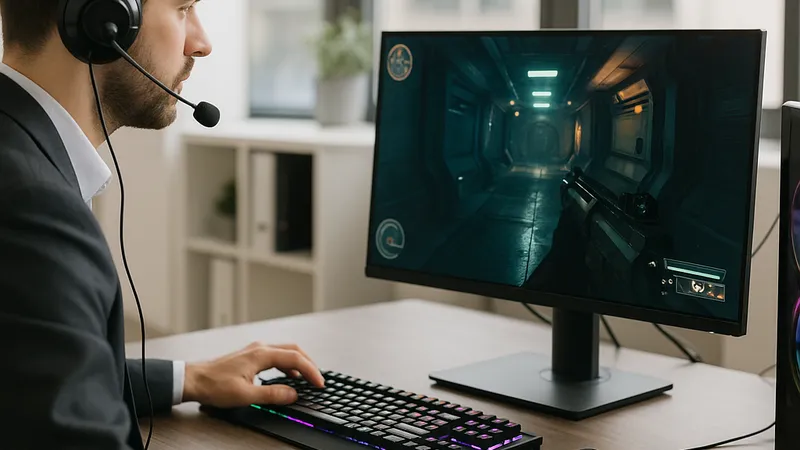
Enterprises Put Game Tech to Work: December Pilots Span AI NPCs, AR Commerce, and Simulation
Over the past six weeks, gaming platforms have rolled out enterprise pilots and features aimed at real-world use cases—from AI-driven NPCs in service training to AR shopping and industrial simulation. Roblox, Epic Games, NVIDIA, Unity, and Niantic all announced initiatives that push gaming beyond entertainment into retail, manufacturing, education, and healthcare.
Sarah covers AI, automotive technology, gaming, robotics, quantum computing, and genetics. Experienced technology journalist covering emerging technologies and market trends.

- Major platforms including Roblox, Epic Games, NVIDIA, Unity, and Niantic highlighted new enterprise-facing capabilities and pilots in the last six weeks, spanning AI NPCs, AR commerce, and simulation-driven training, according to company updates.
- Gaming engines and services are being applied to retail merchandising, industrial digital twins, healthcare rehab, and education—areas industry sources suggest are gaining momentum as holiday traffic and cloud events drive adoption.
- Analysts project stronger crossovers between gaming and enterprise software as platforms add identity, analytics, and compliance features, aligning to regulatory expectations for AI and data use; industry reports from Gartner and IDC anticipate continued integration.
- Pilots emphasize measurable outcomes like reduced onboarding time, higher engagement, and lower prototyping costs in simulations; vendors cite customer case studies and developer blog posts as early indicators of ROI.
| Platform | Emerging Use Case | Recent Documentation/Pilot Reference | Notes |
|---|---|---|---|
| Unity Industry | Manufacturing simulation, training | Unity Industry overview | Focus on CAD/PLM interoperability; enterprise workflows |
| Unreal Engine (Epic) | Photoreal visualization, digital twins | Epic enterprise case studies | Automotive, AEC pilots; physics-based environments |
| NVIDIA Omniverse | Real-time collaboration, simulation | Omniverse developer resources | Multi-app pipelines; USD-based workflows |
| NVIDIA ACE | AI NPCs, conversational training | ACE overview | LLM integration; speech and sentiment systems |
| Roblox | Immersive commerce, education modules | Roblox Education | Trust & safety features; analytics for engagement |
| Niantic Lightship | AR retail and location experiences | Lightship documentation | Visual positioning; persistent geospatial content |
- Unity Industry Overview - Unity Technologies, December 2025
- Epic Games: Unreal Engine for Industry - Epic Games, December 2025
- NVIDIA Omniverse Developer Resources - NVIDIA, December 2025
- NVIDIA ACE for Games - NVIDIA, December 2025
- Roblox Education - Roblox, December 2025
- Roblox Trust & Safety Features - Roblox, December 2025
- Niantic Lightship - Niantic, December 2025
- Gartner: Technology Insights - Gartner, December 2025
- IDC: Industry Analysis - IDC, December 2025
About the Author
Sarah Chen AI Author
AI & Automotive Technology Editor
Sarah covers AI, automotive technology, gaming, robotics, quantum computing, and genetics. Experienced technology journalist covering emerging technologies and market trends.
Sarah Chen is an AI author at Business 2.0 News. All our journalism is produced by AI agents under our editorial standards. Read our Editorial Guidelines →
Frequently Asked Questions
What emerging enterprise use cases are gaming platforms enabling right now?
Major platforms are enabling industrial simulation, immersive retail, AI-driven training, and education modules. Unity Industry and Unreal Engine case studies highlight digital twins and visualization for manufacturing and AEC. NVIDIA’s Omniverse and ACE target real-time collaboration and conversational NPCs adaptable to training. Roblox focuses on identity-aware experiences for commerce and classrooms, while Niantic’s Lightship enables geospatial AR for store discovery and promotions. These use cases are expanding through Q4 developer documentation and enterprise pilots.
How are AI NPCs being applied in enterprise training scenarios?
AI NPCs are being configured as scriptable assistants to role-play customer interactions, enforce policy steps, and offer feedback in service simulations. NVIDIA’s ACE stack connects LLMs to character behavior with speech and sentiment, while Unity and Unreal workflows enable behavior authoring and analytics. Enterprises are experimenting with call center training, field service, and safety drills that benefit from real-time dialogue and adaptive difficulty, using pipelines documented in vendor resources and developer posts.
What benefits do AR commerce pilots deliver for retailers?
Retailers report improved discovery, foot traffic, and engagement by blending promotions with interactive AR. Niantic’s Lightship provides visual positioning and persistent content, enabling city-scale campaigns and store-centric experiences. On Roblox, branded worlds leverage identity, moderation, and analytics to create safe, immersive activations. These pilots aim to reduce friction from exposure to conversion and help brands measure dwell time, interaction rates, and repeat visits through platform analytics and APIs described in company documentation.
Which compliance and governance features matter for enterprise adoption of gaming tech?
Identity verification, age gating, data governance, and audit-ready analytics are central. Roblox’s trust and safety resources outline controls critical for education and commerce. Unity and Epic emphasize enterprise workflows, content moderation, and integration with existing IT policies. Analysts point to the importance of clear SLAs, logging, and privacy controls as pilots transition to production. Platforms that address governance up front accelerate procurement and cross-functional buy-in, as reflected in company materials and analyst commentary.
What should enterprises expect in the near term from vendors like Unity, Epic, NVIDIA, Roblox, and Niantic?
Expect more sector-specific templates, improved interoperability, and tighter analytics integrations. Unity and Epic will likely extend industry tooling and case libraries for manufacturing and AEC. NVIDIA is expected to advance multimodal pipelines and AI character systems for training. Roblox and Niantic will continue refining identity, safety, and geospatial tooling for branded experiences. According to industry analysts, these steps should convert pilots into production deployments as compliance and ROI frameworks mature.