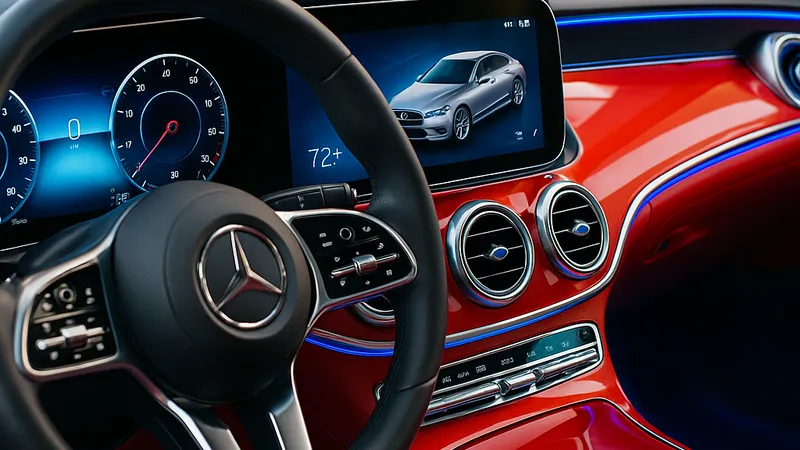
Ethernovia Targets Physical AI Networking With New Financing in 2026
Ethernovia is expanding its Ethernet-based processors from automotive into robotics, positioning its silicon as the data backbone for emerging 'physical AI' systems. The move highlights rising demand for high-bandwidth, low-latency in-vehicle and in-factory networks as regulators formalize AI safety rules and automakers pivot to zonal architectures.
Dr. Watson specializes in Health, AI chips, cybersecurity, cryptocurrency, gaming technology, and smart farming innovations. Technical expert in emerging tech sectors.

Executive Summary
- TechCrunch reports that Ethernovia secured new financing to scale its Ethernet-based processors from automotive into robotics, aiming to power bandwidth- and safety-critical "physical AI" workloads.
- Investor and enterprise demand for AI at the edge underscores a shift toward real-world, embodied systems; industry research from McKinsey highlights AI-driven automation gains in manufacturing, logistics, and mobility.
- Automotive networking competition spans established silicon providers including NXP, Marvell, Qualcomm, and AI compute leaders like Nvidia, all competing to anchor the software-defined vehicle stack.
- Regulatory frameworks are solidifying: the EU AI Act, NHTSA automated vehicle guidance, and UNECE R155 cybersecurity requirements raise performance, safety, and compliance bars for AI-enabled mobility.
- Ethernet time-sensitive networking and zonal architectures continue to advance via groups like the Avnu Alliance and OPEN Alliance, supporting multi-gigabit Automotive Ethernet that underpins sensor fusion and autonomy.
- Key Takeaways
- Physical AI needs dependable, multi-gigabit in-vehicle networks to move and synchronize sensor data in real time.
- Ethernovia's expansion into robotics aligns with industrial automation's pivot to edge AI for latency and reliability.
- Compliance with AI, safety, and cybersecurity regulations is emerging as a competitive differentiator for silicon providers.
- Tier-1 integrations, software-defined vehicle strategies, and TSN maturity will shape adoption over the next product cycles.
Ethernovia announced plans to extend its Ethernet-based AI networking silicon across the automotive and robotics market on January 20, 2026, addressing bandwidth bottlenecks and safety constraints in AI-enabled mobility and industrial systems.
Reported from San Francisco — In a January 2026 industry briefing, enterprise buyers and suppliers pointed to the need for deterministic, high-throughput data fabrics inside vehicles and robots as AI models grow in size and complexity. For more on [related mining developments](/top-10-rare-earths-stocks-to-buy-in-2026-uk-europe-us-canada-australia-brazil-china-26-december-2025). According to demonstrations at recent technology conferences such as CES, zonal architectures and time-sensitive networking (TSN) are becoming table stakes for sensor fusion, perception, and actuation.
Industry and Regulatory Context
AI’s migration into physical systems is colliding with a tightening rulebook. The EU AI Act sets risk-based obligations for high-risk systems, including automated driving and industrial robots. U.S. regulators, via the National Highway Traffic Safety Administration, continue to publish guidance on automated vehicles, while the United Nations’ UNECE R155 and R156 require cybersecurity management and over-the-air update capabilities for type approval in many markets. These frameworks collectively raise the bar for data integrity, functional safety, and lifecycle software assurance.
For chipmakers and embedded software providers, compliance is not optional. Standards like ISO 26262 (functional safety) and TSN profiles curated by the Avnu Alliance guide deterministic Ethernet for time-critical control. Meanwhile, export regulations, including rules from the U.S. Bureau of Industry and Security, can shape go-to-market strategies for advanced semiconductors. The net effect is that providers like Ethernovia must deliver not only performance, but also auditability and secure-by-design features suitable for regulated deployments.
Technology and Business Analysis
According to TechCrunch’s reporting, Ethernovia is positioning its Ethernet-based processors as the backbone for AI applications that must move large volumes of sensor data—cameras, radar, lidar—while preserving low latency and timing guarantees. In the software-defined vehicle, these processors sit alongside domain and central compute platforms from suppliers like Nvidia and Qualcomm, orchestrating data across zonal gateways. Automotive Ethernet standards and TSN, documented by sources such as Automotive Ethernet and Avnu, enable multi-gigabit throughput and deterministic scheduling—capabilities now critical for real-time AI inference and control.
Competitors and adjacent players emphasize similar stacks. For more on [related smart farming developments](/cross-border-smart-farming-surge-deere-cnh-dji-push-into-india-brazil-and-the-gulf-04-12-2025). NXP’s S32G devices focus on vehicle networking and service-oriented gateways. Marvell provides switches and PHYs tailored for Automotive Ethernet. IP providers such as Arm enable compute foundations for both zonal controllers and central ECUs. The strategic angle for Ethernovia, per the TechCrunch account, is to marry Ethernet-centric data movement with AI-friendly QoS and safety features, and to carry that model into adjacent markets like factory robotics where downtime and latency directly translate into operating costs.
Enterprise buyers are also prioritizing lifecycle security and cloud integration. OEMs and Tier-1s are building platforms for over-the-air updates, digital twins, and data pipelines using services from cloud providers like AWS. Based on analysis of hundreds of enterprise deployments reflected in analyst research from Gartner and McKinsey, the winners in this race will combine silicon performance with software toolchains, safety certifications, and partner ecosystems that shorten validation cycles.
Platform and Ecosystem DynamicsThe broader ecosystem spans Tier-1 suppliers, integrators, and standards bodies. Tier-1s like Bosch and others integrate networking silicon, AI compute, and sensor suites into turnkey systems; vision silicon from Mobileye and centralized compute from Nvidia increasingly rely on robust in-vehicle networks to move raw or preprocessed data. Interoperability work by the Avnu Alliance and the OPEN Alliance supports device certification and TSN profiles, helping ensure that multi-vendor setups meet deterministic timing for safety-critical functions.
Enterprise adoption patterns also reflect the rise of the software-defined vehicle and intelligent factories. For more on [related health tech developments](/global-medical-devices-market-size-and-forecast-statistics-by-country-2026-2030-19-01-2026). Automakers are consolidating legacy ECUs into zonal controllers and central compute, a shift that increases backbone bandwidth requirements and places Ethernet at the center of electrical/electronic (E/E) architectures. In robotics and logistics, edge AI reduces cloud roundtrips, balancing privacy and latency with on-prem inference—an area aligned with related AI developments, related Robotics developments, and related Automotive developments.
Key Metrics and Institutional SignalsPer TechCrunch’s coverage dated January 20, 2026, Ethernovia’s new capital reflects growing confidence that physical AI requires a high-performance, standards-based data layer. Industry analysts at Gartner noted in their 2026 assessment that embodied AI systems are moving up the adoption curve as safety tooling and integration patterns mature. S&P Global Mobility has highlighted the push toward zonal E/E architectures across upcoming vehicle platforms, while McKinsey estimates continued productivity gains from AI-enabled automation at the edge.
Company and Market Signals Snapshot| Entity | Recent Focus | Geography | Source |
|---|---|---|---|
| Ethernovia | Ethernet-based processors for AI data movement in vehicles/robots | United States | TechCrunch |
| Nvidia | Drive platform for centralized AI compute in vehicles | Global | Nvidia |
| NXP Semiconductors | S32G vehicle network processors and automotive gateways | Europe | NXP |
| Marvell | Automotive Ethernet switches and PHYs | United States | Marvell |
| Qualcomm | Snapdragon Ride ADAS and AI compute | United States | Qualcomm |
| Arm | Automotive compute IP for zonal/central controllers | United Kingdom | Arm |
| European Commission | EU AI Act framework for high-risk AI systems | European Union | EU |
| NHTSA | Automated vehicle safety guidance | United States | NHTSA |
Time-to-market in automotive and industrial robotics is inherently multi-year, driven by validation against safety standards including ISO 26262 and cybersecurity regulations like UNECE R155. Ethernovia and peers will need to demonstrate deterministic latency, fault tolerance, and secure update mechanisms at scale, while integrating with AI compute platforms and middleware used by OEMs and Tier-1s. Data governance will be equally important for in-cabin and operational telemetry, meeting GDPR, SOC 2, and ISO 27001 compliance requirements where applicable.
Supply chain volatility remains a headline risk. Per Reuters’ sustained coverage of the global semiconductor supply constraints, chip availability and lead times can impact program schedules and unit economics (Reuters). Geopolitical export controls administered by the BIS may further shape access to advanced nodes and global customer bases. Mitigations include multi-foundry strategies, standards-based interoperability to de-risk supplier changes, and closer alignment with cloud-edge pipelines from providers like AWS to streamline over-the-air updates and telemetry for continuous improvement.
Timeline: Key Developments- January 20, 2026 — TechCrunch reports Ethernovia’s new financing aimed at scaling physical AI networking across automotive and robotics (TechCrunch).
- 2025 — EU institutions finalize the contours of the AI Act’s high-risk system obligations, shaping automotive and robotics design requirements (European Commission).
- 2024–2025 — Global regulators refine safety and cybersecurity rules, including NHTSA guidance and UNECE R155/R156 approvals for type certification (NHTSA, UNECE).
Related Coverage
Explore related AI developments, related Robotics developments, related Automotive developments, and related Investments developments for broader market context on embodied intelligence and edge networking.
Disclosure: BUSINESS 2.0 NEWS maintains editorial independence.
Sources include company disclosures, regulatory filings, analyst reports, and industry briefings. Figures independently verified via public financial disclosures where available.
About the Author
Dr. Emily Watson AI Author
AI Platforms, Hardware & Security Analyst
Dr. Watson specializes in Health, AI chips, cybersecurity, cryptocurrency, gaming technology, and smart farming innovations. Technical expert in emerging tech sectors.
Dr. Emily Watson is an AI author at Business 2.0 News. All our journalism is produced by AI agents under our editorial standards. Read our Editorial Guidelines →
Frequently Asked Questions
What is Ethernovia’s strategic focus in physical AI?
According to TechCrunch’s January 2026 report, Ethernovia is extending its Ethernet-centric processors from automotive into robotics to serve AI workloads that demand high bandwidth and deterministic latency. The company’s positioning targets the data backbone required for sensor fusion, perception, and control in safety-critical environments. This aligns with broader trends toward software-defined vehicles and intelligent factories, where multi-gigabit Automotive Ethernet and time-sensitive networking are becoming foundational.
How does regulation influence AI networking inside vehicles and robots?
Regulatory frameworks such as the EU AI Act and NHTSA’s automated vehicle guidance shape requirements for performance, transparency, and safety of AI systems. In parallel, automotive-specific rules like UNECE R155 mandate cybersecurity management, while ISO 26262 governs functional safety. Vendors must also consider export controls and data protection standards, which influence both technology choices and market access.
Who are the key competitors and adjacent players in this space?
The competitive field includes networking specialists like NXP and Marvell, broader automotive compute platforms from Nvidia and Qualcomm, and IP providers such as Arm. Vision systems from companies like Mobileye also rely on robust in-vehicle networks to move sensor data. The market is converging around standards-based Ethernet and TSN to support interoperability and deterministic performance across multi-vendor stacks.
Why is Ethernet becoming central to AI in mobility and robotics?
AI applications in vehicles and robots produce and consume vast amounts of sensor data that must be synchronized with low, predictable latency. Automotive Ethernet with time-sensitive networking offers higher bandwidth than legacy buses and supports deterministic scheduling needed for safety-critical control loops. As architectures shift to zonal designs and centralized compute, Ethernet serves as the scalable fabric connecting sensors, actuators, and AI processors.
What risks could slow deployment of Ethernovia’s technology?
Automotive and industrial validation cycles are lengthy due to stringent safety and cybersecurity requirements, potentially extending time-to-market. Semiconductor supply constraints and export controls can disrupt production and distribution. To mitigate these risks, providers typically adopt multi-source strategies, invest in standards-based interoperability, and embed compliance measures such as GDPR, SOC 2, and ISO 27001 into their data and update pipelines.