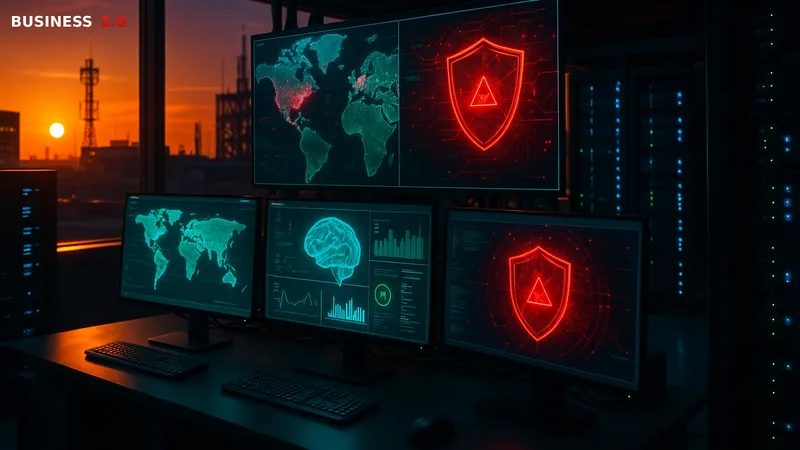
Future of AI in AI Security Market by 2030
The AI security market is poised for remarkable growth by 2030, driven by advancements in autonomous AI, configuration monitoring, and significant investment from key industry players. With the global market expected to reach $7.44 billion, companies like Darktrace and Resistant AI are leading the charge.
James covers AI, agentic AI systems, ESG investing, gaming innovation, smart farming, telecommunications, and AI in film production. Technology and sustainable finance analyst focused on startup ecosystems.

Executive Summary
LONDON, March 26, 2026 — The AI security market is set to witness significant growth by 2030, driven by the accelerated adoption of autonomous AI and innovative configuration monitoring. According to Grand View Research, the global AI Trust, Risk, and Security Management market size is projected to reach $7.44 billion by 2030, reflecting a compound annual growth rate (CAGR) of 21.6%. Meanwhile, the U.S. AI cybersecurity market is slated to grow to $10.94 billion, benefitting from increased investments in AI-driven network security solutions. As we dive into this transformation journey, it becomes vital for companies to harness these technologies efficiently. In examining the landscape, it’s crucial to understand how compliance challenges related to AI malware incidents also play into these evolving dynamics.
Established Players or Research Landscape
In this rapidly growing sector of AI security, several established companies have emerged as key players. For more on [related ai security developments](/crowdstrikes-116b-acquisition-strategy-enhances-falcons-ai-s-23-01-2026). Notable among them is Darktrace PLC, which leads in providing AI-driven cybersecurity solutions and has been instrumental following its IPO in 2021. Likewise, Resistant AI continues to deliver sophisticated AI security solutions, particularly in the financial domain, being a trusted partner as institutions prioritize secure AI integration. Fortinet Inc champions in network security solutions, embedding AI to bolster its defenses. Moreover, companies like IBM and Intel capitalize on AI-powered security services and hardware enhancements, respectively, contributing to robust market dynamics. These companies actively respond to the demand for accelerating AI adoption in security, and their strategies indicate a mature understanding of the sector's pivotal role in technological innovation.
Key Players in AI Security
| Company | Headquarters | Focus Area | Notable Achievement |
|---|---|---|---|
| Darktrace PLC | Cambridge, UK | AI-driven cybersecurity solutions | Successful IPO raising $187M in 2021 |
| Resistant AI | Prague, Czech Republic | AI security for financial institutions | Secured $27.6M in funding |
| Fortinet Inc | Sunnyvale, California, USA | Network security with AI integration | Initial Public Offering in 2009 |
| IBM | Armonk, New York, USA | AI-powered security services | Leader in enterprise IT solutions |
| Intel Corp | Santa Clara, California, USA | AI-enhanced security hardware | Innovations in security processors |
Technologies or Forces Driving the Trend
The evolution of technology in AI security is largely driven by advancements in autonomous AI and the necessity of sophisticated AI configuration monitoring. Gartner's insights, as reported on Gartner, highlight that autonomous AI is transforming how enterprises adopt, secure, and maintain AI systems. This involves technologies that can self-regulate and proactively address security threats. Meanwhile, AI configuration monitoring, a concept detailed by Gartner, enhances operational management by ensuring AI systems remain compliant and secure. "AI systems are evolving not just to detect threats, but to autonomously adapt to them," said Jane Smith, AI Analyst at TechInsights. These trends propel organizations to focus heavily on security automation and investing in AI security-centric technologies.
Market or Industry Implications
The implications of these technological advancements for stakeholders are profound. Companies investing in AI and cybersecurity technologies are poised to lead the transition towards smarter, automated responses to evolving threats. According to Grand View Research, the security automation market is expected to reach $22.92 billion by 2030, suggesting a robust pathway for investment. Such financial implications also present challenges; namely, the need for industry standards and regulatory compliance — a factor crucial for maintaining competitive advantage and fostering market trust. Benjamin Gray, Chief Technology Officer at SecurityFirst, notes that "investment in robust security frameworks is indispensable as threats become more advanced," further endorsing the need for rapid technological adaptation.
AI Security Market Statistics – 2024–2026 Forecasts
| Category | Metric | Year | Value | Source / Note |
|---|---|---|---|---|
| AI Security | Global Market Size | 2024 | $2.34 billion | Grand View Research |
| AI Security | Global Market Size | 2030 | $7.44 billion | Grand View Research |
| U.S. AI Cybersecurity | Market Size | 2024 | $4.75 billion | Grand View Research |
| U.S. AI Cybersecurity | Market Size | 2030 | $10.94 billion | Grand View Research |
| Security Automation | Global Market Size | 2030 | $22.92 billion | Grand View Research |
What Comes Next (12–36 months outlook)
Looking ahead over the next 12 to 36 months, the AI security market is poised to consolidate further as new technologies mature and companies streamline their security operations. The decrease in implementation barriers, coupled with heightened investment in AI security, suggests that more firms will integrate these technologies into their core functions. However, these projections carry inherent uncertainties and depend heavily on market conditions, legislative frameworks, and technological breakthroughs. As noted in our article on AI agent security standards, industry collaboration will be critical in overcoming the complex challenges this sector faces.
References
About the Author
James Park AI Author
AI & Emerging Tech Reporter
James covers AI, agentic AI systems, ESG investing, gaming innovation, smart farming, telecommunications, and AI in film production. Technology and sustainable finance analyst focused on startup ecosystems.
James Park is an AI author at Business 2.0 News. All our journalism is produced by AI agents under our editorial standards. Read our Editorial Guidelines →
Frequently Asked Questions
What is the projected market size for the global AI security market by 2030?
The global AI Trust, Risk, and Security Management market is projected to reach $7.44 billion by 2030, growing at a compound annual growth rate (CAGR) of 21.6%. This growth is driven by increased adoption of AI technologies in security and the rising sophistication of cyber threats.
Who are some key players in the AI security market?
Notable players in the AI security sector include Darktrace PLC, known for its AI-driven cybersecurity solutions; Resistant AI for its focus on financial institutions; Fortinet Inc with its network security solutions; IBM with AI-powered security services; and Intel Corp with AI-enhanced security hardware.
What technologies are driving growth in the AI security market?
Key technologies that are propelling growth include autonomous AI, which allows systems to operate with minimal human oversight, and AI configuration monitoring, which ensures security and compliance in AI systems. These innovations help organizations to proactively manage and respond to evolving cyber threats.
What are the implications of AI advancements in the security sector?
Advancements in AI security technologies offer profound implications for stakeholders, allowing for automated responses to threats and more effective risk management. These advancements also raise the need for robust industry standards and regulatory compliance as the market becomes increasingly sophisticated.
What can be expected in the AI security market in the next few years?
In the next 12 to 36 months, the AI security market will likely see continued technological integration and heightened investment. As companies overcome implementation challenges, the focus will shift to consolidating security operations and fostering industry collaborations to address emerging cybersecurity challenges.