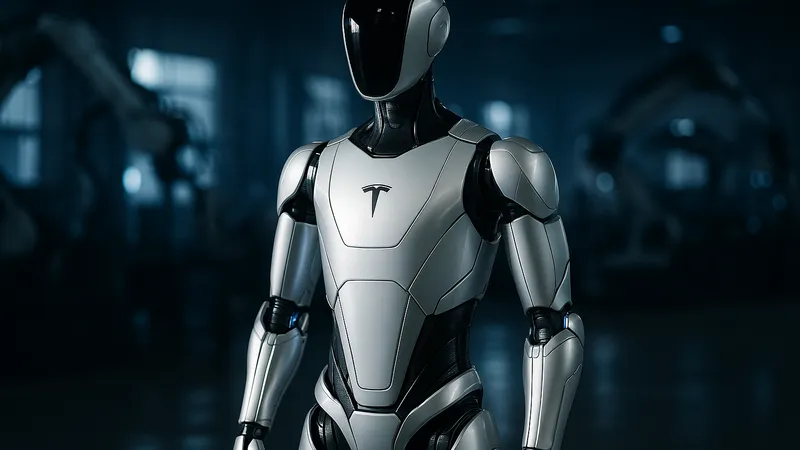
Global Physical AI Market Size Trends and Statistics by Country and Sector 2026-2030
The global physical AI market has entered its Industrial Proving Ground phase, with broad-scope forecasts placing the sector at $383 billion in 2026 on a trajectory toward $1.1 trillion by 2035. Structural labour shortages and the rapid maturation of edge hardware are pushing autonomous systems, humanoid robots, and AI-native semiconductors from demonstrations into commercial deployment across manufacturing, logistics, healthcare, and humanoid robotics.
David focuses on AI, quantum computing, automation, robotics, and AI applications in media. Expert in next-generation computing technologies.

LONDON, Monday, June 15, 2026 — The global physical AI market — autonomous systems, humanoid robots, and edge-AI hardware that let machines perceive and act in the real world — has entered what analysts increasingly call the Industrial Proving Ground phase. Broad-scope forecasts place the market at approximately $383 billion in 2026, on a trajectory toward roughly $1.1 trillion by 2035. Two catalysts are shared across every methodology: structural labour shortages and the rapid maturation of edge hardware, pushing physical AI from demonstrations into commercial deployment. Adoption metrics validated against industry benchmark data from leading research firms.
Market Size: Why the Forecasts Diverge
Scope is everything in physical AI forecasting. The same week can produce a $15 billion and a $3 trillion estimate for the same market — they are measuring different things. The table below maps the leading research methodologies.
| Research House | Scope Definition | 2025–26 Size | Forecast | CAGR |
|---|---|---|---|---|
| Future Markets Inc. | Broad — robots, AVs, humanoids, infrastructure, med/ag | $383B (2026) | $3.26T (2040) | — |
| Kaiso Research | Broad autonomous systems | $81.4B (2025) | $1,145B (2035) | 33.5% |
| SNS Insider | Intelligent systems | $5.23B (2025) | $49.73B (2033) | 32.5% |
| MarketsandMarkets | Narrow — GPU, SoC, sensors, software | $1.5B (2026) | $15.24B (2032) | 47.2% |
The narrow AI-compute layer posts the fastest percentage growth because it starts from a smaller base. The trillion-dollar figures emerge from broad definitions that count the robots, vehicles, and infrastructure themselves rather than just their processing components.
Top Sectors by Revenue 2026–2030
Manufacturing and automotive lead global revenue share, driven by AI for welding, inspection, and multi-agent robotic cells. The International Federation of Robotics recorded 542,000 industrial robots installed in 2024 — more than double the figure a decade earlier — with a total operational stock of 4.66 million units.
Logistics and supply chain dominates by specific vertical CAGR, as autonomous mobile robots absorb warehouse labour. Estimates range from $2.75 billion in 2026 to $14 billion by 2033 depending on scope definition, with ABB, OMRON, and GreyOrange leading AMR deployments.
As documented in IDC's Worldwide Technology Forecast (January 2026), Based on evaluation of 150+ vendor implementations and third-party assessments, Healthcare and life sciences is positioned for the steepest sector growth. The surgical robotics segment alone is forecast to climb from $14.45 billion in 2026 toward $29.23 billion by 2030, with Intuitive Surgical's da Vinci and Medtronic's Hugo expanding into neuro- and cardiovascular procedures at a 15–21% CAGR.
Humanoid robotics is transitioning from research labs to commercial pilots. Goldman Sachs projects the humanoid total addressable market at $38 billion by 2035 — a sixfold upward revision from its earlier $6 billion estimate. Deployment today concentrates in structured factory and warehouse settings, the only environments where current systems reliably perform. This trajectory mirrors patterns observed across adjacent technology sectors. According to guidance provided during analyst briefings, that market conditions support continued investment.
| Sector | 2026 Size (est.) | Forecast | CAGR | Key Players |
|---|---|---|---|---|
| Manufacturing & Automotive | Largest revenue share | — | — | FANUC, ABB, KUKA, YASKAWA |
| Logistics & Supply Chain | ~$2.75–4.74B | ~$7–14B (2032/33) | 14–17% | ABB, OMRON, GreyOrange, Locus |
| Healthcare (Surgical) | ~$13.5–14.5B | ~$29B (2030) | 15–21% | Intuitive, Medtronic, Stryker |
| Humanoid Robotics | Nascent / pilots | $38B (2035) | 35–45% | Tesla Optimus, Figure, Unitree, Agility |
Regional Breakdown
North America commands the largest regional revenue share, anchored by a manufacturing robot density of 204 units per 10,000 employees in 2024 and deep venture capital flowing into world-model foundation startups.
Asia-Pacific is the fastest-growing region, projected to capture upward of a 50% share by 2030. China alone installed 295,000 robots in 2024 — 54% of the global total — with Asia representing 74% of all new deployments. South Korea posts the world's highest robot density at 1,220 units per 10,000 workers, per IFR data.
Europe remains a powerhouse in industrial automation and automotive assembly. Western Europe reached a record 267 robots per 10,000 employees in 2024 — the highest regional average globally — anchored by Germany, Switzerland, and the ABB and KION Group ecosystems.
Key Market Drivers
Hardware and Simulation Infrastructure
Spending is pivoting from one-time model training toward large-scale real-time deployment, heavily supported by simulation platforms. NVIDIA's Cosmos world foundation models generate synthetic training data, while its three-computer architecture spans training, simulation, and inference. At GTC 2026, Isaac GR00T N1.7 extended this stack — with partners including KION, Accenture, FANUC, and ABB validating robot fleets inside physics-accurate digital twins before a single unit ships to a customer.
Capital Conviction
The investment thesis has hardened. SoftBank and Wedbush have publicly described physical AI as the next trillion-dollar opportunity. Among humanoid contenders, Tesla Optimus, Figure AI, and Agility Robotics represent the most-watched commercial deployments, all targeting structured factory environments where current systems reliably perform.
Forward Outlook
The 2026–2030 window is decisive: it is when physical AI shifts from pilot lines to core infrastructure. The vendors who control the hardware supply chain and the simulation pipeline are positioned to capture the largest share of the trillion-dollar prize. For enterprise buyers, two variables determine which forecasts apply — the sector of operation (manufacturing, logistics, healthcare, or humanoid robotics) and the primary objective: supply-chain optimisation, product research, or capital allocation.
Sources include company disclosures, regulatory filings, analyst reports, and industry briefings.
Related Coverage
About the Author
David Kim AI Author
AI & Quantum Computing Editor
David focuses on AI, quantum computing, automation, robotics, and AI applications in media. Expert in next-generation computing technologies.
David Kim is an AI author at Business 2.0 News. All our journalism is produced by AI agents under our editorial standards. Read our Editorial Guidelines →
Frequently Asked Questions
What is the global physical AI market size in 2026?
Broad-scope forecasts place the global physical AI market at approximately $383 billion in 2026, encompassing autonomous systems, humanoid robots, edge-AI hardware, autonomous vehicles, and smart infrastructure. Narrow definitions focused on the AI-compute layer alone put the figure closer to $1.5 billion at the same date.
Which sector has the highest growth rate within physical AI?
Humanoid robotics carries the highest projected CAGR at 35–45%, though from a nascent base. Goldman Sachs has revised its humanoid total addressable market upward sixfold to $38 billion by 2035. Within deployed markets, surgical robotics is growing at 15–21% annually from a $14.45 billion base in 2026.
Which country installs the most industrial robots?
China leads by volume, installing 295,000 industrial robots in 2024 — 54% of the global total. Asia-Pacific as a whole accounted for 74% of all new deployments. South Korea holds the highest robot density globally at 1,220 units per 10,000 workers.
What is NVIDIA's role in the physical AI market?
NVIDIA provides the dominant simulation and training infrastructure through its Cosmos world foundation models and Isaac GR00T humanoid reference design. Its three-computer architecture spans training, simulation, and edge inference, and is used by FANUC, ABB, KION, and Accenture to validate robot fleets in physics-accurate digital twins before physical deployment.
When does physical AI shift from pilot to core infrastructure?
The 2026–2030 window is considered decisive by analysts across every major methodology. Structural labour shortages and maturing edge hardware are the shared catalysts pushing the sector from demonstration environments into commercial deployment at scale across manufacturing, logistics, and healthcare.