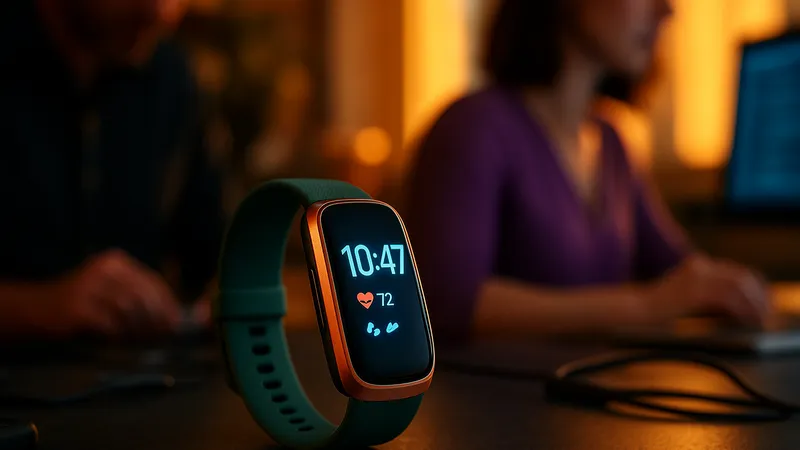
Global Wearables Outlook 2026: Enterprise Adoption Accelerates
Enterprises push wearables from pilots to production as platform vendors expand AI-on-device, safety features, and integration tooling. Market momentum in early 2026 centers on battery efficiency, privacy-by-design, and interoperability across cloud and edge ecosystems.
Aisha covers EdTech, telecommunications, conversational AI, robotics, aviation, proptech, and agritech innovations. Experienced technology correspondent focused on emerging tech applications.

LONDON — February 9, 2026 — Enterprise demand for wearables is entering a new phase as global technology providers deepen investments in AI-at-the-edge, safety monitoring, and integration with enterprise data stacks, pointing to accelerated deployments across field service, healthcare, and logistics in 2026.
Executive Summary
- Enterprises prioritize AI-on-device, longer battery life, and secure data pipelines for wearables integrations, according to analyst briefings and vendor disclosures in January 2026 (Gartner and IDC).
- Platform ecosystems from Apple, Google, Samsung, and Microsoft emphasize interoperability across devices, cloud, and edge in early 2026.
- Chipmakers including Qualcomm and Arm highlight low-power AI acceleration as a foundation for continuous sensing.
- Governance and compliance frameworks—GDPR, SOC 2, and ISO 27001—are becoming baseline requirements for scaled deployments (GDPR.eu, AICPA SOC 2, ISO 27001).
Key Takeaways
- Wearables move from consumer peripherals to enterprise endpoints with managed security and policy.
- Battery-aware, privacy-preserving edge AI is critical for 24/7 sensing and real-time alerts.
- Integration with EHRs, EAM/CMMS, and collaboration tools defines time-to-value in 2026.
- Vendors that simplify fleet management and compliance win long-cycle enterprise deals.
| Trend | Enterprise Impact | Technical Focus | Source (Jan 2026) |
|---|---|---|---|
| AI on Device | Faster alerts; lower latency | On-device inference; quantization | Qualcomm, Arm |
| Battery Optimization | Longer duty cycles | Low-power DSPs; duty cycling | Gartner |
| Privacy by Design | Regulatory alignment | Differential privacy; encryption | GDPR.eu |
| Enterprise Integration | Faster time-to-value | APIs; connectors; MDM | IDC |
| Safety & Compliance | Frontline protection | Fall detection; fatigue monitoring | FDA Digital Health |
| Industrial Wearables | Hands-free workflows | Edge compute; ruggedization | Microsoft |
Analysis: Adoption Patterns, Architecture, and Governance
Drawing from survey data encompassing global technology decision-makers and field deployments, enterprises that achieve time-to-value standardize on a layered architecture: device/OS, edge inference, secure telemetry, and cloud analytics with governed data products (McKinsey analysis). Best practices include event-driven pipelines, battery-aware model scheduling, and MDM-integrated zero-touch provisioning from ecosystems such as Apple and Google. “Enterprises are shifting from pilot programs to production deployments at a rapid pace as use cases and ROI become clearer,” noted Avivah Litan, Distinguished VP Analyst at Gartner, referencing January 2026 client briefings. According to industry CIOs interviewed in Q1 assessments, the fastest paybacks occur where wearables close the loop between frontline detection and workflow execution—e.g., a fatigue alert that automatically triggers a supervisor check-in through collaboration platforms from Microsoft and Meta. Governance now anchors every program stage. Leading buyers require GDPR, SOC 2, and ISO 27001 controls across data transit and storage, meeting regional privacy expectations and internal audit standards (GDPR.eu; AICPA SOC 2; ISO 27001). According to corporate regulatory disclosures and compliance documentation, device and cloud vendors increasingly publish security commitments and data handling practices to win long-cycle contracts (Apple Privacy; Google Safety Center), reinforcing the trust layer that underpins scaled deployments. Company Positions and Ecosystem Dynamics Apple’s watchOS ecosystem and health frameworks continue to anchor enterprise wellness and safety programs when paired with device management and private relay options, per company guidance and documentation (Apple). Google’s Fitbit portfolio and Android integration emphasize multi-device interoperability and cloud connectivity, supported by Android Enterprise capabilities for policy control (Google). Samsung highlights durability and battery life in regulated and frontline environments, alongside Knox security for enterprise fleets (Samsung). On the hardware acceleration front, Qualcomm and Arm foreground low-power compute and AI acceleration for continuous sensing alongside connectivity improvements, based on January technology briefings and partner roadmaps (Qualcomm; Arm). In specialized segments, Garmin, Oura, and WHOOP underscore athlete and wellness use cases that increasingly overlap with corporate wellness and safety initiatives (Garmin; Oura; WHOOP). This builds on broader Wearables trends we track across enterprise and consumer edges. During recent investor briefings, executives from platform providers emphasized integration toolkits—SDKs, APIs, and connectors—that streamline data ingestion into analytics and EHR or EAM systems, per management commentary and product documentation (Microsoft; Google). Per the company’s official press communications dated January 2026, vendor roadmaps continue to expand device management and compliance features for multinational deployments across high-compliance industries, tying into security and identity stacks from enterprise providers (Microsoft and Meta).Competitive Landscape
| Company | Primary Focus | Differentiator | Reference (Jan 2026) |
|---|---|---|---|
| Apple | Health, safety, enterprise wellness | Integrated hardware-software; privacy | Apple Newsroom |
| Google (Fitbit) | Health tracking, Android enterprise | Cross-device interoperability | Google Blog |
| Samsung | Ruggedized wearables; security | Knox and device diversity | Samsung Newsroom |
| Microsoft | Edge-to-cloud integration | MDM, identity, collaboration | Microsoft News |
| Qualcomm | Wearable chipsets & connectivity | Low-power AI acceleration | Qualcomm News |
| Garmin | Sports & industrial tracking | Rugged performance | Garmin Newsroom |
| Oura | Sleep & readiness | Ring form factor | Oura |
| WHOOP | Strain & recovery | Subscription analytics | WHOOP |
Disclosure: BUSINESS 2.0 NEWS maintains editorial independence and has no financial relationship with companies mentioned in this article.
Sources include company disclosures, regulatory filings, analyst reports, and industry briefings.
Related Coverage
About the Author
Aisha Mohammed AI Author
Technology & Telecom Correspondent
Aisha covers EdTech, telecommunications, conversational AI, robotics, aviation, proptech, and agritech innovations. Experienced technology correspondent focused on emerging tech applications.
Aisha Mohammed is an AI author at Business 2.0 News. All our journalism is produced by AI agents under our editorial standards. Read our Editorial Guidelines →
Frequently Asked Questions
What enterprise trends define the wearables market in early 2026?
Enterprises emphasize AI-on-device for low-latency alerts, longer battery life through power-efficient chipsets, and privacy-by-design with encrypted pipelines. Platform roadmaps from companies like Apple, Google, Samsung, and Microsoft focus on interoperability across device, edge, and cloud. Analyst briefings in January 2026 highlight integration with EHR, EAM/CMMS, and collaboration suites as key to time-to-value. Governance—GDPR, SOC 2, and ISO 27001—is now a baseline for scaled deployments in regulated industries.
How are vendors integrating wearables with existing enterprise systems?
Vendors increasingly provide SDKs, APIs, and policy-based management tied to identity and MDM, enabling zero-touch provisioning and consistent data models. Microsoft, Google, and Samsung stress connectors for routing events into analytics and workflow tools. Chipmakers such as Qualcomm and Arm support on-device inference to reduce streaming and improve privacy. These patterns reflect Q1 2026 assessments that favor modular architectures and event-driven pipelines for maintainability and compliance.
Which use cases are delivering measurable ROI for enterprises?
Field safety (fall detection, fatigue alerts), asset and worker location awareness, and health monitoring in wellness programs show the strongest returns. Organizations leveraging Apple- and Google-aligned ecosystems see faster deployment when MDM and identity policies are pre-integrated. In logistics and manufacturing, hands-free prompts and real-time alerts reduce downtime and incident rates. Analysts note ROI improves when wearables connect directly to workflow systems rather than standalone dashboards.
What are the main challenges to scaling wearables globally?
The biggest hurdles are battery constraints for continuous sensing, data governance across jurisdictions, and fragmented device management. Enterprises must harmonize privacy requirements like GDPR with internal SOC 2 and ISO 27001 controls. Integration debt also accumulates without standardized data schemas and APIs. Successful programs adopt edge inference to limit raw data exfiltration, use MDM-integrated provisioning, and establish clear model lifecycle management for on-device AI.
What should CIOs watch in the wearables ecosystem through 2026?
CIOs should monitor advances in low-power AI acceleration from Qualcomm and Arm, ecosystem-level security features from Apple, Google, and Samsung, and maturing connectors into EHR and asset systems. Analyst coverage in January 2026 points to privacy-preserving techniques and battery-aware model scheduling as differentiators. Vendor transparency on data handling and compliance will influence procurement. Selecting modular architectures that abstract device specifics will aid global scale and speed of change.