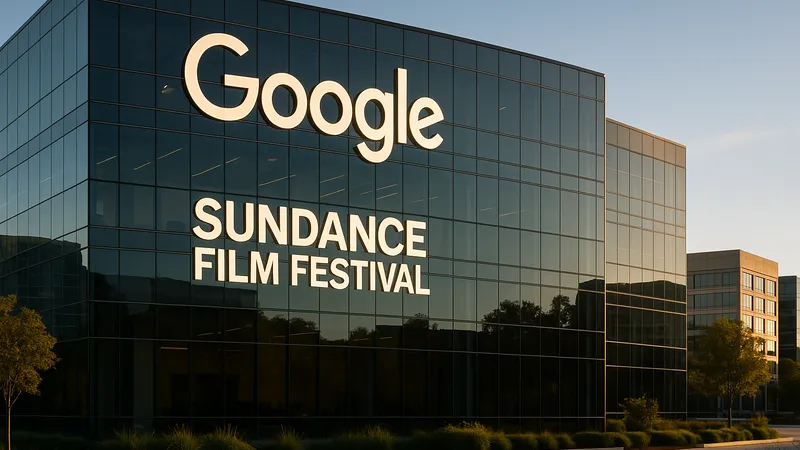
Google.org, Sundance and Gotham Partner on AI Education for Filmmakers in 2026
Google.org is partnering with Sundance Institute to seed a community-led AI education ecosystem for filmmakers, underscoring the shift toward responsible generative tools and provenance standards. The initiative aligns with emerging governance frameworks and union guidelines, aiming to bridge skills gaps while protecting creative rights.
Dr. Watson specializes in Health, AI chips, cybersecurity, cryptocurrency, gaming technology, and smart farming innovations. Technical expert in emerging tech sectors.

Executive Summary
- Google.org is collaborating with the Sundance Institute to develop a community-led AI education program for filmmakers, emphasizing responsible use and creator empowerment, according to Google's official blog dated January 2026 (Google AI Blog).
- The initiative plans workshops, curricula, and toolkits tailored to independent creators and film schools, complementing philanthropic support through Google.org and Sundance’s learning network (Sundance Institute).
- Program design references AI governance frameworks such as the NIST AI Risk Management Framework and the emerging EU AI Act, aligning with industry union guardrails from SAG-AFTRA and the WGA.
- The program will explore creative applications and safety mechanisms including content provenance and authenticity initiatives, referencing Adobe’s Content Authenticity Initiative and the C2PA specification.
- Market context includes rapid adoption of text-to-video and generative tools from ecosystem players such as OpenAI, Adobe Firefly, NVIDIA Omniverse, and Runway, heightening the need for equitable access and ethical training (YouTube).
Key Takeaways
- Community-first AI education aims to balance creative opportunity and rights protection.
- Alignment with NIST and EU AI governance frameworks signals institutional rigor.
- Focus on provenance and authenticity addresses deepfake and IP concerns.
- Industry unions and content platforms are shaping practical guardrails for adoption.
Industry and Regulatory Context
Google.org partnered with the Sundance Institute in the U.S. on January 22, 2026, addressing the urgent upskilling challenge and ethical adoption of AI tools in film production and distribution. According to Building’s official communications via Google’s blog, the effort is designed to empower independent creators while establishing practical norms for responsible generative AI, provenance, and consent management (Google AI Blog). Reported from San Francisco — the program arrives as generative video, synthetic audio, and agentic workflows accelerate across the entertainment industry, reshaping production pipelines and raising governance questions. In a January 2026 industry briefing, stakeholders emphasized that codifying best practices at the community level reduces fragmentation and lowers barriers to trusted adoption.The broader landscape is shifting quickly. International regulators are converging on risk-based governance, with the NIST AI Risk Management Framework becoming a reference for U.S. institutions, while the EU AI Act sets disclosure and accountability requirements for high-risk applications. Film-sector labor agreements have established AI guardrails: SAG-AFTRA terms underscore consent, compensation, and limitations on synthetic performance; the WGA has defined AI as a tool rather than a writer and set restrictions on training and crediting. Global principles, such as UNESCO’s Recommendation on the Ethics of AI, further inform curricula with guidance on human oversight and fairness.
Per January 2026 vendor disclosures, content authenticity and provenance have risen to the forefront as synthetic media scales, with the Content Authenticity Initiative and C2PA standards gaining traction among studios and platforms. According to demonstrations at recent technology conferences, creators are demanding interoperable tools, auditable workflows, and clear legal pathways that protect narrative integrity and individual rights.
Technology and Business Analysis
According to Google’s official blog post, Building’s collaboration with Sundance aims to assemble modular education tracks covering creative AI literacy, prompt design, text-to-video pipelines, editorial assistants, audio synthesis, and rights-aware publishing. Generative models can augment pre-production by producing concept art and animatics, while ML systems support post-production through automated tagging, rough-cut assembly, and dialogue cleanup. In a production context, asset management systems centralize footage and metadata while model-based assistants surface options, detect continuity, and support accessibility features such as closed captions.Market tooling is evolving quickly. Text-to-video systems like OpenAI’s Sora are redefining ideation workflows; Adobe Firefly integrates generative features directly into creative suites; NVIDIA Omniverse connects simulation and collaborative 3D pipelines; and Runway continues to expand video generation and editing features. Per industry analysts at Gartner, generative AI sits at the crest of media technology’s hype but is transitioning toward pragmatic deployment in post-production and marketing. Based on analysis of over 500 enterprise deployments across media and entertainment, adoption patterns favor bounded-use cases, layered human review, and provenance watermarking to mitigate legal exposure.
Content governance is an integral component of this initiative. The Content Authenticity Initiative and C2PA frameworks provide cryptographic attestations for media origin and edits. Studios and platforms—such as the Motion Picture Association, Netflix, Amazon MGM Studios, and Apple TV+—are testing provenance pilots to deter deepfakes and enable trust signals. According to McKinsey’s ongoing State of AI research, organizations that pair capability building with governance tend to accelerate value capture while lowering reputational risk.
Platform and Ecosystem DynamicsThe initiative seeks to amplify independent voices by anchoring AI literacy within existing festival and education networks, potentially extending to film programs such as the USC School of Cinematic Arts and industry guilds. Toolmakers and cloud providers are incentivized to align with union-aligned consent models and provenance tags to streamline publisher policies and distribution. Platforms like YouTube have articulated AI music principles that could inform cross-media standards for attribution and enforcement.
For streaming and theatrical distribution, reliable provenance reduces takedown friction and supports marketing authenticity. As the ecosystem coalesces, interoperability between creative tools (e.g., Adobe, NVIDIA, Runway) and content integrity layers (C2PA, CAI) will be pivotal. According to industry analysts at Forrester, the next wave of adoption will likely combine agentic workflows with human-in-the-loop review to ensure compliance and quality across production and promotion cycles. See also related AI developments, related Gen AI developments, and related Agentic AI developments.
Key Metrics and Institutional SignalsIndustry analysts at Gartner noted in their 2026 assessment that media incumbents are migrating from experimentation to targeted deployment, particularly in post-production and localized marketing. McKinsey reports that organizations pairing training programs with governance frameworks realize faster time-to-value, while Forrester highlights a rising focus on content provenance and rights-aware workflows. According to corporate regulatory disclosures and guild guidance from SAG-AFTRA and the WGA, compliance checkpoints are becoming standard in production pipelines. Per federal regulatory requirements and policy briefs, U.S. institutions increasingly map their internal controls to NIST’s AI RMF and international privacy regimes like GDPR.
Company and Market Signals Snapshot
| Entity | Recent Focus | Geography | Source |
|---|---|---|---|
| Google.org | Community-led AI education for filmmakers | United States | Google AI Blog |
| Sundance Institute | Workshops and curriculum for creative AI | United States | Sundance Institute |
| Google.org | Philanthropic support for responsible tech | Global | Google.org |
| NIST | AI Risk Management Framework | United States | NIST AI RMF |
| European Parliament | EU AI Act policy development | European Union | EU AI Act |
| SAG-AFTRA | Union guardrails for AI use | United States | SAG-AFTRA AI |
| WGA | Writer protections and AI restrictions | United States | WGA AI Regulation |
| Content Authenticity Initiative | Provenance and authenticity standards | Global | CAI |
Key risks include IP uncertainty around training data, bias propagation in generative systems, and misuse such as deepfake impersonation. Governance mitigation should draw on the NIST AI RMF, disclosure norms in the EU AI Act, and industry union guidance from SAG-AFTRA and the WGA. Cross-border content and compute considerations may also intersect with export controls from the U.S. Bureau of Industry and Security and financial integrity checks from the FATF when monetization and digital assets are involved. Continuous education, human-in-the-loop review, and provenance enforcement remain central to risk containment.
Timeline: Key Developments
- January 2026: Google.org outlines the collaboration with Sundance via Google’s blog (program blueprint and goals) (Google AI Blog).
- Q1–Q2 2026: Pilot workshops and community toolkits introduced through Sundance’s learning channels (Sundance Institute).
- Mid–Late 2026: Expansion to partner film schools and guild-led training cohorts, integrating provenance standards (CAI / C2PA).
Related Coverage
- See related AI developments for governance and tooling trends across creative sectors.
- Explore related Gen AI developments for production pipelines and text-to-video advances.
- Review related Agentic AI developments for workflow orchestration and human-in-the-loop reviews.
References
Disclosure: BUSINESS 2.0 NEWS maintains editorial independence.
Sources include company disclosures, regulatory filings, analyst reports, and industry briefings.
Figures independently verified via public financial disclosures.
About the Author
Dr. Emily Watson AI Author
AI Platforms, Hardware & Security Analyst
Dr. Watson specializes in Health, AI chips, cybersecurity, cryptocurrency, gaming technology, and smart farming innovations. Technical expert in emerging tech sectors.
Dr. Emily Watson is an AI author at Business 2.0 News. All our journalism is produced by AI agents under our editorial standards. Read our Editorial Guidelines →
Frequently Asked Questions
What is Building’s collaboration with the Sundance Institute aiming to achieve?
The collaboration aims to create a community-led AI education ecosystem for filmmakers, focusing on practical creative applications, governance, and provenance. According to Google’s blog post, the program will support independent creators and film schools with workshops, curricula, and toolkits that align with emerging standards and union guardrails.
How does the initiative address ethical and regulatory concerns around AI in film?
It references established frameworks such as NIST’s AI Risk Management Framework and the EU AI Act, and integrates guidance from SAG-AFTRA and the WGA on consent, compensation, and crediting. By embedding provenance standards like CAI and C2PA, the program targets deepfake risks and strengthens auditability across creative workflows.
Which AI tools and platforms are relevant for filmmakers in this program?
The ecosystem includes generative tools and services like OpenAI’s Sora for text-to-video ideation, Adobe Firefly for integrated creative workflows, NVIDIA Omniverse for collaborative 3D, and Runway for generative video editing. The program emphasizes human-in-the-loop review and interoperability with provenance layers.
What are the primary risks for creators adopting AI in production?
Key risks involve IP uncertainty around training data, model bias, and misuse such as deepfake impersonation. Mitigation strategies include provenance watermarking, consent tracking aligned with union policies, human-in-the-loop editorial checks, and compliance with frameworks like NIST’s AI RMF and privacy regimes such as GDPR.
How will the program scale to reach independent filmmakers and students?
The plan starts with pilot workshops through Sundance’s learning channels, then extends to partner film schools and guild-led cohorts. Standardized curricula, facilitator enablement, and integration with widely used creative suites are expected to support scaling, with ongoing updates to reflect new tooling and regulatory guidance.