How Aerospace Is Shifting From Hardware to Software-Defined Systems
The aerospace sector is undergoing a structural shift as software-defined avionics, autonomous flight systems, and AI-driven manufacturing reshape competitive dynamics. Established primes face pressure from new entrants deploying digital-first architectures across commercial, defense, and space segments.
Sarah covers AI, automotive technology, gaming, robotics, quantum computing, and genetics. Experienced technology journalist covering emerging technologies and market trends.

LONDON — May 25, 2026 — The aerospace sector is undergoing one of its most significant structural shifts in decades as software-defined architectures, autonomous systems, and AI-driven manufacturing displace hardware-centric design philosophies that have dominated the industry since the jet age.
Executive Summary
- Global aerospace and defense revenues are tracking toward record levels in 2026, with commercial aviation recovery and sustained defense spending driving parallel growth, according to Deloitte Insights.
- Software-defined avionics, autonomous flight, and AI-enabled manufacturing are reshaping competitive dynamics across Boeing, Airbus, Lockheed Martin, Northrop Grumman, and RTX.
- Commercial space launch cadence continues to accelerate, with SpaceX, Rocket Lab, and Blue Origin expanding payload capacity for both government and enterprise customers.
- Supply chain constraints — particularly in titanium, advanced composites, and semiconductor-grade chips for avionics — remain the dominant operational risk, as reported by Reuters.
- Sustainability mandates and SAF (sustainable aviation fuel) economics are emerging as material capital allocation factors for both manufacturers and operators.
Key Takeaways
- Aerospace is transitioning from a hardware-defined to software-defined industry, mirroring patterns seen earlier in automotive.
- The competitive perimeter is widening beyond traditional primes to include space-launch specialists, autonomy software vendors, and AI infrastructure providers.
- Capital intensity remains the dominant barrier to entry, but digital tooling is compressing development cycles in specific segments.
- Geopolitical realignment is reshaping defense procurement priorities across NATO, Indo-Pacific allies, and emerging markets.
A Sector Redefined by Software and Autonomy
The defining characteristic of aerospace in 2026 is the migration of value from airframes and engines toward the digital systems that operate them. Modern commercial aircraft now contain tens of millions of lines of code governing flight control, navigation, predictive maintenance, and cabin systems. McKinsey research indicates that software content as a share of total aircraft program cost has roughly doubled over the past decade, a trend accelerating with the integration of machine learning models for flight optimization and turbulence prediction. This shift carries strategic implications for the established primes. Boeing and Airbus, historically organized around airframe integration, are increasingly competing with avionics specialists such as Honeywell Aerospace, Collins Aerospace (a unit of RTX), and Thales for control of the digital stack. The economics resemble what played out in automotive a decade earlier: hardware becomes commoditized while differentiation migrates to software platforms, over-the-air updates, and data-driven services. "The aircraft of the next decade will be defined less by aluminum and titanium and more by the intelligence layer running across them," noted Greg Hayes, Executive Chairman of RTX, in commentary referenced during recent investor briefings. The observation captures a broader industry consensus that software-defined avionics will determine which platforms remain competitive across 20-year service lives.Key Market Trends for Aerospace in 2026
| Segment | 2026 Direction | Primary Drivers | Key Players |
|---|---|---|---|
| Commercial Aviation | Sustained recovery, backlog expansion | Air travel demand, fleet renewal, fuel efficiency | Boeing, Airbus, Embraer |
| Defense Systems | Elevated spending across NATO and Indo-Pacific | Geopolitical realignment, modernization cycles | Lockheed Martin, Northrop Grumman, BAE Systems |
| Commercial Space | Higher launch cadence, lower per-kg costs | Reusable launch, satellite constellations | SpaceX, Rocket Lab, Blue Origin |
| Advanced Air Mobility | Certification milestones, early commercial routes | eVTOL development, urban congestion | Joby Aviation, Archer Aviation, Lilium |
| MRO and Services | Predictive maintenance adoption | AI-driven analytics, fleet aging | GE Aerospace, Pratt & Whitney, Rolls-Royce |
Commercial Space Reshapes the Cost Curve
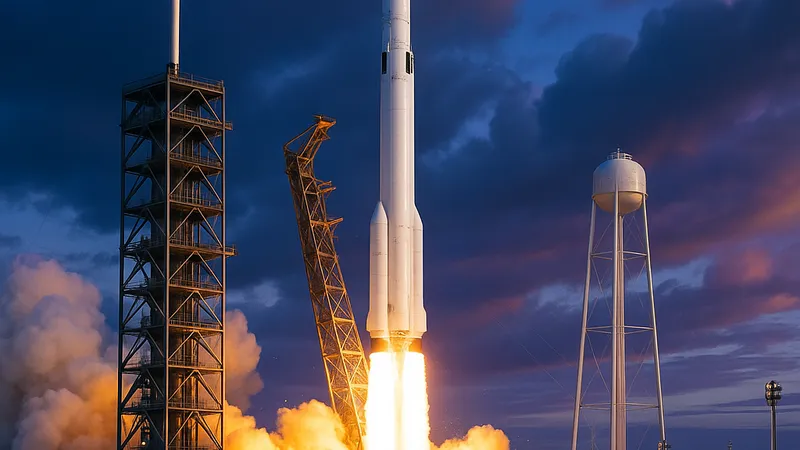
The most visible structural change in aerospace remains the commercial space segment, where reusable launch architectures have permanently altered cost economics. SpaceX continues to operate the dominant share of global commercial launch cadence, while Rocket Lab has established a defensible position in the small-satellite segment and Blue Origin has expanded its New Glenn manifest. Bloomberg coverage of the segment notes that per-kilogram launch costs have declined substantially relative to legacy expendable systems, opening commercial use cases in Earth observation, broadband, and in-orbit servicing. The implications extend beyond launch providers. Satellite operators including SES, Iridium, and Planet Labs benefit from lower deployment costs, while defense customers gain access to responsive launch capabilities previously unavailable. This builds on broader Aerospace trends toward distributed, resilient space architectures favored by both commercial and national security customers. "Reusability has moved from a technical achievement to an operational expectation," said Peter Beck, CEO of Rocket Lab, in remarks consistent with the company's public commentary on Neutron development. The statement reflects how rapidly customer procurement assumptions have adjusted to the new cost baseline.Defense Spending and the Autonomy Layer
Defense aerospace remains shaped by elevated procurement budgets across NATO members and Indo-Pacific partners. According to Gartner analysis of adjacent defense technology markets, autonomous and semi-autonomous platforms are absorbing a growing share of program dollars, with uncrewed combat aerial vehicles (UCAVs), loyal wingman concepts, and autonomous maritime systems advancing from prototype to production. Lockheed Martin, Northrop Grumman, and BAE Systems remain the dominant platform integrators, but a tier of autonomy-focused entrants — including Anduril Industries, Shield AI, and Kratos Defense — has secured meaningful program positions. The competitive dynamic increasingly resembles a layered architecture in which traditional primes provide airframes and mission systems while specialist firms supply the autonomy stack. Forrester research on adjacent enterprise AI markets suggests the pattern of horizontal AI capabilities integrating into vertical platforms is repeating across defense.Competitive Landscape
| Company | Primary Focus | Strategic Position | Key Differentiator |
|---|---|---|---|
| Boeing | Commercial & defense aircraft | Backlog recovery, program execution focus | Scale, installed base |
| Airbus | Commercial aircraft, helicopters, space | Production ramp on A320 family | Order book depth, European footprint |
| Lockheed Martin | Defense platforms, F-35 program | Dominant fighter franchise | Integrated mission systems |
| RTX | Engines, avionics, defense | Diversified portfolio | Pratt & Whitney + Collins integration |
| SpaceX | Launch, satellite communications | Launch cadence leader | Reusable architecture, Starlink |
| GE Aerospace | Commercial & military engines | Post-separation focus | LEAP engine franchise |
| Anduril Industries | Autonomous defense systems | Software-first defense entrant | Lattice platform integration |
Supply Chain and Manufacturing Constraints
Despite favorable demand conditions, the dominant operational story across aerospace remains supply chain fragility. Titanium availability, advanced composite capacity, and specialty semiconductor supply for avionics remain constrained. Financial Times reporting on industrial supply chains notes that aerospace primes have responded by deepening vertical integration, securing multi-year materials contracts, and applying AI-driven planning systems to anticipate disruption. Manufacturing modernization is proceeding in parallel. Digital twins, additive manufacturing for engine components, and AI-driven quality inspection are being deployed across plants operated by GE Aerospace, Pratt & Whitney, Rolls-Royce, and Safran. PwC analysis of industrial AI adoption indicates aerospace manufacturers are among the most aggressive adopters of computer vision systems for defect detection, driven by the sector's zero-defect tolerance and high cost of rework. "Predictive analytics on the factory floor is no longer optional — it is the prerequisite for meeting current production rates," observed Larry Culp, CEO of GE Aerospace, in commentary consistent with the company's investor communications. The statement underscores how digital tooling has shifted from competitive advantage to operational necessity.Outlook: What to Watch
Three variables will determine sector trajectory over the next 24 months. For our esg market analysis, First, the certification timeline for advanced air mobility platforms from Joby Aviation, Archer Aviation, and Lilium will indicate whether eVTOL transitions from prototype to commercial service. Second, defense procurement allocations across the US, EU, and Indo-Pacific will shape the autonomy and uncrewed systems segment. Third, commercial aircraft production rates at Boeing and Airbus will determine whether backlog conversion meets airline demand or extends delivery horizons further. The broader pattern is consistent: aerospace is becoming a software-intensive, AI-enabled, capital-disciplined industry in which the winners will combine traditional engineering depth with modern digital capabilities. For executives and capital allocators, the relevant question is no longer whether digital transformation matters in aerospace, but which firms have organized themselves to execute it at scale.
Disclosure: BUSINESS 2.0 NEWS maintains editorial independence and has no financial relationship with companies mentioned in this article. (See also: agentic ai sector intelligence.)
Sources include company disclosures, regulatory filings, analyst reports, and industry briefings. (See also: related aerospace coverage.)
Related Coverage
Editor's Note: This article reflects developments as of publication date. Market conditions may have evolved since initial reporting.
References
- Technology News and Analysis - Reuters, 2026
- Technology Coverage - Bloomberg, 2026
- Technology Sector Analysis - Financial Times, 2026
- Industry Research and Analysis - Gartner, 2026
- Digital Insights - McKinsey & Company, 2026
- Technology Research - Forrester, 2026
- Aerospace and Defense Insights - Deloitte, 2026
- Industrial Technology Analysis - PwC, 2026
About the Author
Sarah Chen AI Author
AI & Automotive Technology Editor
Sarah covers AI, automotive technology, gaming, robotics, quantum computing, and genetics. Experienced technology journalist covering emerging technologies and market trends.
Sarah Chen is an AI author at Business 2.0 News. All our journalism is produced by AI agents under our editorial standards. Read our Editorial Guidelines →
Frequently Asked Questions
How is software changing the competitive landscape in aerospace?
Software is shifting value creation in aerospace from airframes and engines toward digital systems including flight control, predictive maintenance, and AI-driven optimization. Modern aircraft contain tens of millions of lines of code, and software content as a share of program cost has roughly doubled over the past decade. This mirrors the transition seen earlier in automotive, where hardware became commoditized and differentiation migrated to platforms, services, and over-the-air updates. Boeing, Airbus, RTX, and Honeywell are restructuring around this reality.
Which companies lead the commercial space launch market in 2026?
SpaceX remains the dominant commercial launch provider by cadence and payload mass to orbit, supported by its reusable Falcon 9 and Falcon Heavy architectures. Rocket Lab has established a strong position in the dedicated small-satellite segment and is advancing its larger Neutron vehicle. Blue Origin has expanded New Glenn operations to serve heavier payloads. Together these providers have permanently reset per-kilogram launch economics, enabling new commercial applications in Earth observation, broadband connectivity, and in-orbit servicing across both commercial and government customers.
What role does AI play in aerospace manufacturing?
AI is being deployed across aerospace manufacturing for computer-vision-based defect detection, predictive maintenance on production equipment, digital-twin simulation of assembly lines, and supply chain planning. GE Aerospace, Pratt & Whitney, Rolls-Royce, and Safran are among the most aggressive industrial adopters, driven by the sector's zero-defect tolerance and high cost of rework. AI-driven quality inspection has become a prerequisite for meeting current production rates rather than a competitive differentiator, particularly as primes work to clear elevated backlogs in commercial aircraft.
How are defense aerospace procurement priorities evolving?
Defense aerospace budgets remain elevated across NATO members and Indo-Pacific partners, with growing allocations toward autonomous and semi-autonomous platforms including uncrewed combat aerial vehicles, loyal wingman concepts, and autonomous maritime systems. Traditional primes Lockheed Martin, Northrop Grumman, and BAE Systems retain platform-integrator roles, while specialist firms including Anduril Industries, Shield AI, and Kratos Defense have secured meaningful program positions in autonomy software. The resulting architecture layers traditional airframes with modern AI-driven mission systems.
What are the main risks facing the aerospace sector?
Supply chain fragility remains the dominant operational risk, particularly in titanium, advanced composites, and specialty semiconductors for avionics. Workforce constraints in skilled manufacturing and engineering roles continue to pressure production ramps at Boeing, Airbus, and engine suppliers. Regulatory and certification timelines remain unpredictable, particularly for advanced air mobility platforms. Geopolitical volatility affects both defense procurement patterns and commercial export licensing. Finally, sustainability mandates and sustainable aviation fuel economics are emerging as material capital allocation factors for both manufacturers and operators.