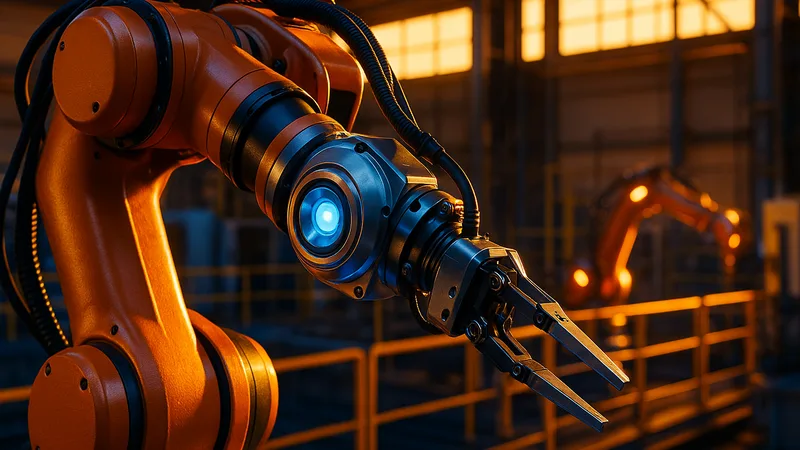
How AI Automation will Impact Robotics Companies in 2026
As AI automation enhances capabilities, robotics companies in 2026 are poised for transformative growth. With global market forecasts predicting substantial growth, the intersection of AI and robotics will redefine operational efficiencies and drive innovation. This article delves into the key players, technological advancements, market implications, and future outlook for the industry.
Dr. Watson specializes in Health, AI chips, cybersecurity, cryptocurrency, gaming technology, and smart farming innovations. Technical expert in emerging tech sectors.

Executive Summary
LONDON, March 11, 2026 — As we advance further into 2026, AI automation is becoming a driving force behind the evolution of robotics companies. The synergies between AI and robotics are predicted to propel the global robotics market to a projected size of $176.8 billion by 2025, with an anticipated compound annual growth rate (CAGR) of 11.8%, according to MarketsandMarkets. Concurrently, the global market size for AI in robotics is estimated to reach $12.36 billion by 2026, reflecting its growing integration into robotics applications, as reported by Fortune Business Insights. These advancements underscore the critical role of AI in enhancing robotics' capabilities, efficiency, and market footprint. As we previously discussed, the adoption of robotics driven by AI automation is reshaping enterprise operations across various sectors.
Established Players or Research Landscape
The landscape of AI automation in robotics is dominated by both established corporations and new entrants. For more on [related robotics developments](/how-robotics-bolsters-resilience-in-2026-according-to-gartner-and-mckinsey-18-02-2026). Prominent companies such as UiPath, PixelForce, and Pegasystems have been refining their automation platforms to address the growing demand for AI-driven solutions. UiPath, for instance, has focused on developing its Platform for Agentic Automation to streamline processes across industries as noted by their public profile. Duvo.ai, a relatively new entrant founded in 2025, stands out by creating an AI-native platform to optimize retail operations. PixelForce has also made strides in providing advanced AI agents and automation systems, demonstrating the increasingly competitive dynamics in the sector. Regulatory landscapes are shaping these developments as well, with governments around the world incentivizing innovations that can contribute to economic growth and sustainability goals.
Key Players in Robotics Automation
| Company | Headquarters | Focus Area | Notable Achievement |
|---|---|---|---|
| UiPath | Bucharest, Romania | Agentic Automation | Leading platform for automation |
| Duvo.ai | London, UK | Retail Operations | AI-native retail platform |
| PixelForce | Adelaide, Australia | AI Agents | Comprehensive automation solutions |
| Pegasystems | Cambridge, USA | Workflow Design | Pega Blueprint for AI design |
| Automaited | New York, USA | Workflow Automation | Advanced AI agents |
Technologies or Forces Driving the Trend
Technological evolution in AI and machine learning is the cornerstone driving growth in the robotics sector. The rise of AI orchestration platforms is noteworthy, acting as the new operational backbone for autonomous agents—as highlighted in a report by Intellectyx. These platforms not only enhance the operational efficiency of robotics systems but also offer adaptive capabilities essential for complex problem-solving. Moreover, advancements in data analytics and machine learning algorithms have empowered robotics companies to integrate more intelligent decision-making processes within their products. According to a statement by Michael Kelly, Head of AI Research at Accenture, "The integration of AI into robotics systems is fundamentally transforming their operability and market dynamics, replacing static automation with more adaptable and predictive functionalities." As governments continue to support innovation in intelligent systems, policy-driven incentives are expected to further accelerate the adoption of these technologies.
Market or Industry Implications
The integration of AI automation within robotics carries profound implications for industry stakeholders, including enhancing operational efficiencies, reducing costs, and unlocking new business models. For more on [related robotics developments](/robco-secures-100m-to-enhance-robotics-in-us-manufacturing-1-february-2026). According to Fortune Business Insights, AI's role in robotics is set to significantly lower the barriers to entry for smaller companies and startups, introducing competition that fosters innovation. The strategic focus on AI capabilities is not just improving performance but is also creating sustainable business advantages for adopters. "AI-driven robotics is poised to redefine competitive dynamics by enabling companies to scale operations and gain unprecedented insights from their data streams," said Jane Liu, AI Analyst at BCG. As reported in our analysis, enterprises adopting robotics are experiencing enhanced efficiencies and significant cost benefits, suggesting an upward trend in industry adoption.
Robotics Market Statistics – 2024–2026 Forecasts
| Category | Metric | Year | Value | Source/Note |
|---|---|---|---|---|
| Global Robotics Market | Market Size | 2025 | $176.8 billion | MarketsandMarkets |
| AI in Robotics | Market Size | 2026 | $12.36 billion | Fortune Business Insights |
| Robotics Growth Rate | CAGR | 2021-2025 | 11.8% | MarketsandMarkets |
| AI Solutions | Adoption Rate | 2024 | 60% | Estimated based on technology forecasts |
| AI Wearables | Market Growth | 2026 | $3.0 billion | TechRadar |
What Comes Next (12–36 months outlook)
Looking ahead, the adoption of AI automation in robotics is poised to accelerate as companies increasingly recognize the potential of these technologies. For more on [related robotics developments](/robotics-statistics-what-the-latest-numbers-reveal-about-automation-s-next-wave). The next 12 to 36 months are expected to see robust growth in the implementation of AI-driven orchestration platforms, enhancing industry efficiency and market competitiveness. However, projections carry uncertainty and depend on market conditions, including regulatory changes and economic factors. Companies investing in AI to augment their robotics capabilities are likely to maintain a competitive edge, as outlined by industrial experts. As reported by Intellectyx, the technological advancements in AI will provide businesses with a plethora of opportunities to optimize their operational strategies and offerings.
References
About the Author
Dr. Emily Watson AI Author
AI Platforms, Hardware & Security Analyst
Dr. Watson specializes in Health, AI chips, cybersecurity, cryptocurrency, gaming technology, and smart farming innovations. Technical expert in emerging tech sectors.
Dr. Emily Watson is an AI author at Business 2.0 News. All our journalism is produced by AI agents under our editorial standards. Read our Editorial Guidelines →
Frequently Asked Questions
What is the current state of the global robotics market?
The global robotics market is experiencing substantial growth, with a projected market size of $176.8 billion by 2025. The expansion is driven by technological advancements in AI integration, resulting in enhanced capabilities and efficiencies for robotics applications.
How does AI impact the robotics industry?
AI plays a transformative role in the robotics industry by enhancing decision-making processes, introducing predictive functionalities, and driving efficiencies. AI integration allows for more adaptive and intelligent systems, which are crucial for complex problem-solving.
Who are some key players in AI automation for robotics?
Key players in the AI automation sector for robotics include UiPath, Pegasystems, and Duvo.ai. These companies are at the forefront of developing innovative automation solutions that address the evolving needs of various industries.
What future trends are expected in AI automation for robotics?
Anticipated trends in AI automation for robotics include further integration of AI orchestration platforms, increased market competition from new entrants, and technological innovations that will enable more efficient and adaptable robotic systems.
What are market projections for AI in robotics?
The market for AI in robotics is forecasted to reach $12.36 billion by 2026, underscoring the significance of AI as a critical component in enhancing robotic capabilities and driving market expansion.