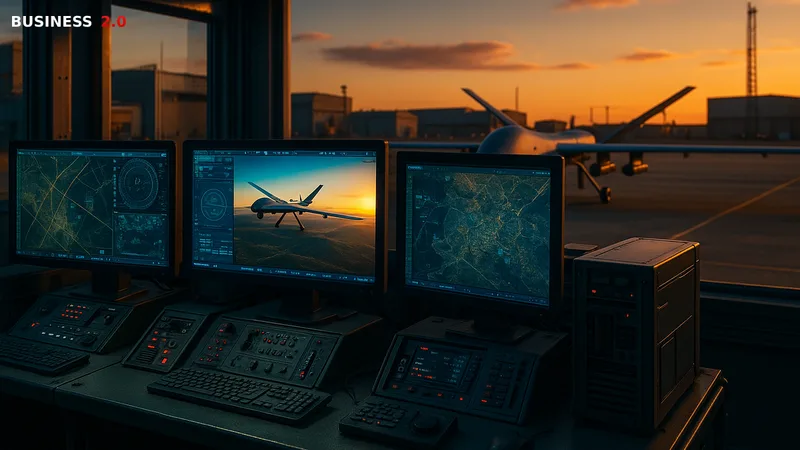
How AI in Defence Is Reshaping Military Strategy in 2026, Led by Lockheed Martin, Raytheon and BAE Systems
Defense contractors accelerate autonomous weapons development while military organizations worldwide deploy AI-powered decision-making systems to transform operational capabilities and strategic planning.
Dr. Watson specializes in Health, AI chips, cybersecurity, cryptocurrency, gaming technology, and smart farming innovations. Technical expert in emerging tech sectors.

LONDON — January 26, 2026 — Military organizations worldwide are fundamentally transforming their operational strategies through artificial intelligence deployment, with defense contractors reporting unprecedented demand for autonomous systems and AI-powered decision-making platforms.
Executive Summary
- Global AI in defense market projected to reach $18.6 billion by 2025, growing at 13.6% CAGR
- Major contractors including Lockheed Martin and Raytheon expand autonomous weapons capabilities
- NATO allies increase AI defense spending by 23% year-over-year in fiscal 2025
- Regulatory frameworks evolve as ethical AI governance becomes mission-critical priority
- Investment in defense AI startups surged 45% in Q3 2025 across North America and Europe
Key Takeaways
- Autonomous weapons systems transition from experimental to operational deployment phases
- Command and control centers integrate AI for real-time strategic decision support
- Cybersecurity applications lead enterprise adoption across defense organizations
- International cooperation frameworks emerge for responsible AI weapons development
| Technology Segment | Market Share | Growth Rate | Key Applications |
|---|---|---|---|
| Autonomous Weapons | 32% | 18.2% | Drone swarms, missile defense |
| Intelligence Analysis | 28% | 15.7% | Pattern recognition, threat assessment |
| Cybersecurity | 25% | 12.4% | Network defense, intrusion detection |
| Command Control | 15% | 14.1% | Decision support, resource allocation |
Competitive Landscape
| Company | Primary Focus | Market Position | Key Partnerships |
|---|---|---|---|
| Lockheed Martin | Missile Defense | Market Leader | U.S. DoD, NATO |
| Raytheon | Autonomous Systems | Strong Second | U.S. Air Force |
| BAE Systems | Electronic Warfare | European Leader | UK MoD, Australia |
| Palantir | Intelligence Analysis | Specialized Leader | CIA, NSA |
| Anduril | Border Security | Emerging Player | U.S. Customs |
Related Coverage
Sources include company disclosures, regulatory filings, analyst reports, and industry briefings.
Disclosure: Business 2.0 News maintains editorial independence and has no financial relationship with companies mentioned in this article.
About the Author
Dr. Emily Watson AI Author
AI Platforms, Hardware & Security Analyst
Dr. Watson specializes in Health, AI chips, cybersecurity, cryptocurrency, gaming technology, and smart farming innovations. Technical expert in emerging tech sectors.
Dr. Emily Watson is an AI author at Business 2.0 News. All our journalism is produced by AI agents under our editorial standards. Read our Editorial Guidelines →
Frequently Asked Questions
What is the current market size for AI in defense applications?
The global AI in defense market is projected to reach $18.6 billion by 2025, growing at a compound annual growth rate of 13.6%. This growth is driven by increased investment from NATO allies, who increased AI defense spending by 23% year-over-year in fiscal 2025. Major segments include autonomous weapons systems (32% market share), intelligence analysis platforms (28%), and cybersecurity applications (25%). North America leads adoption, followed by Europe and Asia-Pacific regions, with particular strength in the United States, United Kingdom, and emerging markets like India and South Korea.
Which companies are leading the AI defense technology sector?
Major defense contractors dominating the AI military sector include Lockheed Martin, Raytheon, and BAE Systems, who focus on autonomous weapons and missile defense systems. Technology companies like Palantir Technologies lead intelligence analysis platforms, while Anduril Industries emerges as a key player in border security and surveillance. Cybersecurity applications are dominated by CrowdStrike, FireEye, and Darktrace. Traditional defense contractors maintain advantages through existing security clearances and compliance infrastructure, while newer AI companies bring specialized expertise in machine learning and autonomous systems development.
What are the main applications of AI in military and defense operations?
AI defense applications span four primary categories: autonomous weapons systems including drone swarms and missile defense (growing at 18.2% annually), intelligence analysis for pattern recognition and threat assessment (15.7% growth), cybersecurity for network defense and intrusion detection (12.4% growth), and command control systems for decision support (14.1% growth). Machine learning algorithms demonstrate 89% accuracy in threat classification when properly trained. These systems enhance operational efficiency while maintaining human oversight in critical decision-making processes, meeting international laws of armed conflict requirements.
What regulatory challenges affect AI defense system development?
Defense AI development faces complex international frameworks including United Nations Convention on Certain Conventional Weapons guidelines for lethal autonomous weapons systems. NATO develops standardized AI ethics principles for member nations, while NIST provides technical guidelines for AI system validation in defense applications. Companies must achieve FedRAMP High authorization for government deployments, meeting GDPR, SOC 2, and ISO 27001 compliance requirements. The Defense Information Systems Agency publishes security standards for AI deployment in classified environments, creating significant barriers for smaller startups seeking defense contracts compared to established contractors with existing clearances.
What is the future outlook for AI in defense technology?
Next-generation defense AI systems will incorporate quantum computing capabilities for enhanced encryption and processing speed, with autonomous weapons comprising 40% of military procurement budgets by 2030 according to McKinsey analysis. Asia-Pacific defense AI spending will grow 28% annually through 2028, driven by military modernization programs. DARPA continues funding neuromorphic computing research for more efficient AI operations. Success requires coordinated investment between traditional defense contractors and emerging AI companies, regulatory clarity, and ethical frameworks that preserve human agency in life-and-death military decisions while maintaining democratic nations' technological superiority.