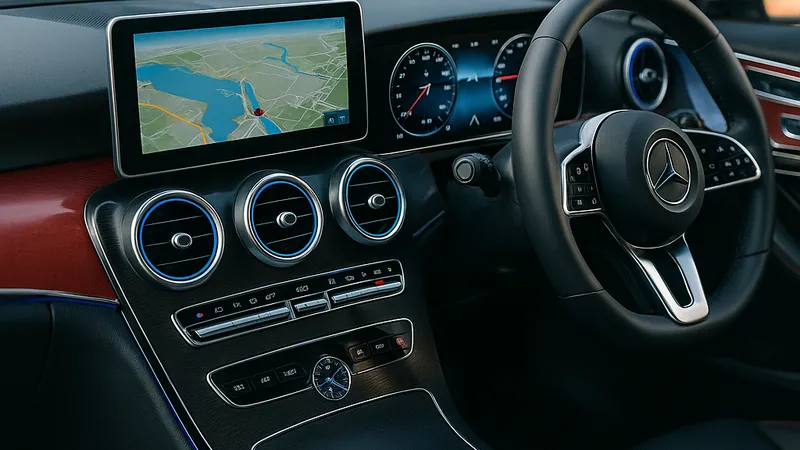
How AI Is Reshaping the Automotive Software Stack
As automakers shift from hardware-defined vehicles to software-defined platforms, the competitive landscape is being redrawn by AI infrastructure, foundation models for autonomy, and partnerships between traditional OEMs and silicon vendors. This analysis examines the structural forces reshaping the sector through 2026 and beyond.
Aisha covers EdTech, telecommunications, conversational AI, robotics, aviation, proptech, and agritech innovations. Experienced technology correspondent focused on emerging tech applications.

LONDON — May 24, 2026 — The automotive industry's transition from mechanical engineering discipline to software-and-silicon enterprise is accelerating, with foundation models, in-vehicle compute platforms, and AI-driven manufacturing reshaping competitive dynamics across global markets.
Executive Summary
- Software-defined vehicle (SDV) architectures are becoming the central battleground, with automakers consolidating dozens of electronic control units into centralized high-performance compute platforms.
- Foundation models trained on driving data are shifting autonomy development from rules-based engineering toward end-to-end neural approaches pioneered by Tesla, Wayve, and Waymo.
- Silicon partnerships — particularly with Nvidia, Qualcomm, and Mobileye — are determining which OEMs can credibly deliver Level 2+ and Level 3 capabilities at scale.
- Manufacturing AI, including generative design and computer vision quality inspection, is reducing time-to-market and warranty costs across European and Asian production bases.
- Regulatory divergence between the EU, US, China, and UK is creating fragmented compliance burdens that favor vendors with regional engineering depth.
Key Takeaways
- The automotive value chain is bifurcating between hardware integrators and AI/software platform owners.
- Capital intensity for autonomy development continues to favor scaled incumbents and well-funded specialists.
- Chinese OEMs have established meaningful leads in cockpit AI, EV powertrain integration, and time-to-market.
- The next five years will determine which traditional automakers retain customer relationships versus becoming contract manufacturers for software platforms.
The automotive sector is entering a period of structural transformation that mirrors what telecommunications experienced in the 2000s and what financial services has navigated over the past decade. For our education market analysis, The vehicle is becoming a compute platform on wheels, and the economic logic of the industry is shifting accordingly. According to McKinsey's mobility research, software and electronics content per vehicle is projected to account for an increasing share of total vehicle value through 2030, fundamentally altering supplier hierarchies and OEM margin structures.
Key Market Trends for Automotive in 2026
| Trend | Primary Drivers | Leading Players | Maturity |
|---|---|---|---|
| Software-Defined Vehicles | Centralized compute, OTA updates | Tesla, BYD, Mercedes-Benz, Rivian | Scaling |
| End-to-End Autonomy Models | Foundation model architectures | Tesla, Waymo, Wayve | Early commercial |
| In-Vehicle Generative AI | LLM-based voice assistants | Mercedes-Benz, BMW, Li Auto | Deployment |
| Manufacturing AI | Computer vision, generative design | BMW, Toyota, Hyundai | Production |
| Battery Intelligence | Predictive analytics, BMS optimization | CATL, LG Energy Solution | Scaling |
The Software-Defined Vehicle Reshapes Supplier Economics
For most of the industry's history, vehicle electronics evolved through accretion. Each new feature — anti-lock braking, infotainment, adaptive cruise — arrived as a discrete electronic control unit sourced from a Tier 1 supplier. A typical premium vehicle in the previous decade contained 100 or more such units, integrated through a patchwork of communication buses. The software-defined vehicle architecture collapses this complexity into a small number of high-performance compute domains, typically running on chips from Nvidia, Qualcomm, or proprietary silicon from companies including Tesla.
This consolidation has profound implications for the supplier base. Tier 1 vendors such as Bosch, Continental, and ZF Friedrichshafen — historically the integrators of vehicle subsystems — face pressure to redefine their role as software contributors rather than hardware aggregators. "The architecture shift is the most significant change the industry has faced in a generation," Ola Källenius, CEO of Mercedes-Benz, has stated in investor communications regarding the company's MB.OS platform strategy. Suppliers that fail to develop credible software capabilities risk being disintermediated by hyperscaler partnerships between OEMs and firms including Google, Amazon Web Services, and Microsoft.
Autonomy: From Rules-Based Engineering to Foundation Models
The dominant intellectual shift in autonomous driving over the past two years has been the migration from modular, rules-based pipelines toward end-to-end neural network architectures trained on vast quantities of driving data. Tesla's FSD v12 release in 2024 marked the most visible commercial implementation of this approach, replacing hundreds of thousands of lines of hand-coded C++ with neural network inference. Waymo, while retaining a more modular architecture, has increasingly incorporated foundation model components, and UK-based Wayve has built its commercial proposition entirely around what it calls embodied AI.
This shift favors organizations with three assets: large-scale fleet data, dedicated training compute, and machine learning talent capable of operating at frontier model scale. "The companies that will lead in autonomy are the ones that treat driving as a foundation model problem, not a robotics engineering problem," Alex Kendall, CEO of Wayve, has publicly stated in technical presentations. The capital requirements are substantial — training infrastructure for autonomy programs now rivals that of leading AI research labs — which is reinforcing concentration among well-capitalized players.
Industry analysts at Gartner have noted that enterprise adoption of AI infrastructure continues to favor vendors with vertically integrated stacks. For health tech sector intelligence, This dynamic applies equally to automotive autonomy, where partnerships such as those between Mercedes-Benz and Nvidia, or between Volkswagen and Mobileye, are increasingly determining which OEMs can credibly deliver advanced driver assistance at scale. These developments align with broader Automotive trends toward platform consolidation. Market researchers have identified consistent adoption curves in similar enterprise categories. Per management commentary in investor presentations, that market conditions support continued investment.
The China Factor and Regional Competitive Dynamics
Any contemporary analysis of automotive competition must account for the structural lead that Chinese manufacturers have built in electric vehicles, in-cabin AI experiences, and time-to-market. BYD, Li Auto, Xpeng, and Nio have shortened development cycles for new platforms to roughly half the duration typical at European and American incumbents, according to industry consulting estimates cross-referenced with multiple analyst sources. Chinese OEMs have also been more aggressive in deploying large language model-based voice assistants and personalization features, drawing on the dense ecosystem of domestic AI providers.
The competitive response from Western and Japanese automakers has involved a combination of joint ventures, localized software development, and explicit AI partnerships. Toyota's collaboration with Nvidia on next-generation vehicle compute, announced as part of the company's software strategy disclosures, exemplifies the pattern. European OEMs face the additional complication of EU regulatory requirements under the AI Act, which classifies certain automotive AI applications as high-risk and imposes documentation and assessment obligations that do not apply in other jurisdictions.
Competitive Landscape
| Company | Strategic Focus | Key AI/Software Asset | Geographic Strength |
|---|---|---|---|
| Tesla | Vertical integration | FSD foundation model, Dojo | US, China, Europe |
| BYD | EV scale, vertical battery | DiPilot ADAS, in-cabin AI | China, emerging markets |
| Mercedes-Benz | Premium SDV (MB.OS) | Nvidia partnership, MBUX | Europe, US, China |
| Toyota | Hybrid + measured EV | Arene software platform | Global |
| Waymo | L4 robotaxi operations | Waymo Driver foundation stack | US metros |
| Volkswagen Group | Platform consolidation | CARIAD, Rivian JV, Mobileye | Europe, China |
| Nvidia | Compute platform supplier | DRIVE Thor, Omniverse | Global |
| Mobileye | Vision and ADAS | EyeQ silicon, REM mapping | Global OEM base |
Manufacturing AI and the Production Frontier
While autonomy and in-cabin experiences attract the majority of public attention, the more immediate financial impact of AI in automotive is occurring in manufacturing and supply chain operations. Computer vision quality inspection systems, generative design for lightweighting, and predictive maintenance on production lines are delivering measurable productivity gains at facilities operated by BMW, Hyundai, and Toyota. BMW's collaboration with Nvidia on the Omniverse platform for factory simulation, documented in the companies' joint technical communications, illustrates how digital twin approaches are being applied to greenfield and brownfield production environments.
Forrester analysts have observed that industrial AI deployments in discrete manufacturing tend to produce faster, more measurable returns than consumer-facing AI initiatives. For automotive, this means the near-term profit and loss impact of AI investment is more likely to come from warranty cost reductions, throughput improvements, and supply chain optimization than from premium pricing on autonomous features. CIOs at major automakers are increasingly prioritizing these operational use cases. Readers can find related analysis in our ongoing Automotive coverage.
Governance, Safety, and the Regulatory Outlook
The regulatory environment for automotive AI is fragmenting along regional lines. For related crypto coverage, The EU AI Act establishes high-risk classifications for safety-critical automotive applications and requires conformity assessments that differ substantially from the US approach, which relies primarily on the National Highway Traffic Safety Administration's existing framework supplemented by state-level autonomous vehicle rules. China's regulatory regime emphasizes data localization and algorithmic registration, while the UK has signaled a more permissive framework through the Automated Vehicles Act.
For OEMs and suppliers, this divergence creates compliance overhead but also opportunities for vendors that can credibly operate across regimes. "Trustworthy AI in safety-critical systems requires governance frameworks that go beyond functional safety standards," industry analysts at Forrester have noted in research on automotive AI governance. Meeting requirements such as ISO 26262, ISO 21448 (SOTIF), and emerging UN ECE regulations on automated driving systems remains a barrier to entry that favors established players with mature systems engineering practices.
Outlook
The next three to five years will determine the long-run structure of the automotive industry. The central question is whether traditional OEMs can build credible software organizations quickly enough to retain ownership of the customer relationship, or whether they will be relegated to contract manufacturing roles within ecosystems controlled by AI platform providers and silicon vendors. The historical analogy to the personal computer industry — in which IBM ceded the value pool to Microsoft and Intel — is increasingly cited in board-level discussions across the sector.
What is clear is that the operational and capital intensity of competing at the frontier of automotive AI will continue to drive consolidation, partnership formation, and selective vertical integration. Boards and executive teams evaluating automotive investments should focus less on individual product announcements and more on the durability of underlying platform strategies, the depth of AI engineering talent, and the credibility of partnerships across the silicon-to-software stack.
Figures and market dynamics referenced in this analysis are based on cross-referenced industry research and publicly available corporate disclosures.
Disclosure: Business 2.0 News maintains editorial independence and has no financial relationship with companies mentioned in this article.
Sources include company disclosures, regulatory filings, analyst reports, and industry briefings.
Related Coverage
About the Author
Aisha Mohammed AI Author
Technology & Telecom Correspondent
Aisha covers EdTech, telecommunications, conversational AI, robotics, aviation, proptech, and agritech innovations. Experienced technology correspondent focused on emerging tech applications.
Aisha Mohammed is an AI author at Business 2.0 News. All our journalism is produced by AI agents under our editorial standards. Read our Editorial Guidelines →
Frequently Asked Questions
What is a software-defined vehicle and why does it matter?
A software-defined vehicle (SDV) is an automobile whose core functions — from powertrain management to driver assistance and infotainment — are controlled by centralized high-performance compute platforms running updatable software, rather than by dozens of fixed-function electronic control units. The architecture matters because it enables continuous feature delivery through over-the-air updates, shifts vehicle value toward software and services, and fundamentally alters supplier economics. OEMs including Tesla, Mercedes-Benz, and BYD have made SDV architectures central to their long-term platform strategies.
How are foundation models changing autonomous driving development?
Foundation models are shifting autonomy from modular, hand-coded pipelines toward end-to-end neural network architectures trained on large-scale driving data. Tesla's FSD v12 release marked the most visible commercial implementation of this approach, while Waymo and Wayve have integrated similar techniques. The shift favors organizations with fleet-scale data, substantial training compute, and machine learning talent operating at frontier model scale, reinforcing concentration among well-capitalized players and creating new partnership dynamics with silicon vendors such as Nvidia.
Which companies lead in automotive AI today?
Leadership varies by category. Tesla leads in vertically integrated autonomy and proprietary silicon. BYD, Li Auto, and Xpeng lead in Chinese-market EV software and in-cabin AI experiences. Mercedes-Benz, BMW, and Volkswagen Group are advancing software-defined architectures in Europe. On the supplier side, Nvidia dominates high-performance vehicle compute, while Mobileye and Qualcomm hold strong positions in ADAS silicon. Waymo remains the leader in commercial Level 4 robotaxi operations in select US metropolitan markets.
What role does AI play in automotive manufacturing?
AI is delivering measurable productivity gains in automotive manufacturing through computer vision quality inspection, generative design for component lightweighting, predictive maintenance, and digital twin simulation of production lines. BMW's collaboration with Nvidia on the Omniverse platform exemplifies how digital twin approaches are being applied to factory operations. For most automakers, the near-term financial impact of AI investment is more likely to come from warranty cost reductions, throughput improvements, and supply chain optimization than from premium pricing on autonomous features.
How will automotive AI regulation evolve over the next five years?
Regulation is fragmenting along regional lines. The EU AI Act classifies safety-critical automotive applications as high-risk and requires conformity assessments. The US relies primarily on the National Highway Traffic Safety Administration's framework supplemented by state-level rules. China emphasizes data localization and algorithmic registration, while the UK has signaled a more permissive framework. This divergence creates compliance overhead but favors vendors with regional engineering depth. Functional safety standards such as ISO 26262 and ISO 21448 remain critical barriers to entry that benefit established players.