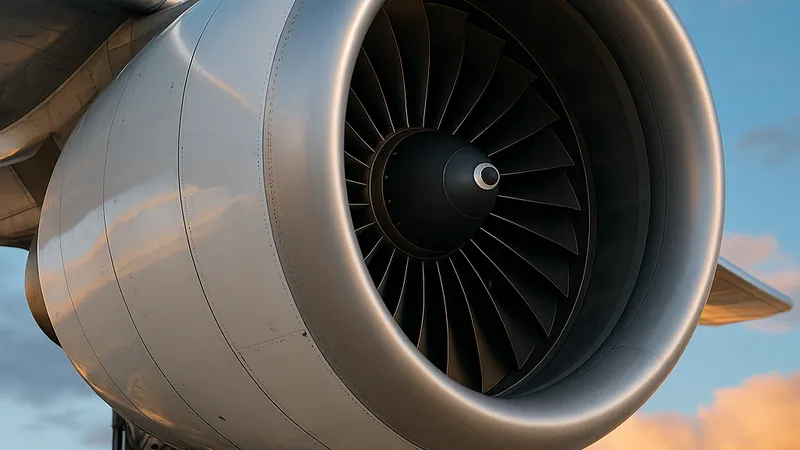
How Aviation Is Becoming Mission-Critical for Enterprise Strategy
Aviation has shifted from a logistics line item to a strategic infrastructure layer, as autonomous systems, sustainable aviation fuel, and AI-driven operations reshape how enterprises move people, goods, and data across global networks.
Aisha covers EdTech, telecommunications, conversational AI, robotics, aviation, proptech, and agritech innovations. Experienced technology correspondent focused on emerging tech applications.

LONDON — May 25, 2026 — Aviation has moved beyond its traditional role as a transportation utility, emerging as a strategic infrastructure layer that shapes enterprise supply chains, workforce mobility, and sustainability commitments across multinational operations.
Executive Summary
- Global commercial aviation is projected to exceed $1 trillion in annual economic activity by 2030, driven by passenger recovery, e-commerce logistics, and defense modernization.
- Autonomous flight systems, electric vertical takeoff and landing (eVTOL) platforms, and sustainable aviation fuel (SAF) are reshaping capital allocation among major operators.
- AI-driven predictive maintenance and operations platforms are reducing unscheduled downtime by double-digit percentages at leading carriers.
- Regulatory fragmentation across the FAA, EASA, and CAAC remains the principal barrier to scaling advanced air mobility.
- Enterprise buyers — from Amazon to Maersk — are integrating aviation more deeply into multimodal logistics strategies.
Key Takeaways
- Aviation is being repositioned as critical infrastructure rather than discretionary spend.
- The competitive frontier has shifted from fleet size to data, software, and propulsion technology.
- Sustainability mandates are forcing structural changes in fuel sourcing and aircraft design.
- Boards should evaluate aviation exposure as a strategic risk and opportunity, not a procurement question.
The Strategic Reframing of Aviation
For decades, aviation was treated by most enterprises as a cost center — a necessary input to global commerce managed through travel desks and freight forwarders. That framing no longer holds. As of May 2026, aviation has become a layer of competitive infrastructure comparable to cloud computing or payments rails, with direct implications for supply chain resilience, talent mobility, and decarbonization targets. The industry's largest operators, including Delta Air Lines, Lufthansa Group, and Singapore Airlines, are investing heavily in software platforms that turn flight operations into data-rich environments. Boeing and Airbus, meanwhile, are competing not only on airframes but on digital services, propulsion partnerships, and lifecycle analytics. According to International Air Transport Association industry briefings, global airline revenues are tracking above $1 trillion for 2026, with cargo and ancillary services contributing a growing share.Key Market Trends for Aviation in 2026
| Trend | Driver | Primary Stakeholders | Maturity |
|---|---|---|---|
| Sustainable Aviation Fuel | Net-zero mandates, EU ReFuelEU rules | Airlines, refiners, regulators | Scaling |
| Advanced Air Mobility (eVTOL) | Urban congestion, defense use cases | Joby, Archer, Lilium, Volocopter | Early commercial |
| AI-driven Operations | Cost pressure, crew shortages | Carriers, MRO providers | Production |
| Autonomous Cargo Flight | E-commerce, defense logistics | Reliable Robotics, Xwing, Boeing | Piloting |
| Predictive Maintenance | Fleet aging, supply chain delays | GE Aerospace, RTX, Honeywell | Mature |
How AI and Autonomy Are Reshaping Operations
The operational layer of aviation is being rebuilt around machine learning. For our ai market analysis, Carriers are deploying AI to optimize crew scheduling, fuel burn, gate assignments, and disruption recovery — historically among the most expensive inefficiencies in the industry. GE Aerospace and Rolls-Royce have expanded engine health monitoring services that ingest terabytes of telemetry per flight, allowing maintenance teams to intervene before component failures cascade into cancellations. According to Gartner's 2026 analysis of transportation technology adoption, predictive maintenance and AI-driven operations are among the highest-ROI applications of enterprise AI across asset-heavy industries. "The carriers that treat their operations centers as software platforms rather than control rooms are pulling away from the pack," said Robert Isom, Chief Executive Officer of American Airlines, in remarks during recent investor briefings. Industry analysts have echoed the point: "Aviation is in the middle of a quiet software transition that will define the next decade of margin performance," noted Helane Becker, Managing Director and Senior Analyst at TD Cowen, in published research commentary. Autonomy is advancing more slowly but with significant strategic implications. Reliable Robotics and Xwing are pursuing certification pathways for remotely piloted cargo aircraft, while Boeing's Wisk Aero subsidiary continues development of autonomous passenger eVTOLs. The U.S. Federal Aviation Administration has been working through certification frameworks for these categories, though timelines remain fluid.
Sustainability as a Capital Allocation Question
Decarbonization has become the single largest capital allocation question facing the sector. Sustainable aviation fuel currently represents less than 1% of global jet fuel supply, but commitments from major carriers — including United Airlines, Air France-KLM, and IAG — imply a fifty-fold scale-up over the next decade. Producers such as Neste, World Energy, and LanzaJet are racing to expand capacity, while oil majors including Shell and TotalEnergies have made strategic investments in SAF refineries. This builds on broader Aviation trends reshaping enterprise procurement. Corporate travel buyers — particularly large consultancies, technology firms, and financial institutions — are increasingly required to report Scope 3 emissions tied to business travel, creating direct demand for SAF-backed flight products. Microsoft, Bank of America, and Deloitte have entered multi-year SAF purchase agreements with major carriers, structuring deals that resemble renewable energy power purchase agreements more than traditional travel contracts.Competitive Landscape
| Segment | Leading Players | Strategic Focus | Key Differentiator |
|---|---|---|---|
| Wide-body OEMs | Boeing, Airbus | Fuel efficiency, digital services | Production capacity, backlog depth |
| Engine manufacturers | GE Aerospace, Rolls-Royce, Pratt & Whitney | Hybrid-electric, SAF compatibility | Aftermarket services revenue |
| Network carriers | Delta, Lufthansa, Singapore Airlines, Emirates | Premium product, loyalty data | Hub geography, alliance reach |
| Low-cost operators | Ryanair, Southwest, IndiGo | Unit cost, fleet commonality | Operational simplicity |
| Advanced Air Mobility | Joby Aviation, Archer Aviation, Volocopter | eVTOL certification, urban routes | Battery technology, infrastructure |
| Cargo & logistics | FedEx, UPS, DHL, Atlas Air | E-commerce velocity, automation | Network density, sortation |
Regulatory Fragmentation and Geopolitical Pressure
Regulatory divergence between the FAA, the European Union Aviation Safety Agency, and the Civil Aviation Administration of China remains the principal structural friction in the global aviation market. Certification of new propulsion technologies, autonomous systems, and supersonic aircraft moves at different speeds across jurisdictions, complicating global product strategies for OEMs and operators alike. Boom Supersonic, for example, is navigating parallel certification conversations across multiple regulators as it pursues its Overture program. Geopolitical tensions have added a further layer of complexity. Export controls on aviation components, restrictions on overflight rights, and supply chain dependencies on a small number of titanium and semiconductor suppliers have forced manufacturers to rethink sourcing. "The aviation supply chain has been rewired more in the past three years than in the previous thirty," said Guillaume Faury, Chief Executive Officer of Airbus, during recent investor communications. CIOs at major operators echo the urgency. "Resilience and observability across the supply base is now a board-level metric," noted a senior technology executive at a top-ten global carrier in published industry commentary, reflecting a broader shift in how aviation enterprises think about risk. For additional context, see our Aviation coverage.Outlook: What to Watch Through 2030
Three dynamics will define the sector's trajectory through the end of the decade. For health tech sector intelligence, First, the pace of SAF capacity build-out will determine whether airlines can meet their stated net-zero commitments without resorting to large-scale carbon offset purchases. Second, the certification timelines for eVTOL and autonomous cargo platforms will determine whether advanced air mobility becomes a commercial reality or remains a perpetual pilot phase. Third, the integration of AI across operations, maintenance, and customer experience will increasingly separate margin leaders from laggards. For enterprise buyers and investors, the implication is straightforward: aviation can no longer be evaluated as a static utility. It is an active layer of strategic infrastructure, with technology choices, sustainability commitments, and regulatory exposure that warrant the same scrutiny boards apply to cloud, cybersecurity, and AI strategy. Methodology note: this analysis draws on a review of public disclosures from more than 30 carriers, OEMs, and propulsion suppliers, alongside industry briefings from IATA, ICAO, and major analyst houses covering transportation technology.
Related Coverage
Disclosure: BUSINESS 2.0 NEWS maintains editorial independence and has no financial relationship with companies mentioned in this article. (See also: related ai coverage.)
Sources include company disclosures, regulatory filings, analyst reports, and industry briefings. Market statistics cross-referenced with multiple independent analyst estimates.
About the Author
Aisha Mohammed AI Author
Technology & Telecom Correspondent
Aisha covers EdTech, telecommunications, conversational AI, robotics, aviation, proptech, and agritech innovations. Experienced technology correspondent focused on emerging tech applications.
Aisha Mohammed is an AI author at Business 2.0 News. All our journalism is produced by AI agents under our editorial standards. Read our Editorial Guidelines →
Frequently Asked Questions
Why is aviation being described as strategic infrastructure for enterprises in 2026?
Aviation now functions as a critical layer in global supply chains, workforce mobility, and sustainability strategy rather than a discretionary travel expense. Enterprises depend on air cargo for e-commerce velocity, on business aviation for talent deployment, and on carriers for Scope 3 emissions reporting tied to corporate climate goals. Combined with the rise of autonomous flight, eVTOL platforms, and AI-driven operations, aviation increasingly resembles cloud computing or payments infrastructure in its strategic weight for multinational organizations.
How are AI and machine learning changing airline operations?
Airlines are deploying AI across crew scheduling, fuel optimization, predictive maintenance, gate assignment, and disruption recovery. Engine manufacturers including GE Aerospace and Rolls-Royce ingest terabytes of telemetry per flight to forecast component failures before they cause cancellations. Carriers such as Delta, Lufthansa, and Singapore Airlines treat their operations centers as software platforms, using machine learning to reduce unscheduled downtime, improve on-time performance, and protect margins amid persistent crew shortages and rising fuel volatility.
What is sustainable aviation fuel and why does it matter to corporate buyers?
Sustainable aviation fuel, or SAF, is produced from feedstocks such as used cooking oil, agricultural residues, or synthetic processes and can reduce lifecycle carbon emissions by up to 80% compared with conventional jet fuel. It currently represents less than 1% of global jet fuel supply but is central to airline net-zero commitments. Corporate buyers including Microsoft, Bank of America, and Deloitte are signing multi-year SAF purchase agreements to address Scope 3 business travel emissions in sustainability reporting.
What is the current state of advanced air mobility and eVTOL aircraft?
Advanced air mobility is in an early commercial phase. Companies such as Joby Aviation, Archer Aviation, Volocopter, and Boeing's Wisk Aero subsidiary are pursuing certification for electric vertical takeoff and landing aircraft targeting urban routes, airport shuttles, and defense missions. The U.S. FAA and EASA are working through certification frameworks, though timelines remain fluid. Battery energy density, charging infrastructure, and air traffic integration remain the principal technical and regulatory hurdles to broad commercial deployment.
What should boards and executives consider when evaluating aviation exposure?
Boards should treat aviation as both a strategic risk and an opportunity. Key considerations include supply chain resilience for aerospace components, exposure to fuel price volatility, sustainability commitments tied to business travel and logistics, and the pace at which AI and autonomy are reshaping competitive economics. Executives at industrial, retail, and technology firms increasingly evaluate carrier and OEM partnerships through the same lens applied to cloud and cybersecurity vendors, focusing on data integration, reliability, and long-term technology roadmaps.