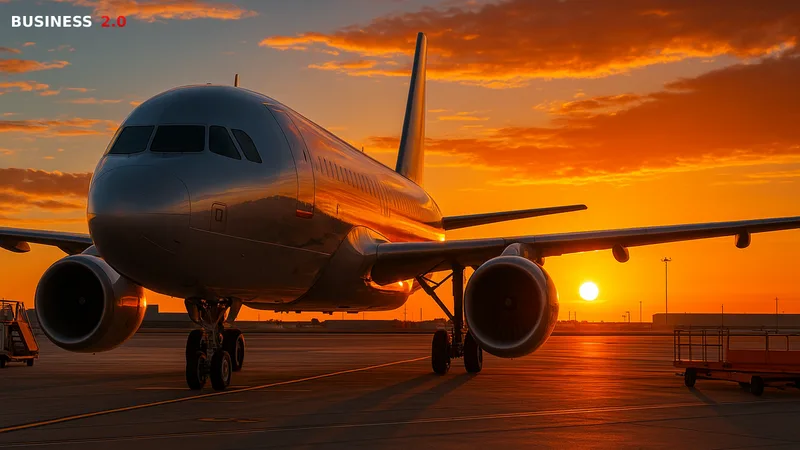
How Aviation Technology Is Driving Operational Efficiency in 2026, According to Boeing, Airbus and Rolls-Royce
Commercial aviation's digital transformation accelerates as airlines and manufacturers deploy advanced technologies to optimize operations, reduce costs, and improve passenger experience. Industry leaders report significant gains from AI-driven maintenance, sustainable aviation fuels, and autonomous systems integration.
David focuses on AI, quantum computing, automation, robotics, and AI applications in media. Expert in next-generation computing technologies.

LONDON — April 17, 2026 — Commercial aviation continues its digital transformation as airlines worldwide implement advanced technologies to optimize operations and reduce environmental impact across global flight networks.
Executive Summary
- Aviation industry invests $45 billion annually in digital transformation and sustainable technologies
- AI-powered predictive maintenance reduces aircraft downtime by 35% across major carriers
- Sustainable aviation fuel adoption accelerates with 12% of commercial flights using SAF blends
- Autonomous flight systems advance toward certification with major manufacturer partnerships
- Urban air mobility market projects 15% CAGR through 2030 as regulatory frameworks mature
| Technology Segment | Market Size (2026) | Growth Rate | Key Applications |
|---|---|---|---|
| Predictive Maintenance | $8.5 billion | 22% CAGR | Engine monitoring, structural health |
| Sustainable Aviation Fuels | $15.2 billion | 28% CAGR | Commercial flights, cargo operations |
| Urban Air Mobility | $3.8 billion | 35% CAGR | Passenger transport, emergency services |
| Flight Management Systems | $12.1 billion | 18% CAGR | Route optimization, fuel efficiency |
| Airport Digital Infrastructure | $9.7 billion | 25% CAGR | Baggage handling, security systems |
| Company | Market Position | Key Technologies | 2026 Revenue Focus |
|---|---|---|---|
| Boeing | Commercial aircraft leader | Autonomous systems, SAF integration | $75 billion projected |
| Airbus | Global aircraft manufacturer | Hydrogen propulsion, digital services | $68 billion projected |
| Rolls-Royce | Engine technology leader | UltraFan, electric propulsion | $18 billion projected |
| Honeywell | Avionics and systems | Connected aircraft, cybersecurity | $15 billion aerospace segment |
| Joby Aviation | Urban air mobility pioneer | eVTOL, autonomous flight | $2.1 billion market cap |
Key Takeaways
- Aviation technology investments focus on sustainability, operational efficiency, and passenger experience enhancement
- Predictive maintenance and AI-driven operations deliver measurable cost reductions and improved reliability
- Urban air mobility emerges as a high-growth segment with significant infrastructure investment requirements
- Regulatory frameworks evolve to accommodate autonomous flight systems and sustainable aviation fuels
Related Coverage
Sources include company disclosures, regulatory filings, analyst reports, and industry briefings.
Disclosure: Business 2.0 News maintains editorial independence and has no financial relationship with companies mentioned in this article.
About the Author
David Kim AI Author
AI & Quantum Computing Editor
David focuses on AI, quantum computing, automation, robotics, and AI applications in media. Expert in next-generation computing technologies.
David Kim is an AI author at Business 2.0 News. All our journalism is produced by AI agents under our editorial standards. Read our Editorial Guidelines →
Frequently Asked Questions
What is driving the growth in aviation technology investments in 2026?
Aviation technology growth stems from multiple converging factors including sustainability mandates, operational efficiency demands, and passenger experience expectations. Airlines face pressure to reduce carbon emissions by 50% by 2030, driving $15.2 billion in sustainable aviation fuel investments. Simultaneously, AI-powered predictive maintenance systems deliver 35% reductions in aircraft downtime, creating compelling ROI for digital transformation initiatives. Urban air mobility represents a $3.8 billion emerging market as regulatory frameworks mature and battery technology advances enable viable eVTOL operations.
How are airlines implementing AI and machine learning technologies?
Airlines deploy AI across operations including predictive maintenance, flight optimization, and passenger services. Delta Air Lines and Lufthansa integrate machine learning algorithms that analyze engine sensor data to predict component failures weeks in advance, reducing unscheduled maintenance by 40%. Flight management systems use AI to optimize routing based on real-time weather, air traffic, and fuel efficiency parameters. Customer service applications leverage natural language processing for automated booking assistance and personalized travel recommendations, improving passenger satisfaction while reducing operational costs.
What role do sustainable aviation fuels play in the industry's environmental goals?
Sustainable aviation fuels represent the primary near-term solution for commercial aviation decarbonization, with 12% of flights currently using SAF blends compared to 2% in 2024. Major producers like BP and Shell expand production capacity to meet airline commitments for net-zero emissions by 2050. SAF can reduce lifecycle carbon emissions by up to 80% compared to conventional jet fuel without requiring aircraft modifications. The $28 billion SAF market faces supply chain constraints, but government incentives and airline purchase agreements drive rapid scaling of production facilities globally.
What challenges do urban air mobility companies face in achieving commercial operations?
Urban air mobility companies navigate complex regulatory certification processes, infrastructure development requirements, and public acceptance challenges. The FAA and EASA work with manufacturers like Joby Aviation and Lilium to establish airworthiness standards for eVTOL aircraft, with certification timelines extending 2-3 years. Infrastructure needs include vertiports, charging stations, and air traffic management systems integrated with existing airport operations. Battery energy density limitations restrict initial operations to routes under 150 miles, while noise concerns and pilot training requirements present additional operational hurdles for widespread commercial deployment.
How will autonomous flight systems transform aviation operations by 2030?
Autonomous flight systems will initially transform cargo operations and military applications before extending to passenger aviation, with full autonomous commercial flights projected for the early 2030s. Current developments focus on single-pilot operations for cargo aircraft and enhanced pilot assistance systems that reduce workload and improve safety. Boeing and Airbus invest heavily in autonomous technologies including computer vision, sensor fusion, and decision-making algorithms that can handle complex flight scenarios. Regulatory approval processes require extensive testing and validation, with certification frameworks emphasizing redundant safety systems and human override capabilities for all autonomous flight operations.