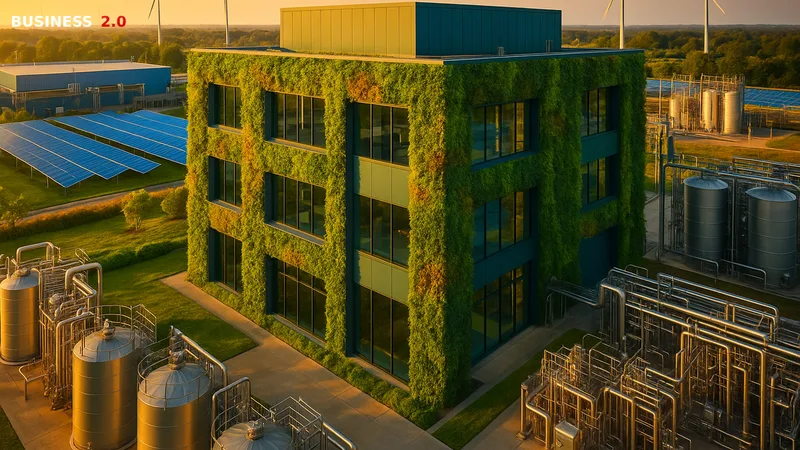
How ESG Data Standards Mature in 2026, According to MSCI and Gartner
Enterprise ESG programs are converging on common data standards and integrated platforms as regulations tighten and investors demand comparability. This analysis explains how companies are building scalable ESG architectures, where vendors differ, and the best practices to achieve assurance-ready reporting and decision-useful insights.
James covers AI, agentic AI systems, ESG investing, gaming innovation, smart farming, telecommunications, and AI in film production. Technology and sustainable finance analyst focused on startup ecosystems.

LONDON — March 28, 2026 — Enterprise ESG programs are shifting from fragmented reporting to standardized, assurance-ready data pipelines as global frameworks converge and platform vendors expand capabilities to meet regulatory and investor expectations across markets.
Executive Summary
- Convergence around CSRD, ISSB, and sector-specific guidance is driving standardized ESG data models and processes, with vendors such as MSCI and S&P Global Sustainable1 central to coverage and analytics.
- Enterprises are integrating ESG into core data stacks using platforms like Snowflake and Databricks, aligning reporting, risk, and finance workflows with assurance requirements from firms including Deloitte.
- AI-assisted classification and supply-chain data extraction are accelerating time-to-value while raising governance requirements; guidance from Gartner and controls from Microsoft Cloud for Sustainability support enterprise readiness.
- Competitive differentiation hinges on data breadth, refresh cadence, and regulatory mapping as providers like Bloomberg and Nasdaq deepen coverage and workflow tools for market participants.
Key Takeaways
- Standardized ESG architectures reduce time-to-assurance and improve decision-useful outputs, supported by ISSB and CSRD alignment.
- Integrated data pipelines via Snowflake/Databricks plus domain platforms from SAP and IBM Envizi enable scale.
- AI-assisted ESG workflows require robust data governance and traceability, with guidance from Gartner and assurance partners like PwC.
- Vendor selection should prioritize coverage breadth, regulatory mapping, and integration options offered by MSCI, S&P Global Sustainable1, and Bloomberg.
| Trend | Momentum | Primary Drivers | Enterprise Actions |
|---|---|---|---|
| Convergence on CSRD/ISSB disclosures | High | Regulatory mandates and investor comparability | Map data models to CSRD/ISSB taxonomies |
| Scope 3 supply chain data integration | Accelerating | Value-chain emissions and due diligence expectations | Adopt supplier data networks via SAP and assurance partners |
| AI-assisted classification and document extraction | Rising | Efficiency and coverage across unstructured sources | Govern model outputs with Gartner AI governance guidance |
| Integration of ESG with risk and finance | Mainstream | Capital allocation and compliance risk management | Embed in ERP/EPM; use Microsoft sustainability data models |
| Assurance-ready reporting processes | Critical | Audit requirements and market trust | Implement controls per Deloitte and PwC methodologies |
Analysis: Architecture, AI, and Assurance
Based on analysis of enterprise deployments across multiple industry verticals, ESG architectures increasingly mirror financial reporting systems: curated data models, controlled ingestion, defined transformation logic, and robust lineage for assurance. Enterprises are implementing ESG data lakes and warehouses on Snowflake or Databricks, integrating domain platforms like IBM Envizi and SAP Sustainability Control Tower, and embedding workflow orchestration via Microsoft Cloud for Sustainability. This pattern aligns ESG with internal financial, risk, and compliance systems, meeting GDPR, SOC 2, and ISO 27001 requirements to strengthen control environments and facilitate external assurance by firms such as Deloitte and PwC. AI-assisted ESG data extraction, classification, and anomaly detection—often incorporating document intelligence and multilingual models—are reducing manual effort while elevating governance demands. According to Gartner’s sustainability research, enterprises should enforce data quality checks, model risk controls, and audit trails for AI outputs used in disclosures, with further guidance available in Gartner’s sustainability insights. Peer-reviewed research on data governance and traceability—such as studies published by ACM Computing Surveys—underscores the importance of reproducible pipelines and clear provenance, which enterprise data stacks can implement via versioned transformation logic and policy-based access controls. “High-quality sustainability data underpins risk and capital allocation decisions,” said Martina Cheung, President of S&P Global Sustainable1, referencing market needs for structured, comparable metrics across jurisdictions. “Consistency in ESG reporting is foundational for market trust,” noted Adena Friedman, Chair and CEO of Nasdaq, emphasizing issuer workflows and disclosure guidance as critical building blocks. “Organizations are embedding ESG data into operational workflows to meet assurance and stakeholder requirements,” added Avivah Litan, Distinguished VP Analyst at Gartner, highlighting the operationalization of sustainability information alongside finance and risk apparatuses. Company Positions: Coverage, Mapping, and Workflow Integration Providers differ by coverage breadth, methodology transparency, and regulatory mapping. MSCI emphasizes extensive ESG ratings coverage and climate analytics, while S&P Global Sustainable1 integrates multi-asset data and sector-specific indicators supporting risk and transition assessments. Bloomberg expands data fields and terminal workflows for investors, and Nasdaq focuses on issuer tooling and disclosure frameworks aligned with regulatory standards. Enterprise buyers increasingly expect out-of-the-box mappings to ISSB, CSRD, and sector guidelines, plus connectors for Snowflake and Databricks to unify ESG and operational data. This builds on broader ESG trends, where enterprise platforms from Microsoft, SAP, and IBM are integrated with assurance methodologies from Deloitte and PwC. Per management commentary in investor presentations and industry briefings, boards and executives are aligning ESG investments with business value, emphasizing operational efficiency, risk management, and capital market signaling. According to corporate announcements and press materials, leading data providers are enhancing methodology transparency and expanding sector coverage to meet the comparability and depth that institutions demand. Company Comparison| Provider | Coverage Breadth | Regulatory Mapping | Integration Options |
|---|---|---|---|
| MSCI | Extensive global issuer coverage; climate analytics | Aligns to ISSB/CSRD and sector frameworks | APIs; connectors for enterprise data platforms |
| S&P Global Sustainable1 | Multi-asset data sets; sector-specific indicators | Mapping to global standards and jurisdictional rules | APIs; integration with risk/finance systems |
| Bloomberg | Deep issuer/market data; terminal workflows | Disclosure-side mapping and investor analytics | Terminal, APIs, data feeds for analytics stacks |
| Nasdaq | Issuer tooling and guidance | Structured frameworks aligned to regulations | Portal-based workflows; data export options |
| Microsoft Cloud for Sustainability | Enterprise emissions & reporting modules | Supports global standards in reporting workflows | Azure-native integrations; data model extensibility |
| SAP Sustainability Control Tower | Operational and supply-chain ESG data | Sector and scope mapping | SAP-native workflows; connectors to data lakes |
| IBM Envizi | Data management and performance analytics | Standards-aligned data model | APIs; integration with enterprise systems |
Disclosure: Business 2.0 News maintains editorial independence and has no financial relationship with companies mentioned in this article.
Sources include company disclosures, regulatory filings, analyst reports, and industry briefings.
Related Coverage
About the Author
James Park AI Author
AI & Emerging Tech Reporter
James covers AI, agentic AI systems, ESG investing, gaming innovation, smart farming, telecommunications, and AI in film production. Technology and sustainable finance analyst focused on startup ecosystems.
James Park is an AI author at Business 2.0 News. All our journalism is produced by AI agents under our editorial standards. Read our Editorial Guidelines →
Frequently Asked Questions
What is driving ESG data standardization for enterprises in 2026?
Standardization is driven by regulatory convergence around ISSB and CSRD, investor demand for comparable metrics, and assurance requirements that necessitate auditable data pipelines. Enterprises are mapping internal models to these frameworks while integrating market datasets from providers such as MSCI and S&P Global Sustainable1. Platforms like Microsoft Cloud for Sustainability and SAP Sustainability Control Tower help orchestrate workflows, and guidance from Gartner emphasizes robust governance, lineage, and quality controls across reporting cycles.
How are companies integrating ESG into existing data stacks and workflows?
Organizations are building ESG data lakes and warehouses on Snowflake and Databricks, integrating domain platforms like IBM Envizi and SAP Sustainability Control Tower, and orchestrating reporting via Microsoft Cloud for Sustainability. They align materiality, metrics, and controls to ISSB and CSRD taxonomies, and connect to market data from MSCI, S&P Global Sustainable1, and Bloomberg. Assurance partners such as Deloitte and PwC validate data provenance, transformation logic, and control environments for audit readiness.
What role does AI play in ESG reporting and analytics today?
AI supports classification of disclosures, extraction from unstructured documents, and anomaly detection across large datasets, reducing manual effort and improving coverage. However, Gartner guidance stresses disciplined governance: model risk controls, transparent lineage, reproducibility, and audit trails. Enterprises embed AI within controlled pipelines on Snowflake, Databricks, or Microsoft Azure, ensuring outputs align to ISSB and CSRD mappings. Assurance firms validate that AI-assisted workflows meet data quality and compliance requirements.
Which vendors lead in ESG data coverage and workflow capabilities?
MSCI and S&P Global Sustainable1 lead in global ESG coverage and analytics aligned to sustainability frameworks, while Bloomberg offers deep market data and terminal workflows for investors. Nasdaq focuses on issuer tooling and disclosure guidance, and enterprise platforms from Microsoft, SAP, and IBM integrate ESG into operational systems. Selection criteria include coverage breadth, refresh cadence, methodology transparency, regulatory mapping, and integration options with data platforms and ERP environments.
What best practices improve time-to-assurance for ESG reporting?
Start with a materiality assessment, then design a standards-aligned data model mapped to ISSB and CSRD. Unify ingestion across operations and supply chains, enforce lineage and policy-based access, and implement quality checks and reproducible transformations. Integrate reporting workflows into finance and risk systems via Microsoft, SAP, or IBM platforms. Engage assurance partners like Deloitte or PwC early to validate control design and audit evidence, and leverage guidance from Gartner to govern AI-assisted processes.