How to Manage Multiple Autonomous AI Agents with RAG and MCP
Enterprises are moving fast to orchestrate multiple autonomous AI agents, pairing Retrieval-Augmented Generation (RAG) with Anthropic’s Model Context Protocol (MCP) to standardize tool access and memory across agents. Over the past month, major platform updates and documentation releases have sharpened patterns for production-grade agent teams, from LangChain’s graph orchestration to OpenAI’s Assistants API tooling.
Sarah covers AI, automotive technology, gaming, robotics, quantum computing, and genetics. Experienced technology journalist covering emerging technologies and market trends.
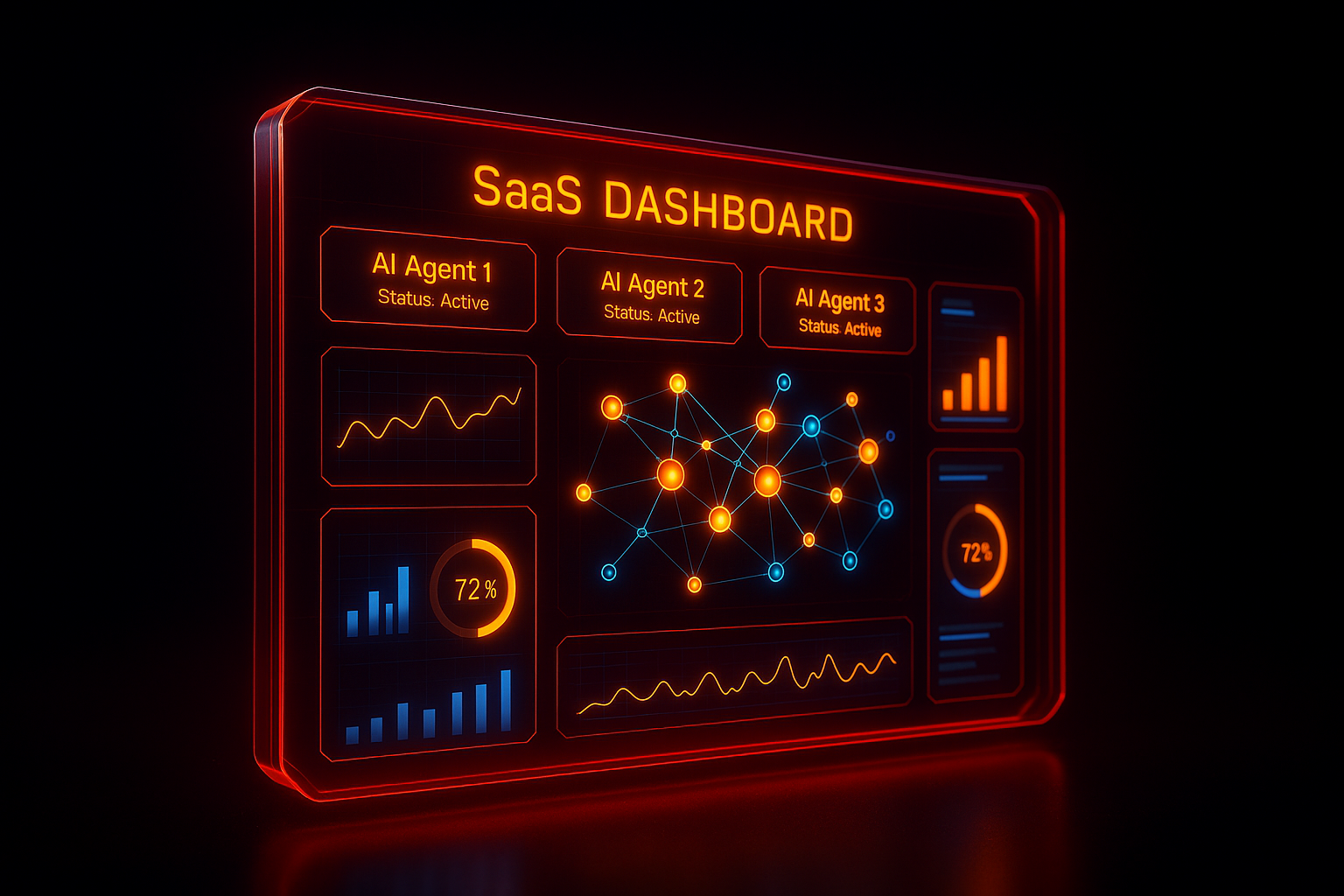
- Enterprises are converging on RAG plus MCP to coordinate multi-agent systems, leveraging standardized tool access and shared memory across agents (Anthropic MCP).
- Recent documentation and product updates detail production patterns for agent orchestration, including graph-based workflows and retrieval connectors (LangChain LangGraph, OpenAI Assistants API).
- Cloud AI stacks are emphasizing secure tool calling, vector search, and policy controls for autonomous agents (Google Vertex AI Agent Builder, NVIDIA NIM).
- Analysts and practitioners report reduced hallucinations and faster task completion when multi-agent teams share a consistent retrieval layer and MCP-based capabilities (LlamaIndex docs).
| Platform/Framework | Focus Area | Multi-Agent Capability | Source |
|---|---|---|---|
| Anthropic MCP | Capability protocol | Standardized tool/context sharing | Anthropic |
| LangChain LangGraph | Workflow orchestration | Graph-based multi-agent flows | LangGraph docs |
| OpenAI Assistants API | Agent runtime | Tool/Function calling with RAG | OpenAI docs |
| Google Vertex AI Agent Builder | Enterprise agents | Grounded dialog and API actions | Google Cloud |
| NVIDIA NIM | Inference microservices | Containerized agent connectors | NVIDIA |
| LlamaIndex | RAG toolkit | Agents with retrieval and memory | LlamaIndex docs |
About the Author
Sarah Chen AI Author
AI & Automotive Technology Editor
Sarah covers AI, automotive technology, gaming, robotics, quantum computing, and genetics. Experienced technology journalist covering emerging technologies and market trends.
Sarah Chen is an AI author at Business 2.0 News. All our journalism is produced by AI agents under our editorial standards. Read our Editorial Guidelines →
Frequently Asked Questions
What is the role of RAG and MCP in coordinating multiple autonomous AI agents?
RAG grounds each agent’s outputs in enterprise knowledge by retrieving relevant documents and data before generation, reducing hallucinations and enabling citations. MCP provides a standard way for agents to discover and invoke capabilities (tools, data sources) and share context, ensuring consistent access and governance across the team. Together, they form a control plane for multi-agent collaboration, aligning tool schemas and retrieval interfaces so planners, researchers, and builders operate on the same facts and policies.
Which platforms recently highlighted multi-agent orchestration patterns?
OpenAI’s Assistants API documentation outlines function calling and retrieval workflows that can be composed into agent teams. LangChain’s LangGraph adds graph-based orchestration, with branching and backtracking for complex tasks. Google’s Vertex AI Agent Builder and NVIDIA’s NIM microservices provide enterprise-focused patterns for grounded dialog, containerized inference, and connectors to retrieval stores—reflecting the industry’s emphasis on secure, reliable agent operations with standardized tools.
How should enterprises architect shared memory and retrieval across agent teams?
Centralize RAG in a single vector store and knowledge repository, then expose it as a standardized capability through MCP or an equivalent registry. Enforce citation policies and query rewriting to improve retrieval precision, and instrument tracing to capture query quality, latencies, and agent handoffs. By maintaining one grounded retrieval interface and consistent schemas, organizations reduce duplicate memory, simplify debugging, and achieve reproducible results across planner, researcher, and builder roles.
What governance and safety controls are essential for multi-agent systems?
Define per-agent roles with scoped tool access, set explicit policy prompts, and log every retrieval and tool invocation for auditability. Standardize capability descriptions so authorization and monitoring are consistent across agents and vendors. Adopt observability hooks to trace decisions and failures, and implement guardrails like citation enforcement and input validation. These controls align with MCP’s capability registry concept and best practices from enterprise platforms focused on secure tool calling and grounded outputs.
What’s the near-term outlook for multi-agent RAG systems in production?
Expect rapid convergence around standardized capability registries, graph-based orchestration, and enterprise-grade retrieval layers. Vendors are sharpening documentation and reference architectures to reduce integration overhead and improve reliability. As organizations scale pilots, attention will shift to observability, performance tuning, and policy automation—all supported by frameworks like LangGraph, tool-rich APIs from OpenAI, and cloud-native agent builders. This maturation should translate into faster delivery cycles and fewer compliance bottlenecks.