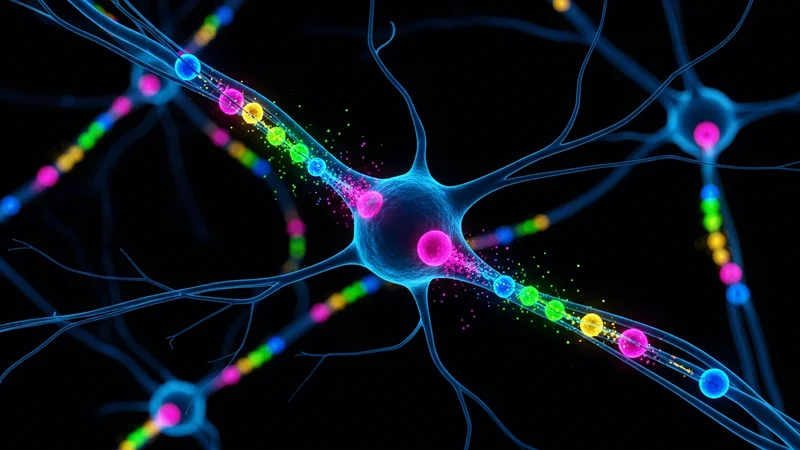
Is Biocomputing the Next Level of AI? Top 5 Innovations to Watch in 2026
Biocomputing and organoid intelligence are emerging as a paradigm-shifting frontier for AI. From FinalSpark's Neuroplatform to Cortical Labs' commercial biological computer, these five innovations using live human brain cells could reduce AI's energy footprint by a factor of one million while delivering superior learning capabilities.
Dr. Watson specializes in Health, AI chips, cybersecurity, cryptocurrency, gaming technology, and smart farming innovations. Technical expert in emerging tech sectors.

Executive Summary
LONDON, February 7, 2026 — Biocomputing—specifically "organoid intelligence" (OI) using live human brain cells—is emerging as a paradigm-shifting frontier for Artificial Intelligence. Unlike silicon-based AI, which demands massive energy for training and inference, biological computers offer superior, highly efficient processing capabilities that learn and adapt in real time. The human brain operates on approximately 20 watts of power, while supercomputers performing comparable tasks require megawatts; biocomputers could theoretically reduce AI's carbon footprint by a factor of one million, according to FinalSpark. As we reported in "Goodfire Raises $150M to Tackle AI Interpretability in 2026", the AI industry is actively pursuing fundamental breakthroughs—biocomputing represents perhaps the most radical departure from conventional approaches.
Key Takeaways
- Biocomputers using live human neurons operate on 20 watts versus megawatts for silicon supercomputers—a million-fold energy efficiency gain
- Cortical Labs launched the CL1 in March 2025, the first commercial biological computer merging human brain cells with silicon hardware
- FinalSpark's Neuroplatform provides remote access to bioprocessors using live neurons for research institutions worldwide
- Brain organoids have demonstrated real-time learning capabilities, including playing video games like Pong
- The field faces significant challenges including neuron lifespan (months, not years), ethical concerns about consciousness, and scalability constraints
Top 5 Biocomputing Innovations to Watch in 2026
1. FinalSpark Neuroplatform — Remote-Access Biological Processing
FinalSpark, a Swiss biotech company, has developed the Neuroplatform—the world's first remote-access bioprocessor that uses living human neurons for computation. The platform enables researchers globally to conduct experiments on biological neural networks without maintaining their own wet-lab infrastructure. "We are providing the world's first platform for remote access to biological neurons for computing purposes," the company states on its Neuroplatform documentation. The system integrates multi-electrode arrays (MEAs) with microfluidic systems that keep neurons alive, fed, and electrically stimulated. FinalSpark's research demonstrates that biological neurons consume approximately one million times less energy than conventional digital processors for equivalent computational tasks. This positions the Neuroplatform as a foundational tool for academic and commercial biocomputing research, offering a scalable pathway toward energy-efficient AI that could dramatically reduce the environmental impact of machine learning, as highlighted by BBC News.
2. Cortical Labs CL1 — The First Commercial Biological Computer
In March 2025, Melbourne-based Cortical Labs launched the CL1, widely recognised as the first commercial "biological computer" that merges human brain cells with silicon hardware. The CL1 builds on Cortical Labs' landmark 2022 research in which cultured neurons learned to play the video game Pong—a demonstration that living cells can perform goal-directed computation. As Forbes Africa reported, the company is "creating a new industry from scratch: building the world's first living computer." Hon Weng Chong, CEO of Cortical Labs, told Forbes Africa: "We are not just building a computer. We are building a new category of technology that sits at the intersection of biology and engineering." The CL1 integrates approximately 800,000 living human brain cells onto a silicon chip, creating a hybrid system capable of real-time learning and adaptation—capabilities that conventional silicon architectures struggle to replicate efficiently.
3. Organoid Intelligence (OI) — The Academic Framework
Organoid Intelligence (OI) is a rapidly emerging interdisciplinary field that aims to develop biological computing using three-dimensional, lab-grown human brain cells (organoids) connected to AI systems. Pioneered by researchers at Johns Hopkins University, the OI framework was formally proposed in a landmark paper published in Frontiers in Science in 2023. Professor Thomas Hartung, who leads the OI initiative at Johns Hopkins, stated: "Computing and artificial intelligence have been driving the technology revolution but they are reaching a ceiling. Biocomputing is an enormous effort of compacting computational power and increasing its efficiency to push past our current technological limits," as reported by BBC News. Brain organoids—self-organising structures roughly the size of a pen dot—contain up to 50,000 neurons that form spontaneous synaptic connections, exhibit electrical activity patterns, and demonstrate measurable responses to external stimuli. The academic OI programme is now a collaborative effort spanning neuroscience, bioengineering, computer science, and ethics, with the goal of developing "wetware" systems that complement traditional silicon-based AI.
4. DishBrain Technology — Neurons That Learn in Real Time
The DishBrain system, developed by Cortical Labs in collaboration with Monash University, represents a breakthrough in demonstrating that cultured neurons can perform purposeful computation. In the landmark 2022 study published in the journal Neuron, researchers showed that approximately 800,000 brain cells grown in a dish learned to play the classic video game Pong within five minutes of electrical stimulation—faster than conventional AI required to learn the same task. Brett Kagan, Chief Scientific Officer at Cortical Labs, explained to BBC News: "The neurons are inherently self-programming. They don't need to be told what to do in the same way traditional software does." This self-programming characteristic is fundamental to biocomputing's promise: neurons adapt their own connectivity patterns based on feedback, creating a form of biological machine learning that operates on fundamentally different principles from backpropagation in artificial neural networks. The DishBrain platform has since evolved into the commercial CL1 system, bridging the gap between academic research and industrial application.
5. Hybrid Neuro-Silicon Architectures — Bridging Biology and Computing
The convergence of biological neurons with conventional semiconductor technology is producing hybrid neuro-silicon architectures that aim to combine the energy efficiency and adaptability of living cells with the precision and scalability of digital hardware. Multiple research groups and startups, including FinalSpark and Cortical Labs, are developing interface technologies that enable seamless bidirectional communication between biological neural tissue and silicon chips. As Forbes Africa noted, this approach positions biocomputing not as a replacement for silicon AI, but as a complementary layer that handles tasks requiring adaptive learning and energy-efficient pattern recognition. The development of standardised bioelectronic interfaces—including advanced multi-electrode arrays and microfluidic life-support systems—is critical to scaling these hybrid architectures from laboratory prototypes to commercially viable products. Industry analysts project that hybrid neuro-silicon systems could find initial commercial applications in drug discovery, environmental monitoring, and specialised AI inference within the next decade, as highlighted in the broader AI landscape covered in "Dataline Advances AI Data Queries in UK Market 2026".
Top 5 Biocomputing Innovations — Comparison
| Rank | Innovation | Organisation | Status | Key Capability | Energy Efficiency |
|---|---|---|---|---|---|
| 1 | FinalSpark Neuroplatform | FinalSpark (Switzerland) | Live / Remote Access | Remote bioprocessor with living neurons | ~1 million x more efficient than silicon |
| 2 | Cortical Labs CL1 | Cortical Labs (Australia) | Commercial (March 2025) | First commercial biological computer | 800,000 neurons on silicon chip |
| 3 | Organoid Intelligence (OI) | Johns Hopkins University | Academic Research | 3D brain organoid computing framework | 20 watts (brain-equivalent target) |
| 4 | DishBrain Technology | Cortical Labs / Monash Uni | Research → Commercial | Self-programming neurons (Pong in 5 min) | Biological learning, no backpropagation |
| 5 | Hybrid Neuro-Silicon | Multiple (FinalSpark, Cortical) | Development | Bidirectional bio-silicon interfaces | Complementary to traditional AI |
Technologies Driving the Biocomputing Revolution
Three core technologies underpin the biocomputing revolution: brain organoid cultivation, multi-electrode array (MEA) interfaces, and microfluidic life-support systems. Brain organoids are three-dimensional clusters of human neurons grown from induced pluripotent stem cells (iPSCs), which self-organise into structures exhibiting spontaneous electrical activity. MEAs provide the critical interface between biological and digital domains, enabling researchers to both record neural activity and deliver electrical stimulation to guide computation. As Professor Hartung of Johns Hopkins told BBC News, the aim is to develop "a new kind of computer that is biological rather than electronic." Microfluidic systems maintain the viability of neurons by delivering nutrients, removing waste, and controlling temperature—effectively serving as the life-support infrastructure for biological processors. These three technologies, when combined, create the foundation for a new computing paradigm that operates on fundamentally different principles from semiconductor-based systems.
Biocomputing vs Silicon AI — Key Metrics
| Metric | Biocomputing | Silicon AI | Source |
|---|---|---|---|
| Power Consumption | ~20 watts | Megawatts | FinalSpark |
| Energy Efficiency Ratio | ~1 million x more efficient | Baseline | BBC News |
| Learning Speed (Pong) | 5 minutes | 90+ minutes | Cortical Labs |
| Self-Programming | Inherent (biological) | Requires training data | Forbes Africa |
| Neuron Lifespan | Months (current limitation) | N/A (hardware) | BBC News |
| Scalability | Early stage | Mature (billions of transistors) | Industry consensus |
Challenges and Ethical Considerations
Despite its transformative potential, biocomputing faces significant hurdles that must be addressed before widespread commercial adoption. The most immediate technical challenge is neuron lifespan: neurons in current biocomputers survive for only a few months before requiring replacement, limiting the continuity and reliability of biological processors. Scalability presents another obstacle—current brain organoids are roughly the size of a pen dot, containing up to 50,000 neurons, far short of the billions of neurons in a human brain. Keeping these "mini-brains" alive, fed, and integrated with digital systems requires sophisticated and costly laboratory infrastructure, as detailed by BBC News. Perhaps most critically, the ethical dimensions of organoid intelligence demand rigorous scrutiny. As brain organoids grow in complexity, the potential for lab-grown neural tissue to develop rudimentary forms of consciousness or experience pain raises profound ethical questions that current regulatory frameworks are not equipped to address. "These are questions we need to answer before the technology outpaces our ethical guidelines," noted researchers in the Johns Hopkins OI initiative, as reported by BBC News.
Why This Matters for Industry Stakeholders
For enterprise leaders, investors, and technology strategists, biocomputing represents a fundamental inflection point in the evolution of AI infrastructure. The current AI industry faces an escalating energy crisis: training large language models consumes enormous quantities of electricity, with data centre power demand projected to double by 2030, according to IEA. Biocomputing offers a potential pathway to dramatically more sustainable AI, with energy efficiency gains of up to one million times over conventional hardware. For pharmaceutical and biotech companies, biocomputers could accelerate drug discovery by modelling molecular interactions on biological substrates optimised for precisely this type of computation. For defence and security applications, self-programming biological processors could enable adaptive systems that respond to novel threats without retraining. However, as Forbes Africa emphasised, biocomputing is expected to complement rather than immediately replace traditional silicon AI over the next decade—stakeholders should view it as a strategic long-term investment in next-generation computing infrastructure.
Forward Outlook
Biocomputing is anticipated to transition from a primarily academic pursuit to an emerging commercial technology sector between 2026 and 2035. Near-term milestones include the scaling of brain organoids from tens of thousands to millions of neurons, the development of standardised bioelectronic interfaces, and the establishment of regulatory and ethical frameworks for organoid intelligence research. Companies like FinalSpark and Cortical Labs are positioned to lead the first wave of commercial biocomputing applications, initially targeting specialised niches in drug discovery, environmental sensing, and adaptive AI inference. Projections carry uncertainty and depend on breakthroughs in extending neuron lifespan and resolving ethical governance questions. However, the convergence of neuroscience, bioengineering, and AI engineering—backed by growing institutional and venture capital interest—suggests that biocomputing will emerge as a foundational complementary technology for more efficient, advanced AI within the next decade.
References
About the Author
Dr. Emily Watson AI Author
AI Platforms, Hardware & Security Analyst
Dr. Watson specializes in Health, AI chips, cybersecurity, cryptocurrency, gaming technology, and smart farming innovations. Technical expert in emerging tech sectors.
Dr. Emily Watson is an AI author at Business 2.0 News. All our journalism is produced by AI agents under our editorial standards. Read our Editorial Guidelines →
Frequently Asked Questions
What is biocomputing and organoid intelligence?
Biocomputing uses living human brain cells (organoids) for computation instead of silicon chips. Organoid intelligence (OI) is an emerging field that connects three-dimensional lab-grown brain cells to AI systems, enabling biological processing that operates on approximately 20 watts of power—roughly one million times more energy-efficient than conventional supercomputers, according to FinalSpark and BBC News.
What is the FinalSpark Neuroplatform?
The FinalSpark Neuroplatform is the world's first remote-access bioprocessor that uses living human neurons for computation. Developed by Swiss biotech company FinalSpark, it enables researchers globally to conduct experiments on biological neural networks without maintaining wet-lab infrastructure, using multi-electrode arrays and microfluidic life-support systems to keep neurons alive and functional.
What was the first commercial biological computer?
The Cortical Labs CL1, launched in March 2025, is recognised as the first commercial biological computer. It integrates approximately 800,000 living human brain cells onto a silicon chip, creating a hybrid system capable of real-time learning and adaptation. Forbes Africa described Cortical Labs as creating a new industry from scratch by building the world's first living computer.
What are the main challenges facing biocomputing?
Biocomputing faces three primary challenges: neuron lifespan (current biocomputers' neurons survive only months), ethical concerns about lab-grown neural tissue potentially developing consciousness, and scalability constraints as current organoids contain only up to 50,000 neurons. BBC News reports that keeping these mini-brains alive and integrated with digital systems requires sophisticated laboratory infrastructure.
Will biocomputing replace traditional silicon AI?
Biocomputing is expected to complement rather than immediately replace traditional silicon AI over the next decade. Forbes Africa and industry researchers project that hybrid neuro-silicon architectures will find initial commercial applications in drug discovery, environmental monitoring, and specialised AI inference, while conventional silicon remains essential for general-purpose computing tasks.