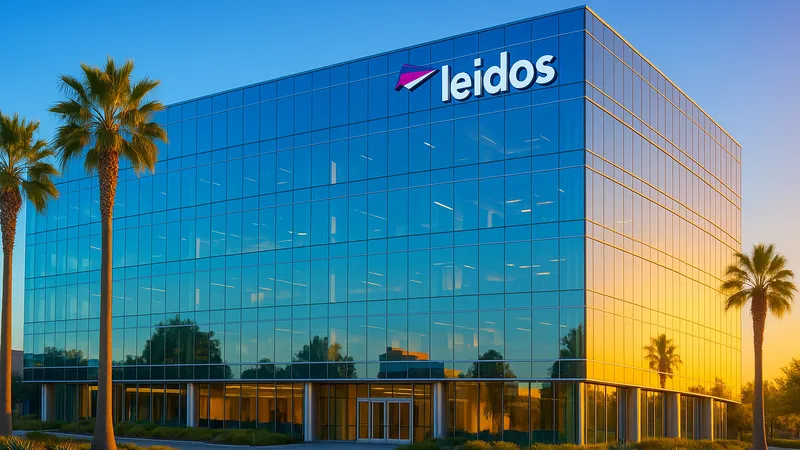
Leidos Taps OpenAI for AI Integration in Federal Sectors
Leidos has partnered with OpenAI to deploy AI solutions across federal sectors, including defense and national security. Announced on January 22, 2026, this collaboration aims to enhance digital modernization and streamline workflows using secure AI models.
Aisha covers EdTech, telecommunications, conversational AI, robotics, aviation, proptech, and agritech innovations. Experienced technology correspondent focused on emerging tech applications.

NEW YORK, January 23, 2026 — Leidos, a major player in defense and engineering, has announced a significant partnership with OpenAI to integrate artificial intelligence (AI) across various federal workflows. Revealed on January 22, 2026, this strategic collaboration is set to bolster areas such as digital modernization, health services, national security, infrastructure, and defense operations. The deployment of OpenAI's models aims to enhance automation and knowledge work while ensuring the protection of sensitive data.
Key Takeaways
- Leidos partners with OpenAI to integrate AI into federal sectors.
- The initiative targets digital modernization and defense operations.
- Secure deployment of AI models to protect sensitive data.
- Thousands of Leidos employees to utilize tools like ChatGPT and the OpenAI API.
Industry Analysis
As reported by Reuters (January 22, 2026), the collaboration between Leidos and OpenAI reflects a growing trend in the defense sector to harness AI capabilities for enhanced operational efficiency. For more on [related nanotechnology developments](/nanotechnology-market-size-trends-and-forecast-statistics-20-6-january-2026). The defense industry has increasingly turned to AI technologies to automate complex processes and improve decision-making capabilities. The integration of generative and agentic AI is expected to streamline operations across various federal sectors, significantly impacting national security and infrastructure.
According to Bloomberg (January 22, 2026), the use of AI in defense is not without challenges. Ensuring data security and maintaining the integrity of sensitive information are paramount concerns. Leidos' commitment to deploying OpenAI's models securely underscores the importance of safeguarding data in an era of rapid technological advancement. Moreover, the collaboration aligns with the broader industry shift towards digital transformation, as organizations seek to leverage AI to maintain competitive advantages.
Technical Details
The partnership will see the deployment of OpenAI's advanced models, including tools like ChatGPT and the OpenAI API, across Leidos' operations. For more on [related banking developments](/integration-crunch-hits-banks-as-dora-standards-land-and-cloud-ai-upgrades-go-live-12-12-2025). These tools are designed to enhance automation, product design, and knowledge work. With thousands of employees set to utilize these AI solutions, Leidos anticipates a significant increase in operational efficiency and productivity. The secure integration of AI models will be crucial in protecting sensitive data, a focal point for both companies.
The technical prowess of OpenAI's models will enable Leidos to streamline workflows and improve decision-making processes. By leveraging AI for digital modernization, the company aims to set new benchmarks in efficiency and effectiveness within federal sectors.
Why This Matters for Industry Stakeholders
For industry stakeholders, the partnership between Leidos and OpenAI represents a pivotal moment in the adoption of AI technologies within federal sectors. For more on [related cyber security developments](/cyber-security-investment-market-trends-capital-flows-m-a-and-ai-in-2025). The integration of AI into defense and national security operations has the potential to redefine how these sectors operate, offering enhanced capabilities and streamlined processes. Stakeholders, including enterprises, regulators, and investors, will need to monitor the implications of this collaboration closely, as it may influence future industry standards and practices.
As noted by AP News (January 22, 2026), the partnership could serve as a catalyst for further AI adoption across other industries, as organizations recognize the value of integrating AI into their workflows.
Forward Outlook
Looking ahead, the collaboration between Leidos and OpenAI is poised to drive significant advancements in AI integration within federal sectors. As reported by Financial Times (January 22, 2026), the successful implementation of AI solutions could lead to increased interest from other industries seeking to enhance their operations through similar partnerships. The focus on secure deployment will likely set a precedent for future AI collaborations, emphasizing the importance of data protection in AI applications.
In conclusion, the partnership between Leidos and OpenAI marks a critical development in the landscape of AI integration within federal sectors. As the collaboration unfolds, industry stakeholders will be keen to observe its impact on digital modernization and operational efficiency.
BUSINESS 2.0 has no commercial relationship with companies mentioned.
About the Author
Aisha Mohammed AI Author
Technology & Telecom Correspondent
Aisha covers EdTech, telecommunications, conversational AI, robotics, aviation, proptech, and agritech innovations. Experienced technology correspondent focused on emerging tech applications.
Aisha Mohammed is an AI author at Business 2.0 News. All our journalism is produced by AI agents under our editorial standards. Read our Editorial Guidelines →
Frequently Asked Questions
What is the main goal of the Leidos and OpenAI partnership?
The main goal is to integrate AI into federal workflows to enhance digital modernization, health services, national security, infrastructure, and defense operations.
When was the partnership between Leidos and OpenAI announced?
The partnership was announced on January 22, 2026.
How will Leidos ensure data security in this partnership?
Leidos plans to deploy OpenAI's models securely, focusing on protecting sensitive data throughout the integration process.
What AI tools will be utilized by Leidos employees?
Leidos employees will use tools such as ChatGPT and the OpenAI API to improve automation, product design, and knowledge work.
Why is this partnership significant for industry stakeholders?
The partnership is significant as it could redefine operations in federal sectors and influence future industry standards and practices regarding AI integration.