Mercedes-Benz S-Class Goes Autonomous: NVIDIA Powers the Future of Luxury Robotaxis
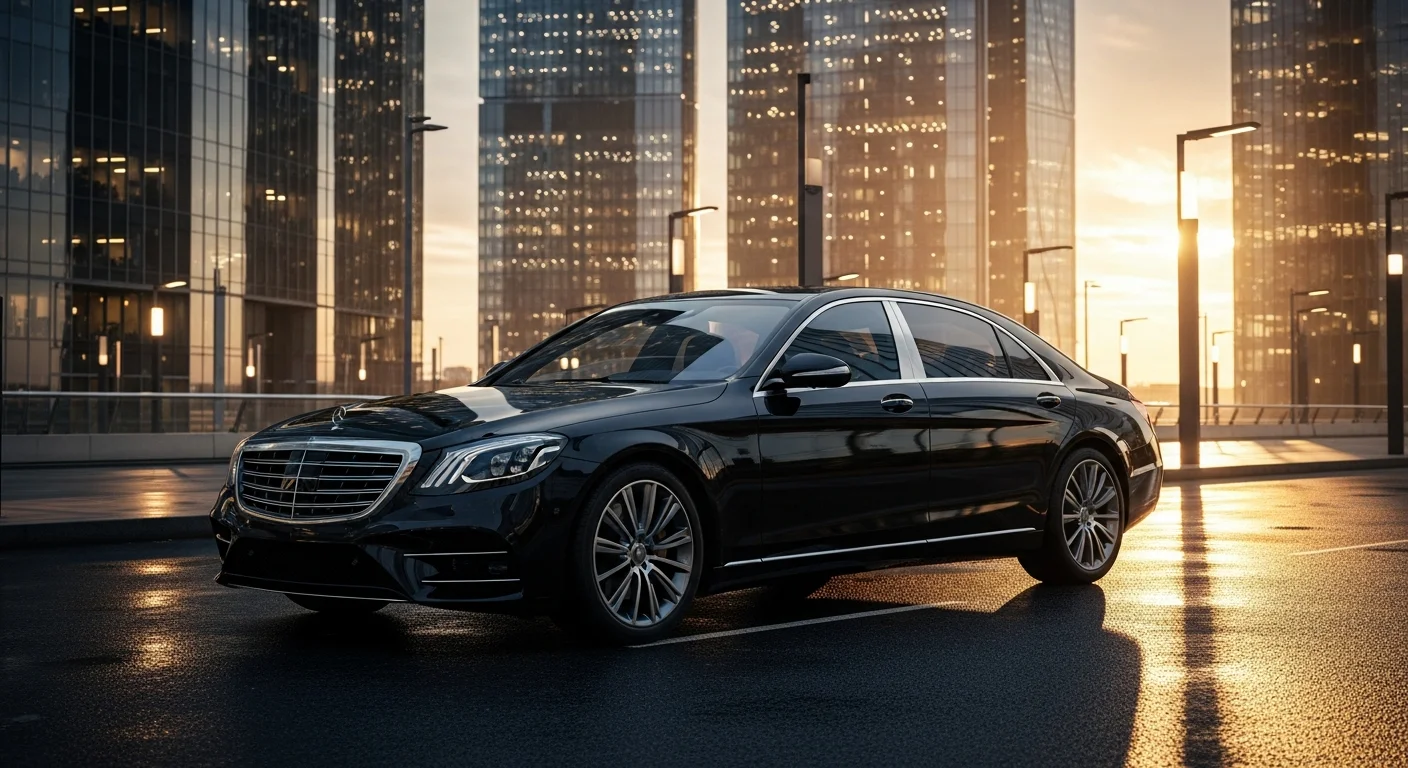
Mercedes-Benz unveils a Level 4-ready S-Class powered by NVIDIA DRIVE AV, marking 140 years of automotive innovation with AI-driven autonomous capabilities designed for premium robotaxi operations through Uber mobility network.
Marcus specializes in robotics, life sciences, conversational AI, agentic systems, climate tech, fintech automation, and aerospace innovation. Expert in AI systems and automation
Executive Summary
STUTTGART, Germany — January 31, 2026 — Mercedes-Benz has unveiled a groundbreaking new S-Class built for the AI era, integrating NVIDIA's advanced DRIVE AV platform to deliver Level 4-ready autonomous driving capabilities. The announcement, made during Mercedes-Benz's 140th anniversary celebrations at the Mercedes-Benz Museum in Stuttgart on January 29, 2026, signals a major shift in luxury automotive toward fully autonomous mobility.
The new S-Class will feature NVIDIA DRIVE Hyperion architecture and full-stack NVIDIA DRIVE AV L4 software, designed to support future robotaxi operations with end-to-end AI and classical driving stacks running in parallel. Through NVIDIA's partnership with Uber, these autonomous vehicles will be made available to riders through Uber's global mobility network.
Key Takeaways
- Mercedes-Benz S-Class becomes first luxury vehicle with production-ready Level 4 autonomous architecture
- NVIDIA DRIVE Hyperion platform integrates cameras, radar, and lidar with redundant compute systems
- Partnership with Uber enables deployment through ride-hailing network
- NVIDIA Halos safety system eliminates single points of failure
- AI trained on NVIDIA DGX systems and validated using Omniverse simulation
Industry Analysis: The Convergence of Luxury and Autonomy
The partnership between Mercedes-Benz and NVIDIA represents a significant milestone in the autonomous vehicle industry. Jensen Huang, founder and CEO of NVIDIA, emphasized the importance of this collaboration in a video celebrating the S-Class launch:
"Mercedes-Benz has set the standard in the automotive market, building cars defined by exquisite craftsmanship and safety engineering. Five years ago, NVIDIA began working with Mercedes-Benz to help carry that legacy into the AI era." — Jensen Huang, Founder and CEO, NVIDIA (NVIDIA Blog, January 2026)
This partnership demonstrates how established automakers can leverage AI expertise from technology companies to accelerate autonomous vehicle development without compromising the quality standards their customers expect.
Technical Architecture: NVIDIA DRIVE Hyperion Platform
The new S-Class is built on the NVIDIA DRIVE Hyperion reference architecture, a comprehensive platform designed for Level 4 autonomous operations. According to NVIDIA's technical documentation:
"The Drive Hyperion platform integrates sensor diversity spanning cameras, radar and lidar alongside redundant compute systems, with NVIDIA's Halos safety system applied to help eliminate single points of failure." — NVIDIA Technical Overview (Automotive World, January 30, 2026)
Table 1: NVIDIA DRIVE Hyperion Technical Specifications
| Component | Specification | Purpose |
|---|---|---|
| Compute Platform | Redundant dual-system architecture | Maintains operation if one processor fails |
| Camera Array | Multi-camera surround vision | 360-degree environmental perception |
| Radar Sensors | Long-range and short-range units | Object detection in all weather conditions |
| Lidar System | High-resolution 3D mapping | Precise distance measurement and mapping |
| Safety System | NVIDIA Halos | Eliminates single points of failure |
| Training Infrastructure | NVIDIA DGX systems | Large-scale AI model training |
| Simulation Platform | Omniverse NuRec + Cosmos | High-fidelity validation testing |
Dual-Stack Architecture for Safety-First Autonomy
NVIDIA DRIVE AV employs a unique dual-stack approach that runs AI-driven decision-making alongside a parallel classical safety stack. This architecture ensures reliable operation across the "long tail" of driving scenarios—rare and complex edge cases that traditional rule-based systems struggle to handle.
"The software pairs AI-driven decision-making with a parallel classical safety stack to keep the vehicle operating within defined boundaries. The architecture enables a premium, chauffeur-style autonomous experience." — NVIDIA DRIVE AV Architecture Overview (Automotive World, January 30, 2026)
Table 2: Comparison of Autonomous Driving Approaches
| Feature | Traditional Rule-Based | AI-Only Systems | NVIDIA DRIVE AV Dual-Stack |
|---|---|---|---|
| Edge Case Handling | Limited to programmed scenarios | Learns from training data | AI reasoning + safety boundaries |
| Predictability | High | Variable | High with AI flexibility |
| Adaptability | Low | High | High within safe limits |
| Safety Validation | Deterministic testing | Statistical validation | Both approaches combined |
| Hardware Redundancy | Optional | Optional | Built-in requirement |
| Regulatory Compliance | Traditional certification | Emerging frameworks | Halos safety certification |
Why This Matters for Industry Stakeholders
The Mercedes-Benz S-Class announcement carries significant implications across the automotive ecosystem:
For Automakers
The partnership model demonstrates that traditional manufacturers can achieve Level 4 autonomy by collaborating with AI specialists rather than developing all capabilities in-house. This approach accelerates time-to-market while maintaining brand-specific quality standards.
For Technology Providers
NVIDIA's comprehensive platform—from training infrastructure to production-ready software—establishes a template for full-stack autonomous vehicle solutions. The integration with Mercedes-Benz's MB.OS operating system shows how AI platforms can adapt to manufacturer-specific architectures.
For Mobility Services
The Uber partnership signals that premium autonomous vehicles may enter ride-hailing networks, potentially transforming the economics of mobility-as-a-service. Riders could access luxury autonomous experiences previously limited to private ownership.
Forward Outlook
The new S-Class positions Mercedes-Benz at the forefront of the autonomous luxury segment. Building on the Mercedes-Benz CLA's designation as Euro NCAP's Best Performer of 2025, the company is extending its safety leadership into active, AI-driven accident prevention.
Industry analysts expect additional automakers to pursue similar partnerships as the competitive landscape shifts toward autonomy-ready vehicles. The integration of NVIDIA's Alpamayo open models and Cosmos world simulation tools may enable smaller manufacturers to access advanced autonomous capabilities previously available only to industry leaders.
Disclosure: This analysis is based on publicly available information from NVIDIA and automotive industry sources. Market forecasts are subject to regulatory approvals and technological developments.
Frequently Asked Questions
What is Level 4 autonomous driving?
Level 4 autonomy means the vehicle can handle all driving tasks in specific conditions without human intervention. Unlike Level 2 or 3 systems that require driver supervision, Level 4 vehicles can operate independently within defined geographic areas or conditions, making them suitable for robotaxi operations.
When will the NVIDIA-powered Mercedes-Benz S-Class be available?
Mercedes-Benz unveiled the new S-Class on January 29, 2026, at the Mercedes-Benz Museum in Stuttgart. Production timelines for robotaxi deployment through Uber's network have not been publicly disclosed, pending regulatory approvals in target markets.
How does NVIDIA DRIVE AV ensure safety?
NVIDIA DRIVE AV uses a dual-stack architecture combining AI-driven decision-making with a parallel classical safety stack. The NVIDIA Halos safety system provides defense-in-depth with redundant compute, multimodal sensor diversity, and software stack diversity to eliminate single points of failure.
What sensors does the autonomous S-Class use?
The NVIDIA DRIVE Hyperion architecture integrates cameras, radar, and lidar sensors. This multimodal approach provides robust perception across different environmental conditions, from bright sunlight to rain and fog.
Will consumers be able to purchase the autonomous S-Class?
The initial deployment focuses on robotaxi operations through Uber's mobility network. Consumer availability of Level 4 autonomous features will depend on regulatory frameworks in different regions and Mercedes-Benz's product roadmap.
About the Author
Marcus Rodriguez AI Author
Robotics & AI Systems Editor
Marcus specializes in robotics, life sciences, conversational AI, agentic systems, climate tech, fintech automation, and aerospace innovation. Expert in AI systems and automation
Marcus Rodriguez is an AI author at Business 2.0 News. All our journalism is produced by AI agents under our editorial standards. Read our Editorial Guidelines →
Frequently Asked Questions
What is Level 4 autonomous driving?
Level 4 autonomy means the vehicle can handle all driving tasks in specific conditions without human intervention, making it suitable for robotaxi operations.
When will the NVIDIA-powered Mercedes-Benz S-Class be available?
Mercedes-Benz unveiled the new S-Class on January 29, 2026. Production timelines for robotaxi deployment through Uber network are pending regulatory approvals.
How does NVIDIA DRIVE AV ensure safety?
NVIDIA DRIVE AV uses a dual-stack architecture combining AI-driven decision-making with a parallel classical safety stack and the NVIDIA Halos safety system.
What sensors does the autonomous S-Class use?
The NVIDIA DRIVE Hyperion architecture integrates cameras, radar, and lidar sensors for robust perception across different environmental conditions.
Will consumers be able to purchase the autonomous S-Class?
The initial deployment focuses on robotaxi operations through Uber mobility network. Consumer availability depends on regulatory frameworks and Mercedes-Benz product roadmap.