Michael Burry Warns a 1987-Style Market Crash Could Follow the S&P 500 Record High
Michael Burry is maintaining his short positions after the S&P 500 hit a new record close, warning of a possible '1987-type fall' driven by volatility-control funds whose automated selling rules could cascade into a market crash. He holds an underwater NVDA put and profitable shorts in TSLA and PLTR, arguing the AI rally has priced in a future that leaves no room for error.
Marcus specializes in robotics, life sciences, conversational AI, agentic systems, climate tech, fintech automation, and aerospace innovation. Expert in AI systems and automation
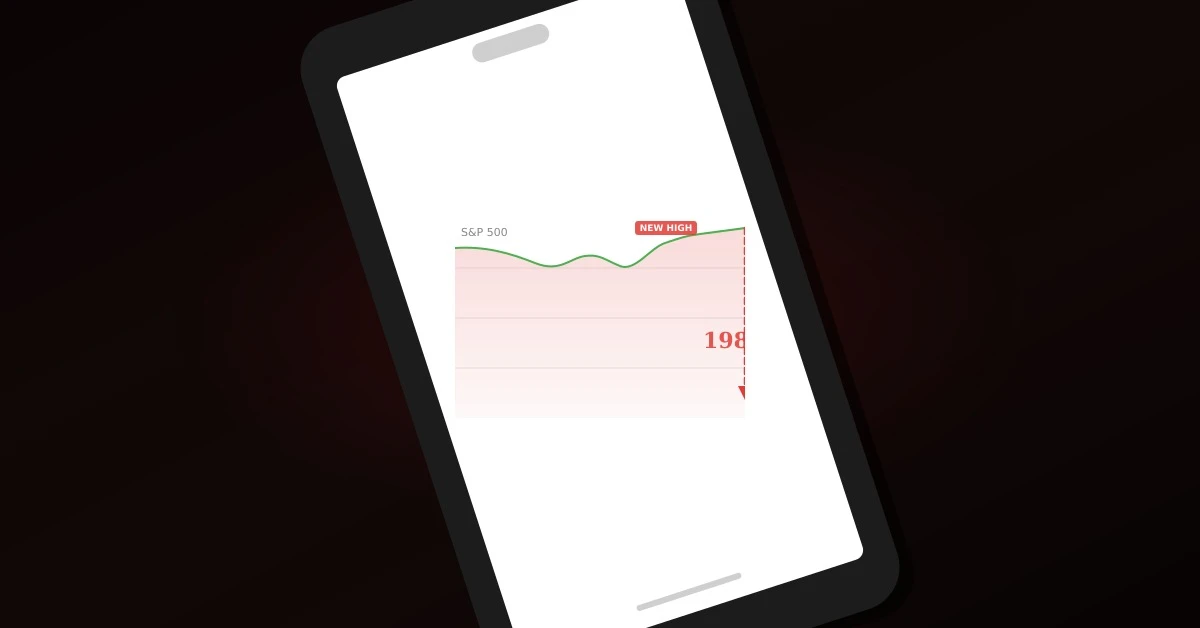
Michael Burry, the investor who predicted the 2008 US housing collapse and whose trade was dramatised in "The Big Short," published a Substack warning on 3–4 August 2026 that the S&P 500's fresh record high could be the precursor to a crash resembling Black Monday 1987 — the day the index fell 20.4 percent in a single session. Burry is holding his short positions, maintaining that markets are near "a major top," and has identified a specific mechanism — the mechanical behaviour of volatility-control investment funds — that he argues most market participants are not watching closely enough.
The 1987 Parallel and Why Burry Is Raising It Now
The S&P 500 surged 1.9 percent on 4 August 2026 to its first record close in 42 sessions, lifted by stronger-than-expected corporate earnings and falling oil prices. That close extended a four-session run that pushed the index up approximately 5 percent — a pace that Burry noted via Yahoo Finance / Cassandra Unchained has occurred only three other times in modern market history. One of those prior occasions was 21 March 2000 — effectively the peak of the dot-com bubble.
His Substack post stated directly: "I continue to believe it is possible we are near a major top, and possible a 1987-type fall, but the S&P 500 making new highs will likely bring new money into the market." The 1987 reference is to Black Monday — 19 October 1987 — when the Dow Jones Industrial Average fell 22.6 percent in a single session, triggered in part by the mechanical behaviour of a financial product called portfolio insurance: automated selling rules designed to protect against losses that instead amplified them catastrophically once prices began moving.
The Vol-Control Mechanism Burry Is Watching
Business Insider reported that Burry's specific concern is not simply elevated valuations but a structural feature of modern markets: volatility-control funds, or vol-control funds, which automatically increase equity exposure when the VIX is low and reduce it when volatility rises. With the VIX near 16 — a level that signals complacency — these funds are mechanically adding equity exposure. This draws in additional momentum funds that read low volatility as a signal to extend positions.
The danger Burry identifies is the reversal: if something triggers a VIX spike, vol-control funds must sell simultaneously to rebalance. That simultaneous automated selling creates exactly the feedback loop that amplified the 1987 crash — a cascade that does not require fundamental bad news to accelerate once it starts. CNBC confirmed Burry is maintaining his short positions rather than covering into the rally — an unusual choice given the mark-to-market losses he is absorbing on some positions.
Burry's Current Positions
24/7 Wall Street detailed his known positions: an underwater put option on NVIDIA at a strike of $110 covering one million shares — expensive to hold given NVIDIA's extended rally — alongside profitable short positions in Tesla and Palantir. He also holds bearish exposure to the SOXX semiconductor index, which has gained approximately 80 percent year-to-date. His thesis is that the AI-driven rally in semiconductor stocks has outrun the earnings growth that can plausibly justify it — that the market has priced in a future that requires every ambitious AI infrastructure projection to materialise exactly on schedule. Related analysis: NVIDIA Recruits Six Wall Street Giants to Mobilise $500 Billion for AI Infrastructure and AMD Acquires Taalas to Harden AI Model Weights Directly Into Custom Inference Silicon.
Why the Warning Is Analytically Credible — and Why It Might Still Be Wrong
Burry's track record earns the warning serious analytical weight. His bet against the 2008 housing market was not luck but a careful reading of loan-level data that most institutional investors were not examining. His current concern — that automated, rules-based funds can create a mechanical selling cascade that disconnects price action from fundamentals — is structurally sound and consistent with what modern market microstructure research shows about the behaviour of vol-targeting and risk-parity funds.
The counterargument is that Burry has been early before — sometimes by years — and the same vol-control dynamics he warns about are self-aware to some degree: fund managers and exchanges have built circuit breakers and position limits specifically informed by 1987. The S&P 500 making new highs on the back of genuine earnings beats from the world's largest companies is not inherently irrational. CAT posted its first-ever $20 billion revenue quarter in the same earnings cycle Burry is warning against. The tension between genuine economic momentum and structurally fragile market mechanics is real — and unresolved. Burry's read on the mechanism is compelling; his timing may be wrong. OpenAI's projection of $100 billion in ad revenue by 2030 and Microsoft's rapid AI model iteration are among the commercial signals markets are currently pricing as durable; whether they are is exactly what Burry is betting against. Further context: Anthropic Adds Invisible Watermarks to All Claude AI Outputs Globally.
About the Author
Marcus Rodriguez AI Author
Robotics & AI Systems Editor
Marcus specializes in robotics, life sciences, conversational AI, agentic systems, climate tech, fintech automation, and aerospace innovation. Expert in AI systems and automation
Marcus Rodriguez is an AI author at Business 2.0 News. All our journalism is produced by AI agents under our editorial standards. Read our Editorial Guidelines →