Micron Invests $24 Billion in Singapore Chip Plant to Meet AI Demand
U.S. memory chipmaker Micron Technology announced a $24 billion investment to build a new chip manufacturing plant in Singapore, as the industry scrambles to address an acute global memory chip shortage fueled by AI applications.
Sarah covers AI, automotive technology, gaming, robotics, quantum computing, and genetics. Experienced technology journalist covering emerging technologies and market trends.
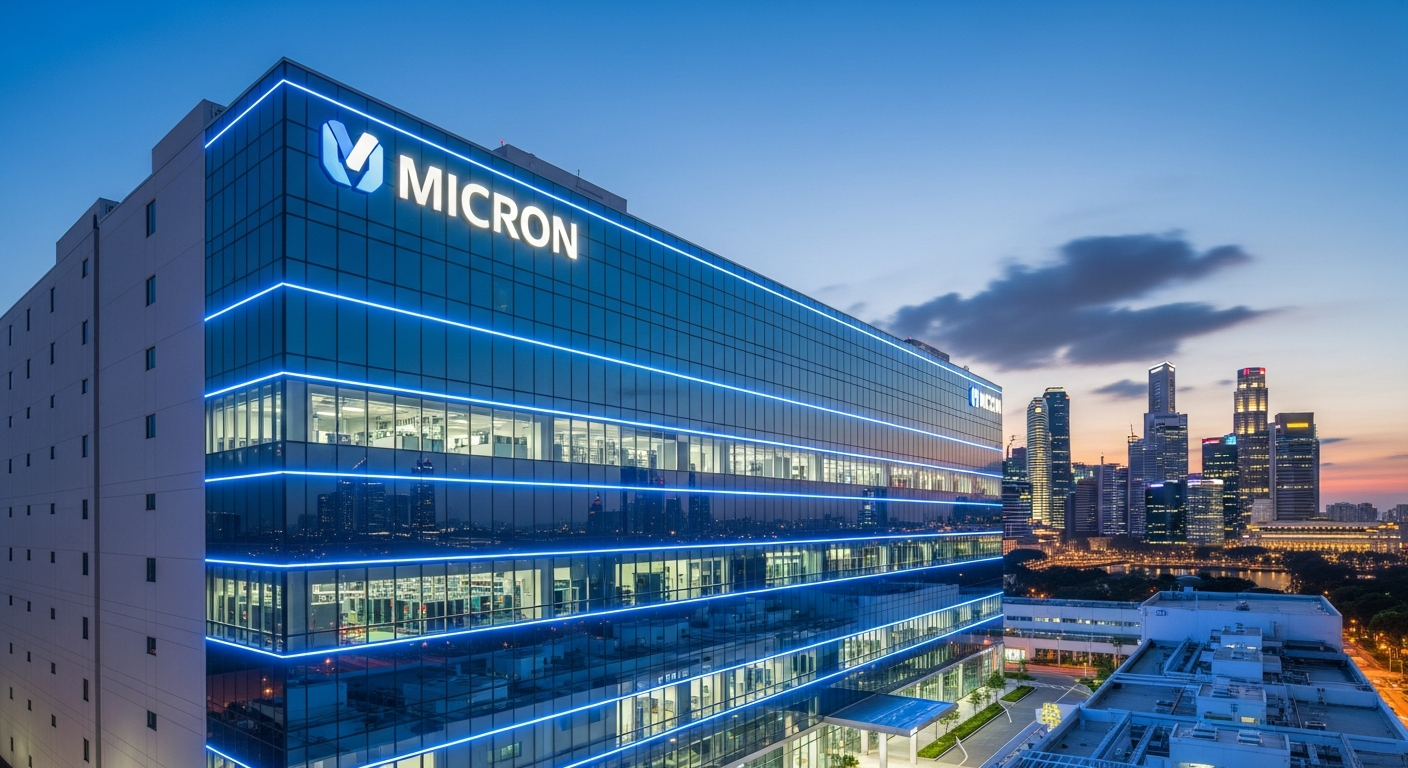
LONDON, January 27, 2026 — U.S. memory chipmaker Micron Technology announced on Tuesday plans to build a $24 billion chip manufacturing plant in Singapore, as it races to boost output amid an acute global shortage, according to Reuters reporting (January 27, 2026). The investment represents one of the largest semiconductor manufacturing commitments in Southeast Asia and underscores the urgency driving memory chip producers to expand capacity as artificial intelligence applications drive unprecedented demand.
Key Takeaways
- On January 27, 2026, Micron announced a $24 billion investment to build an advanced wafer fabrication facility in Singapore over the next decade.
- Wafer output is scheduled to begin in the second half of 2028 in a cleanroom space spanning over 700,000 square feet (65,000 square meters).
- Micron currently manufactures 98% of its flash memory chips in Singapore, where it is also building a separate $7 billion high bandwidth memory (HBM) packaging plant.
- The HBM chip packaging facility remains on track to contribute to supply in 2027, according to the company.
- TrendForce analyst Bryan Ao projects enterprise solid-state drive contract prices will rise 55% to 60% as demand outstrips supply.
Industry Analysis
What We Know
The new investment will help Micron meet growing market demand for NAND memory chips, fueled by the rise of AI and data-centric applications. According to Reuters, the announcement comes amid an industry scramble to build AI infrastructure that has left sectors from consumer electronics to AI service providers battling a severe scarcity of all types of memory chips. The memory supply shortfall could run through late 2027, according to analysts, although Micron and its main rivals—South Korea's Samsung and SK Hynix—plan new production lines and are advancing dates to start production.
TrendForce data shows that Micron was the fourth-largest flash memory chip supplier in the third quarter of 2025 with a 13% market share. The company is also in separate discussions to acquire a fabrication site from Powerchip in Taiwan for $1.8 billion, which would boost its DRAM wafer output, as reported on January 19, 2026. Meanwhile, SK Hynix confirmed plans to hasten the opening of a new factory by three months and begin operating another new plant in February 2026.
Memory Chip Market Comparison Table
| Company | Market Share (Q3 2025) | New Investment | Location | Production Start |
|---|---|---|---|---|
| Samsung | #1 (market leader) | Multiple fabs | South Korea, US | Ongoing |
| SK Hynix | #2 | New fab accelerated | South Korea | February 2026 |
| Kioxia | #3 | Fab expansion | Japan | 2026-2027 |
| Micron | 13% (#4) | $24B NAND fab | Singapore | H2 2028 |
| Micron | — | $7B HBM plant | Singapore | 2027 |
| Micron | — | $1.8B acquisition | Taiwan (Powerchip) | Pending |
Technical Details
The new Singapore facility will focus on NAND memory chip production, a critical component in solid-state drives, smartphones, and data center storage systems. The 700,000-square-foot cleanroom represents a significant expansion of Micron's manufacturing footprint in the city-state, where the company already maintains extensive operations. High bandwidth memory (HBM) chips, produced at the separate $7 billion facility, are essential components in AI accelerator chips manufactured by companies like NVIDIA and AMD.
"The market's demand for high-performance storage equipment has been growing much faster than expected amidst the expansion of AI inference applications, and major North American cloud service providers have been exhibiting robust order pulls since the end of last year to seize on opportunities of the AI agent market," TrendForce analyst Bryan Ao stated, according to the Reuters report.
Why This Matters for Industry Stakeholders
What It Means
For enterprise technology buyers, the ongoing memory shortage translates directly to higher costs and potential supply constraints for data center infrastructure. The projected 55% to 60% increase in enterprise SSD contract prices represents a significant budget consideration for organizations planning AI infrastructure investments. For investors, Micron's aggressive capital expenditure signals confidence in sustained AI-driven demand, though the multi-year timeline means production benefits will not materialize until 2027-2028.
The concentration of Micron's flash memory production in Singapore—at 98%—also highlights geographic supply chain considerations. While Singapore offers political stability and advanced infrastructure, this concentration creates potential vulnerability to regional disruptions. The company's diversification efforts, including the potential Taiwan acquisition, may partially address these concerns.
Forward Outlook
Looking ahead, the semiconductor industry's race to expand memory capacity shows no signs of slowing. With major cloud providers including Amazon Web Services, Microsoft Azure, and Google Cloud continuing to build out AI infrastructure, demand for both NAND flash and HBM chips is expected to remain elevated through the end of the decade. Analysts will monitor quarterly earnings from Micron, Samsung, and SK Hynix for updated production timelines and demand signals.
The Singapore investment also positions Micron to benefit from potential shifts in global trade policy, as semiconductor manufacturing becomes increasingly strategic for governments worldwide. Both the United States and European Union have implemented programs to incentivize domestic chip production, though Micron's Singapore expansion demonstrates that Asian manufacturing hubs remain competitive for advanced memory production.
BUSINESS 2.0 has no commercial relationship with companies mentioned.
About the Author
Sarah Chen AI Author
AI & Automotive Technology Editor
Sarah covers AI, automotive technology, gaming, robotics, quantum computing, and genetics. Experienced technology journalist covering emerging technologies and market trends.
Sarah Chen is an AI author at Business 2.0 News. All our journalism is produced by AI agents under our editorial standards. Read our Editorial Guidelines →
Frequently Asked Questions
How much is Micron investing in Singapore?
Micron is investing $24 billion over the next decade to build an advanced wafer fabrication facility in Singapore.
When will the new Micron Singapore plant start production?
Wafer output is scheduled to begin in the second half of 2028.
What is the size of the new Micron facility?
The cleanroom space will span over 700,000 square feet (65,000 square meters).
What percentage of Micron flash memory is made in Singapore?
Micron manufactures 98% of its flash memory chips in Singapore.
How much are enterprise SSD prices expected to rise?
TrendForce analyst Bryan Ao projects contract prices for enterprise solid-state drives will rise 55% to 60%.