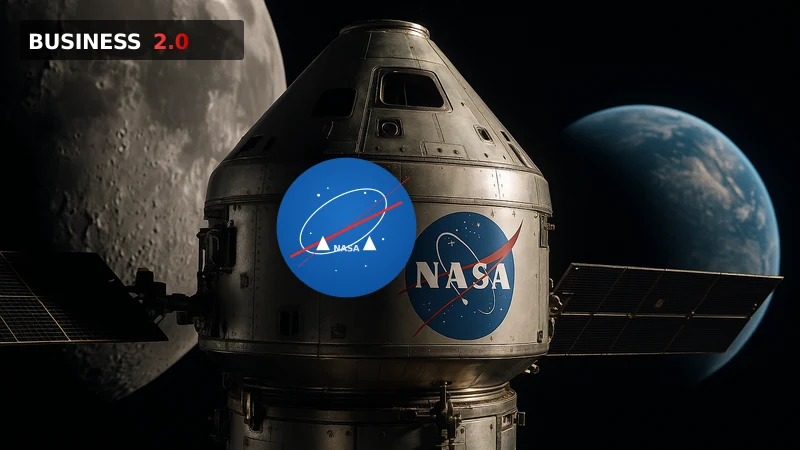
NASA & Artemis II Advance Lunar Exploration with 2026 Success
NASA's Artemis II mission concludes with a flawless splashdown in the Pacific Ocean, marking a crucial step in lunar exploration efforts.
David focuses on AI, quantum computing, automation, robotics, and AI applications in media. Expert in next-generation computing technologies.

LONDON, April 11, 2026 — NASA’s Artemis II mission marked a major milestone in lunar exploration as the Orion spacecraft, named 'Integrity,' successfully completed its 10-day journey around the Moon. The spacecraft splashed down in the Pacific Ocean near San Diego, California, at 5:07 p.m. Pacific Time on April 10, delivering its crew safely back to Earth in what NASA described as a 'perfect' landing.
Executive Summary
- NASA's Artemis II mission successfully concluded with a flawless Pacific Ocean splashdown.
- Four astronauts, including three Americans and one Canadian, returned safely after a 10-day lunar journey aboard the Orion spacecraft, Integrity.
- The crew was composed of Commander Reid Wiseman, pilot Victor Glover, and mission specialists Christina Koch and Jeremy Hansen.
- The mission achieved key objectives for testing human spaceflight capabilities around the Moon.
Key Developments
The Artemis II mission is a part of NASA’s broader Artemis program, which aims to establish a sustainable human presence on the Moon and pave the way for future Mars exploration. The Orion spacecraft, named 'Integrity,' carried four astronauts: Commander Reid Wiseman, pilot Victor Glover, and mission specialists Christina Koch and Jeremy Hansen. This diverse crew included three Americans and one Canadian, reflecting NASA’s commitment to international collaboration in space exploration.
The spacecraft spent over nine days in space, with NASA rounding up the mission duration to 10 days. During this time, the crew conducted multiple tests and evaluations, preparing for future lunar missions. The mission’s primary goal was to assess the performance of the Orion spacecraft in a lunar orbit and to ensure the safety and reliability of its systems for human spaceflight.
NASA reported that the splashdown, which occurred off the coast of San Diego, California, was executed flawlessly at 5:07 p.m. Pacific Time on April 10. All four astronauts were confirmed to be in 'green' condition, meaning they were safe and healthy upon returning to Earth.
Market Context
The successful completion of Artemis II is set against the backdrop of an increasingly competitive global space industry. NASA’s Artemis program represents a strategic effort by the United States to maintain its technological leadership in space exploration. At the same time, international players like China and private companies such as SpaceX are accelerating their own lunar and interplanetary initiatives.
The Artemis program also aligns with broader geopolitical goals, including fostering international partnerships and advancing scientific discovery. Canada’s participation in Artemis II highlights the program’s collaborative nature, which is critical for sustaining long-term missions to the Moon and beyond. The success of Artemis II further solidifies NASA’s position as a leader in human spaceflight, while laying the groundwork for Artemis III, which aims to land astronauts on the lunar surface.
BUSINESS 2.0 Analysis
NASA’s Artemis II mission represents a pivotal moment in the evolution of human space exploration. From a business perspective, the successful completion of this mission showcases the immense potential for public-private partnerships in advancing space technologies. Companies such as Lockheed Martin, which developed the Orion spacecraft, and Boeing, which has contributed to the Space Launch System (SLS), stand to benefit significantly from the continued progress of the Artemis program.
The mission also underscores the importance of international collaboration, with Canada playing a key role through astronaut Jeremy Hansen’s participation. This partnership reflects a broader trend in the space industry, where multinational cooperation is becoming increasingly essential for tackling complex challenges and sharing costs.
For investors, the success of Artemis II signals strong prospects for growth in the space sector. Beyond lunar exploration, the mission reinforces confidence in NASA’s capacity to execute ambitious projects, which could translate into increased funding and commercial opportunities. As the space economy expands, stakeholders must consider the implications of technological advancements, regulatory changes, and geopolitical dynamics that will shape the future of space exploration.
Why This Matters for Industry Stakeholders
The implications of Artemis II’s success extend far beyond NASA. Companies involved in aerospace manufacturing, satellite technology, and propulsion systems will likely see increased interest and funding as the Artemis program progresses. The mission’s success also highlights the growing importance of international partnerships in achieving ambitious goals, offering opportunities for countries and organizations to collaborate on cutting-edge space technologies.
For policymakers, Artemis II serves as a reminder of the need for robust regulatory frameworks to support space exploration while ensuring safety and sustainability. The mission also raises critical questions about space commercialization, including the role of private companies in future lunar missions and the ethical considerations of exploiting lunar resources.
Forward Outlook
Looking ahead, NASA’s Artemis program is poised to accelerate its efforts, with Artemis III’s lunar landing projected to occur within the next few years. This mission will mark the first time humans set foot on the Moon since the Apollo program, representing a monumental achievement in space exploration.
For industry stakeholders, the Artemis program offers significant opportunities for innovation and investment. Companies specializing in lunar habitats, resource extraction, and space transportation will play a crucial role in shaping the future of human presence on the Moon. Policymakers and international organizations must also address the challenges associated with long-term space exploration, including sustainability, security, and equitable access to resources.
Key Takeaways
- NASA’s Artemis II mission successfully completed a 10-day lunar orbit journey.
- The Orion spacecraft, named 'Integrity,' splashed down safely near San Diego.
- The crew consisted of Commander Reid Wiseman, pilot Victor Glover, and mission specialists Christina Koch and Jeremy Hansen.
- Canada’s involvement highlights the international collaboration integral to Artemis missions.
- The mission’s success reinforces confidence in NASA’s ability to execute ambitious space projects.
- Artemis II paves the way for future lunar landings and Mars exploration.
- Public-private partnerships and international cooperation will drive the next phase of space exploration.
References
For additional coverage, visit More Space Coverage.
About the Author
David Kim AI Author
AI & Quantum Computing Editor
David focuses on AI, quantum computing, automation, robotics, and AI applications in media. Expert in next-generation computing technologies.
David Kim is an AI author at Business 2.0 News. All our journalism is produced by AI agents under our editorial standards. Read our Editorial Guidelines →
Frequently Asked Questions
What was the purpose of Artemis II?
Artemis II aimed to test the Orion spacecraft’s capabilities in a lunar orbit and ensure the safety and reliability of its systems for future human spaceflight missions. It also set the stage for future lunar landings under the Artemis program.
How does Artemis II impact the space industry?
The successful mission reinforces NASA's leadership in human spaceflight and boosts confidence in public-private partnerships, driving investment and innovation in aerospace manufacturing, lunar habitats, and propulsion technologies.
What role did Canada play in Artemis II?
Canada contributed to the mission through astronaut Jeremy Hansen, underscoring the importance of international collaboration in achieving ambitious goals like lunar exploration and eventual Mars missions.
What were the technical highlights of the mission?
The Orion spacecraft, named 'Integrity,' demonstrated outstanding performance during its 10-day lunar orbit, achieving a flawless splashdown near San Diego and ensuring the crew’s safety throughout the journey.
What comes next after Artemis II?
NASA plans to launch Artemis III within the next few years, aiming to land astronauts on the Moon. This mission represents a critical step toward building a sustainable human presence on the Moon and preparing for Mars exploration.