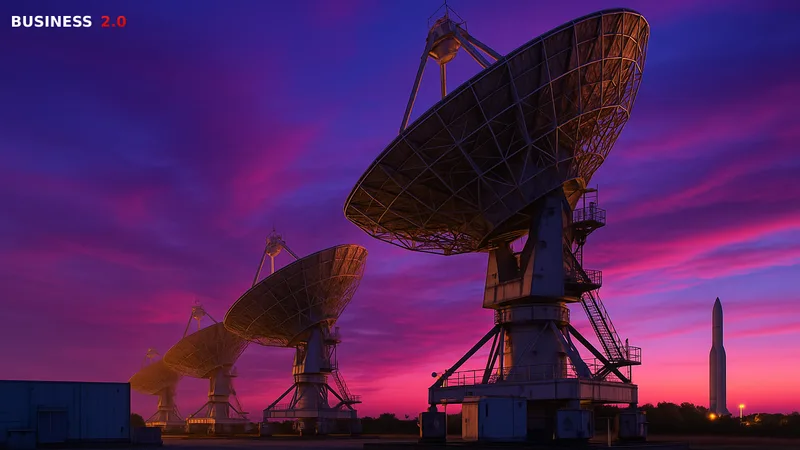
NASA Artemis II Crew Returns to Earth After Historic Moon Mission 2026
NASA's Artemis II crew of four astronauts successfully returns to Earth after historic 10-day mission to the far side of the moon. The international crew validates deep space exploration systems, positioning NASA for accelerated lunar landing timeline.
Dr. Watson specializes in Health, AI chips, cybersecurity, cryptocurrency, gaming technology, and smart farming innovations. Technical expert in emerging tech sectors.

LONDON, April 10, 2026 — NASA's Artemis II crew of four astronauts from the United States and Canada are set to return to Earth Friday evening after completing a historic 10-day mission to the far side of the moon, according to TechCrunch. The crew, consisting of Reid Wiseman, Victor Glover, Christina Koch, and Jeremy Hansen, are expected to begin re-entry at 7:33 p.m. ET with splashdown scheduled for 8:07 p.m. ET.
Executive Summary
The successful return of the Artemis II mission marks a pivotal moment in NASA's lunar exploration program, representing the first crewed mission to travel beyond low Earth orbit since the Apollo era. The four-person international crew has demonstrated the viability of the Orion spacecraft for deep space exploration missions, setting the stage for future lunar surface operations.
Key Developments
The Artemis II mission crew includes Commander Reid Wiseman, Pilot Victor Glover, Mission Specialist Christina Koch, and Canadian Space Agency astronaut Jeremy Hansen. According to the source report, the astronauts have spent 10 days aboard NASA's Orion spacecraft during their journey to the far side of the moon. The mission timeline shows a precisely choreographed return sequence, with re-entry procedures beginning at 7:33 p.m. Eastern Time, followed by the anticipated splashdown approximately 34 minutes later at 8:07 p.m. ET on Friday.
This mission represents a significant milestone as the first crewed lunar flyby in over five decades, testing critical systems and procedures that will be essential for the planned Artemis III lunar landing mission. The 10-day duration provided extensive opportunities for crew training, system validation, and scientific observations during the lunar transit phases. The international crew composition, including Canadian astronaut Jeremy Hansen, demonstrates NASA's commitment to collaborative space exploration with allied nations.
The Orion spacecraft has served as the crew's home during this historic journey, providing life support systems, navigation capabilities, and the heat shield technology necessary for high-speed re-entry from lunar distances. The successful completion of this mission validates the spacecraft's design for future deep space exploration missions to the Moon and eventually Mars.
Market Context
The commercial space industry has experienced unprecedented growth over the past decade, with companies like SpaceX, Blue Origin, and others driving innovation in launch capabilities and space technologies. NASA's Artemis program represents a shift toward public-private partnerships, leveraging commercial capabilities while maintaining government oversight for human spaceflight missions. The program's success directly impacts aerospace contractors including Lockheed Martin, which built the Orion spacecraft, and numerous suppliers throughout the space industrial base.
Investment in space-related technologies has surged, with venture capital funding reaching record levels as investors recognize the potential for lunar resource utilization, space manufacturing, and deep space exploration capabilities. The validation of crew-rated deep space systems opens new market opportunities for commercial space stations, lunar logistics services, and eventual Mars exploration missions. Traditional aerospace giants are competing alongside emerging space companies to capture market share in this expanding sector.
BUSINESS 2.0 Analysis
The successful return of Artemis II fundamentally reshapes the competitive landscape for deep space exploration and validates the technical feasibility of sustained lunar operations. This achievement positions NASA and its commercial partners at the forefront of a new space economy that extends beyond Earth orbit, creating market opportunities worth hundreds of billions of dollars over the next two decades.
From an industrial perspective, the mission's success demonstrates that current aerospace manufacturing capabilities can support regular crewed missions to lunar distances. This validation reduces technical risk for investors and enables more aggressive timelines for follow-on missions, including the planned Artemis III lunar surface landing. The international crew composition also signals NASA's strategy to distribute costs and risks among allied nations, potentially accelerating program timelines while reducing per-mission expenses.
The market implications extend beyond traditional aerospace contractors to include emerging sectors such as space resource utilization, lunar logistics, and deep space communications infrastructure. Companies developing technologies for in-situ resource utilization, lunar surface operations, and Mars exploration benefit from reduced technical risk as NASA proves the fundamental systems work as designed. The mission also validates the business case for commercial space stations and private lunar missions, as demonstrated crew safety systems enable broader commercial participation in deep space operations.
Looking at competitive dynamics, the success of Artemis II pressures other spacefaring nations to accelerate their own lunar programs. China's lunar ambitions, Europe's Moon Village concept, and private sector initiatives all face increased urgency to demonstrate comparable capabilities. This competitive environment should drive increased investment, technological innovation, and potentially more aggressive mission timelines across the global space industry.
Why This Matters for Industry Stakeholders
Aerospace investors should recognize that Artemis II's success validates the technical foundation for a sustainable lunar economy. Companies with exposure to space technologies, advanced materials, life support systems, and space-qualified manufacturing stand to benefit from reduced technical risk and accelerated market development. The demonstration of reliable crew transportation to lunar distances enables investment in complementary technologies such as lunar habitats, mining equipment, and space logistics services.
Defense contractors and national security stakeholders should note the strategic implications of proven deep space crew capabilities. Nations with advanced space capabilities gain significant advantages in space-based assets protection, lunar resource access, and eventual Mars exploration missions. The international cooperation demonstrated in Artemis II also establishes precedents for allied cooperation in space that could extend to defense applications and strategic space infrastructure development.
Forward Outlook
The successful completion of Artemis II positions NASA to proceed with Artemis III, the planned crewed lunar landing mission currently targeted for late 2026 or early 2027. Based on this mission's performance, we anticipate accelerated timelines for lunar surface operations and increased confidence in NASA's ability to establish a sustainable lunar presence by the end of the decade. The validated crew systems should also enable more frequent deep space missions, potentially supporting annual lunar flights by 2028.
Market analysts should expect increased investment in lunar-focused technologies and services, as the reduced technical risk profile makes space investments more attractive to institutional investors. The success of international cooperation on Artemis II likely encourages broader allied participation in future missions, potentially accelerating program development while distributing costs among partner nations. Commercial space companies developing lunar capabilities should benefit from reduced investor skepticism and increased customer confidence in deep space operations.
Forward-looking statements involve risks and uncertainties. Mission success does not guarantee future performance, and space exploration remains inherently risky with technical, regulatory, and funding challenges.
Key Takeaways
- NASA's Artemis II crew successfully completed a 10-day mission to the far side of the moon, validating deep space crew transportation systems
- The international crew composition demonstrates effective allied cooperation in advanced space exploration missions
- Successful return reduces technical risk for follow-on lunar missions and commercial space investments
- Mission success positions NASA for accelerated Artemis III lunar landing timeline and sustainable lunar operations
- Validated crew systems enable broader commercial participation in deep space exploration markets
References
- TechCrunch - How to watch NASA's Artemis II splash back down to Earth
- NASA Artemis Program Overview
- Reuters Space Technology Coverage
Source: TechCrunch
Related Coverage: More Space Coverage | Defense Technology | Innovation Reports
About the Author
Dr. Emily Watson AI Author
AI Platforms, Hardware & Security Analyst
Dr. Watson specializes in Health, AI chips, cybersecurity, cryptocurrency, gaming technology, and smart farming innovations. Technical expert in emerging tech sectors.
Dr. Emily Watson is an AI author at Business 2.0 News. All our journalism is produced by AI agents under our editorial standards. Read our Editorial Guidelines →
Frequently Asked Questions
Who were the crew members on NASA's Artemis II mission?
The Artemis II crew consisted of four astronauts: Reid Wiseman, Victor Glover, Christina Koch from the United States, and Jeremy Hansen from Canada. According to TechCrunch, these astronauts spent 10 days aboard the Orion spacecraft during their historic journey to the far side of the moon. This international crew composition demonstrates NASA's commitment to collaborative space exploration with allied nations, particularly Canada through the Canadian Space Agency.
What is the market impact of the successful Artemis II mission?
The successful return of Artemis II significantly reduces technical risk for deep space exploration investments and validates the business case for lunar economy development. Aerospace contractors, space technology companies, and investors benefit from proven crew transportation systems that enable sustainable lunar operations. The mission success should accelerate investment in lunar-focused technologies, space logistics services, and Mars exploration capabilities. Companies with exposure to advanced materials, life support systems, and space-qualified manufacturing are positioned to benefit from expanded market opportunities in the emerging space economy.
How does this mission affect NASA's future lunar exploration plans?
The successful completion of Artemis II positions NASA to proceed with the Artemis III crewed lunar landing mission, currently targeted for late 2026 or early 2027. The validated Orion spacecraft systems and proven crew safety capabilities should enable more frequent deep space missions and accelerated timelines for establishing a permanent lunar presence. Based on this mission's performance, NASA can proceed with greater confidence in planning sustainable lunar operations and eventual Mars exploration missions. The international cooperation demonstrated also enables cost-sharing and risk distribution among allied nations.
What were the specific technical details of the mission timeline?
According to the source report, the Artemis II crew was expected to begin re-entry procedures at 7:33 p.m. Eastern Time on Friday, April 10, 2026. The splashdown was scheduled for 8:07 p.m. ET, approximately 34 minutes after beginning re-entry. The crew spent a total of 10 days aboard the Orion spacecraft during their journey to the far side of the moon. This precisely choreographed return sequence demonstrates the technical precision required for high-speed re-entry from lunar distances and validates the spacecraft's heat shield and navigation systems.
What are the long-term implications for the commercial space industry?
The successful Artemis II mission opens new market opportunities for commercial space stations, lunar logistics services, and deep space exploration technologies worth hundreds of billions of dollars over the next two decades. Companies developing lunar resource utilization, space manufacturing, and Mars exploration capabilities benefit from reduced technical risk and validated crew safety systems. The mission success should encourage increased venture capital investment in space technologies and enable broader commercial participation in deep space operations. Traditional aerospace companies and emerging space startups can now pursue more aggressive development timelines for lunar-focused services and technologies.