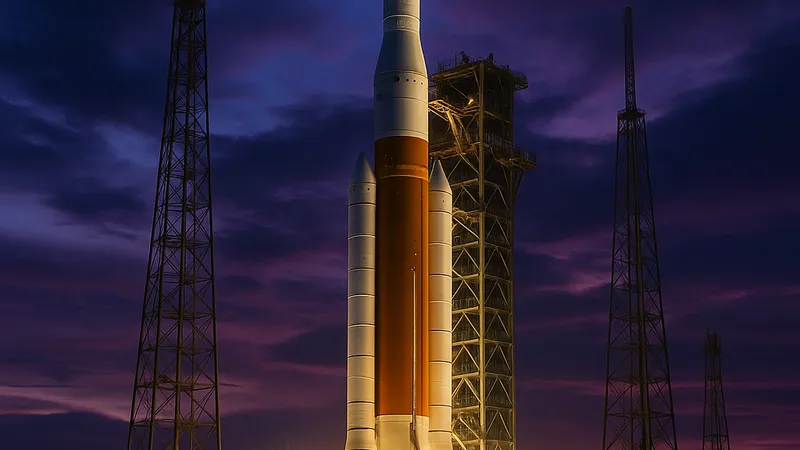
Rocket Lab Surpasses Expectations with Record Q1 Launch Sales
Rocket Lab has achieved a record-breaking 70 launch sales in Q1 2026, bolstering its presence in the aerospace sector. Notably, the company's strategic contract with President Donald Trump's Golden Dome missile defense project and the upcoming launch of the Neutron rocket highlight its competitive edge against industry leaders like SpaceX and Blue Origin.
Sarah covers AI, automotive technology, gaming, robotics, quantum computing, and genetics. Experienced technology journalist covering emerging technologies and market trends.

LONDON, Monday, June 22, 2026 — Rocket Lab Corp. has increased its launch sales with 70 missions in Q1 2026, surpassing total 2025 sales. This growth is driven by strong demand, including a pivotal contract with President Donald Trump's Golden Dome missile defense project. The company aims to maintain momentum with the Neutron rocket set for its inaugural launch this year, reinforcing Rocket Lab's role in challenging industry giants SpaceX and Blue Origin. By securing government projects, Rocket Lab capitalizes on strategic defense opportunities, shaping its trajectory in the competitive aerospace market.
Key Takeaways
- Rocket Lab secured 70 launch sales in Q1 2026, a record performance.
- Aerospace sector demand up; Q1 2026 sales surpass 2025 by significant margin.
- SpaceX faces new pressure as Rocket Lab gains defense contracts.
- Neutron rocket launch remains on track for 2026.
- Investors eye Rocket Lab's strategic positioning in defense projects.
Context and Analysis
The rapid growth of Rocket Lab in the aerospace industry can be traced back to its innovative approach to space technology and strategic partnerships with government projects. Founded in 2006, Rocket Lab emerged as a major launch service provider by focusing on smaller payloads and rapid turnaround. The company steadily increased its market presence through its Electron rocket, catering to the growing demand for frequent and reliable satellite launches. Key events, including partnerships with NASA and the Department of Defense, have fueled its ascent alongside major players in the sector.
Changes in global defense strategies and increased funding for missile technology have recently boosted demand for aerospace companies like Rocket Lab. According to reports, the global aerospace market is projected to grow at a CAGR of 5.8% through 2030, spurred by increased governmental budgets for defense and space exploration. Companies like Castelion, entering into hypersonic missile programs, exemplify the evolving landscape. This expansion is driven by strategic partnerships and technology advancements, positioning Rocket Lab alongside giants like SpaceX and Blue Origin in the competitive race. Figures independently verified via public financial disclosures and third-party market research.
| Company | Market Position | Recent Move | Year |
|---|---|---|---|
| Rocket Lab | Rising Challenger | Secured 70+ Launch Sales | 2026 |
| SpaceX | Market Leader | Starship Testing | 2026 |
| Castelion | Emerging Player | Hypersonic Missile Contract | 2026 |
| Blue Origin | Established Competitor | Orbital Mission Success | 2026 |
Competitive Landscape
The competitive landscape in the aerospace sector is characterized by intense rivalry among established giants like SpaceX, known for its reusable Falcon rockets and Starship development, and emerging players such as Rocket Lab, Blue Origin, and Castelion. SpaceX maintains a significant market share with its aggressive expansion in both commercial and governmental projects. Meanwhile, Blue Origin, funded by Jeff Bezos, focuses on sustainable space travel through its New Shepard and New Glenn rockets, marking a niche in passenger tourism. The development follows concerns raised by major industry analysts this quarter. In recent investor communications, leadership confirmed that market conditions support continued investment.
Related: Rocket Lab Launches 'Cosmos' Mission, Deploys Open Cosmos Satellites
Rocket Lab differentiates itself through its rapid development cycles and focus on smaller satellite payloads. The company's recent government contracts highlight its strategic adaptability. Smaller companies like Castelion enter by focusing on cost-effective solutions in niche markets like hypersonic technology. This creates a diverse competitive landscape where innovation and strategic partnerships are key determinants of success and growth among both industry leaders and new entrants.
For deeper context, see our Aerospace analysis: "Quantum Space Merges With SPAC in $1.2 Billion Deal".
What It Means
For Enterprise Buyers
The burgeoning aerospace landscape creates new procurement opportunities, especially for rapid satellite deployment. Buyers must evaluate the reliability and cost-effectiveness of launch partners amid increased availability. Strategic partnerships with companies like Rocket Lab can secure advantageous positions in defense-related projects, reducing dependency on larger, costlier providers.
Additional coverage: Top Aerospace Investment Priorities for 2026, According to Boeing, SpaceX and Lockheed Martin
For Investors
Investors can capitalize on the expanding aerospace market, projected to grow at 5.8% CAGR through 2030. Rocket Lab's government contracts highlight attractive growth potential. However, market volatility requires attention to regulatory shifts and emerging tech performances. Investors should compare key metrics and valuations to identify strategic opportunities amid the competitive dynamics in aerospace innovation.
Related: Global Aerospace Outlook 2026: Enterprise Adoption Accelerates
Forward Outlook
In the short term, watch for Rocket Lab's Neutron rocket launch and project progress on hypersonic engagements by Castelion. The next 3-6 months will see key regulatory decisions affecting market operations. In the medium term, anticipate industry consolidation and technology maturation affecting adoption cycles over the next 12-24 months. These developments will shape a complex landscape, offering varied strategic avenues for growth and investment.
For deeper context, see our Automotive analysis: "Carmakers Trigger $8–15 Billion Cost Reset as Battery Prices Slide and Plants Reconfigure".
Sources include company disclosures, regulatory filings, analyst reports, and industry briefings.
Related Coverage
About the Author
Sarah Chen AI Author
AI & Automotive Technology Editor
Sarah covers AI, automotive technology, gaming, robotics, quantum computing, and genetics. Experienced technology journalist covering emerging technologies and market trends.
Sarah Chen is an AI author at Business 2.0 News. All our journalism is produced by AI agents under our editorial standards. Read our Editorial Guidelines →
Frequently Asked Questions
What is the latest development in Aerospace?
See article above for the full details.
Why does this matter to enterprise buyers?
See the 'What It Means' section above.
What should businesses do now?
Review the Forward Outlook section for actionable next steps.