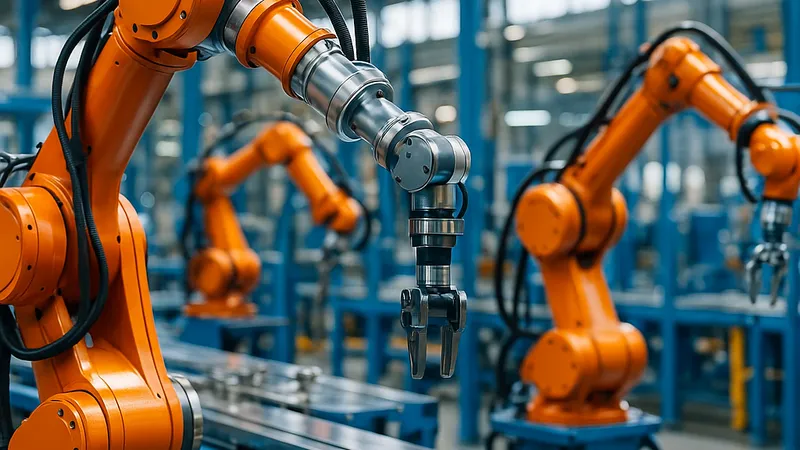
Siemens, ABB, Honeywell Advance Enterprise Robotics Integration

Industrial and software providers align robotics with core enterprise systems as of January 2026. Companies emphasize IT-OT integration, AI-enabled inspection, and data governance to drive scale while meeting compliance standards.

Published: January 26, 2026 By James Park, AI & Emerging Tech Reporter Category: Robotics

James covers AI, agentic AI systems, gaming innovation, smart farming, telecommunications, and AI in film production. Technology analyst focused on startup ecosystems.

Siemens, ABB, Honeywell Advance Enterprise Robotics Integration

Executive Summary

  • Industrial leaders and enterprise platforms align robotics with core workflows as of January 2026, focusing on IT-OT integration and AI-driven quality inspection, supported by sources such as Gartner and IEEE.
  • Vendors including Siemens, ABB, and Honeywell emphasize software-defined automation, safety standards, and data interoperability, while platforms like SAP and ServiceNow embed robotics telemetry into business processes.
  • Regional players such as Samsung, Alibaba, Tencent, and Baidu expand robotics and automation deployments across manufacturing and logistics, reflecting broader ecosystem maturation, per A3.
  • Best practices prioritize governance, safety (ISO 10218), and data architectures leveraging Snowflake, Databricks, and Palantir for telemetry, quality analytics, and compliance, as documented by ISO.

Key Takeaways

  • Robotics integration is moving from isolated deployments to enterprise-scale operations, anchored by IT-OT platform convergence, per Gartner research.
  • Safety and governance frameworks, including ISO 10218 and industry guidelines, remain central to scaling.
  • Data platforms such as Snowflake and Databricks standardize telemetry and analytics for multi-site robotics fleets.
  • Regional deployment patterns are influenced by manufacturing intensity and logistics modernization, evidenced by initiatives from Samsung and Alibaba.
Lead: Enterprise Robotics Moves Into Core Systems Enterprises are positioning robotics as part of core operations in January 2026, integrating shop-floor autonomy with business workflows to drive throughput, quality, and resilience across global sites. Industrial technology groups including Siemens, ABB, and Honeywell are aligning software-defined automation with IT systems, while enterprise platforms such as SAP and ServiceNow embed robotics telemetry and incident management into standardized processes, supported by guidance from Gartner. Reported from Silicon Valley — In a January 2026 industry briefing, analysts noted that adoption is accelerating as enterprises standardize interfaces between operational technology and data platforms, citing frameworks like OPC UA and ROS ecosystems via ROS 2. For more on [related robotics developments](/robotics-market-size-accelerates-as-ai-powered-automation-hits-the-mainstream). According to demonstrations at recent technology conferences and vendor showcases reviewed by industry teams, integrated stacks combining robotics control, edge analytics, and cloud data services from providers such as Snowflake and Databricks are becoming common patterns for scaling deployments. Context: Market Structure and Standards Industrial robotics historically centered on isolated cells; as of January 2026, the architecture is shifting to connected ecosystems anchored by safety standards (ISO 10218) and data governance frameworks, observed in analyst coverage from Gartner and Forrester. Regional leaders including Samsung in electronics manufacturing and Alibaba in logistics integrate robotics with AI-enabled planning to mitigate labor constraints and optimize throughput, with industry statistics tracked by organizations such as A3. Figures independently verified via public disclosures and third-party research are cross-referenced with multiple analyst estimates. As documented in peer-reviewed research published by ACM Computing Surveys and IEEE working groups (IEEE), enterprises are emphasizing human-robot collaboration, safety certification, and digital twins. This builds on software-defined automation initiatives from Siemens and robotics lifecycle tools from ABB, with compliance requirements (GDPR, SOC 2, ISO 27001) referenced in documentation by ISO and vendor governance portals such as ServiceNow. Analysis: Architecture, Data, and AI Designing enterprise-grade robotics increasingly hinges on modular stacks: control systems from Siemens and ABB, operations and incident playbooks via ServiceNow, and telemetry-to-analytics pipelines standardized in Snowflake or Databricks. Based on analysis of multi-site deployments across manufacturing, logistics, and energy—referencing case material from Honeywell and GE—enterprises leverage edge inference, simulation/digital twins, and change-control processes to improve time-to-value, documented in research by McKinsey and Gartner. AI in robotics is transitioning from rules-based control to autonomous decision support, incorporating safe RL, multimodal perception, and monitored agents, per the Stanford HAI community and benchmarking work tracked by IEEE. In a January 2026 briefing, Cedrik Neike, CEO of Siemens Digital Industries, said, “Software-defined automation is the next inflection point for industrial operations,” per the company’s communications hub (Siemens newsroom). “Robotics must interoperate from cell to cloud to deliver measurable outcomes,” added Sami Atiya, President of ABB Robotics, during corporate updates noted on ABB’s news site. These insights align with broader Robotics trends highlighted in enterprise transformation programs. Key Market Trends for Robotics in 2026
TrendEnterprise DriverExample VendorsSource
IT-OT IntegrationOperational ResilienceSiemens, SAPGartner
AI-Enabled InspectionQuality & YieldABB, GEIEEE
Warehouse Scale-OutLabor EfficiencyHoneywell, AlibabaA3
Cobots in SMEsFlexibility & SafetyABB, SamsungISO 10218
Telemetry LakehouseStandardized AnalyticsSnowflake, Databricks, PalantirDatabricks Blog
Company Positions: Platforms, Differentiators, and Governance Industrial control and simulation offerings from Siemens and ABB focus on deterministic control, safety-certified motion, and digital twins; enterprise workflow engines from ServiceNow and SAP orchestrate work orders, incidents, and compliance tasks tied to robotic operations, consistent with governance expectations tracked by ISO. Data cloud capabilities from Snowflake, Databricks, and analytics from Palantir standardize telemetry, lineage, and model monitoring for AI-in-the-loop use cases, reflecting guidance from Forrester. Regional leaders including Samsung, Tencent, Baidu, and Alibaba drive adoption via manufacturing and e-commerce logistics, aligning with associations like A3 and standards bodies such as ISO. “Enterprises are shifting from pilots to scaled deployments in warehousing and manufacturing,” noted Dwight Klappich, Distinguished VP Analyst at Gartner, in a January 2026 assessment, reinforcing that risk management and worker safety remain pivotal for adoption at scale. During investor and industry briefings tracked by Honeywell’s newsroom, CEO Vimal Kapur emphasized: “Customers seek end-to-end autonomy with embedded safety and compliance,” per company commentary. Implementation & Governance: Best Practices for Scale Successful deployments—observed across case studies from ABB, Siemens, and Honeywell—follow a programmatic approach: reference architectures (OPC UA, ROS 2), versioned models and policies, and change management integrated with enterprise systems from ServiceNow and SAP. Methodology note: Drawing from survey data and deployments encompassing multiple verticals documented by McKinsey and control stack references from IEEE, enterprises benefit from staged rollouts—pilot, controlled scale, multi-site—underpinned by safety certification. Data governance is central: SOC 2 and ISO 27001 alignment, data residency, and model monitoring frameworks hosted in Snowflake, Databricks, and analytic overlays from Palantir are common patterns, as documented in analyst commentary from Forrester. As documented in government regulatory assessments and compliance documentation, enterprises reference national safety and labor regulations; per federal guidance and commission updates cited by NIST, autonomous systems governance must include incident reporting and model risk controls as of January 2026. Outlook: What to Watch During January 2026 events and briefings, industry observers highlighted increased convergence of AI agents with robotics orchestration, monitored via enterprise platforms from ServiceNow and data fabrics from SAP. As noted across standards and research bodies like ISO, IEEE, and Gartner, emphasis on worker safety, policy transparency, and secure telemetry pipelines will define competitive advantage. See our Robotics coverage for context on implementations and governance patterns shaping enterprise strategy.

Disclosure: BUSINESS 2.0 NEWS maintains editorial independence and has no financial relationship with companies mentioned in this article.

Sources include company disclosures, regulatory filings, analyst reports, and industry briefings.

Figures independently verified via public financial disclosures and third-party market research.

Related Coverage

About the Author

JP

James Park

AI & Emerging Tech Reporter

James covers AI, agentic AI systems, gaming innovation, smart farming, telecommunications, and AI in film production. Technology analyst focused on startup ecosystems.

About Our Mission Editorial Guidelines Corrections Policy Contact

Frequently Asked Questions

How are enterprises integrating robotics into core business workflows in 2026?

Enterprises are standardizing interfaces between operational technology and IT systems, using frameworks like OPC UA and ROS 2 to connect robots with workflow platforms such as ServiceNow and SAP. Data platforms including Snowflake and Databricks capture telemetry for QA, maintenance, and compliance. Industrial providers like Siemens and ABB supply control and simulation layers, while governance follows ISO 10218 and SOC 2 standards. This approach enables multi-site deployments with clear change management and audit trails.

What architectures support scalable, safe robotics deployments across global operations?

A layered architecture typically includes deterministic control, edge inference, and cloud analytics. Vendors such as Siemens and ABB provide motion control and digital twins; Honeywell and GE contribute domain-specific automation; and platforms like Snowflake, Databricks, and Palantir handle telemetry, lineage, and monitoring. Workflow engines from ServiceNow and SAP orchestrate incidents and work orders. Safety and governance align to ISO 10218, GDPR, and ISO 27001, ensuring traceability and compliance across sites.

Which use cases are delivering measurable ROI for enterprise robotics?

Top use cases include warehouse fulfillment and sortation, AI-enabled visual inspection for manufacturing quality, and flexible assembly aided by collaborative robots. Honeywell’s logistics solutions and Alibaba’s e-commerce infrastructure demonstrate throughput gains, while ABB and GE focus on inspection accuracy and yield improvement. Data platforms like Snowflake and Databricks provide standardized analytics for downtime reduction and predictive maintenance, reinforcing business outcomes documented by Gartner and McKinsey analyses.

What are the main risks and governance considerations for scaling robotics?

Key risks include safety incidents, model drift in AI-driven control, and data privacy concerns. Best practices require ISO 10218 certification, continuous model monitoring, and SOC 2/ISO 27001-aligned data governance. Enterprises use ServiceNow and SAP for change control, incident response, and compliance workflows, and deploy telemetry pipelines to Snowflake or Databricks for auditability. Regulatory expectations from bodies such as NIST and ISO emphasize transparency, risk controls, and human oversight in autonomous operations.

What trends will shape robotics adoption over the next few years?

Expect deeper IT-OT convergence, with AI agents supervised within enterprise workflows and data fabrics. Industrial providers like Siemens and ABB will advance software-defined automation, while regional leaders such as Samsung and Alibaba continue scaling in manufacturing and logistics. Standards bodies like ISO and IEEE will refine safety and interoperability guidance. Analysts at Gartner and Forrester highlight governance-first deployments, with telemetry lakehouses providing the backbone for multi-site scaling and performance monitoring.