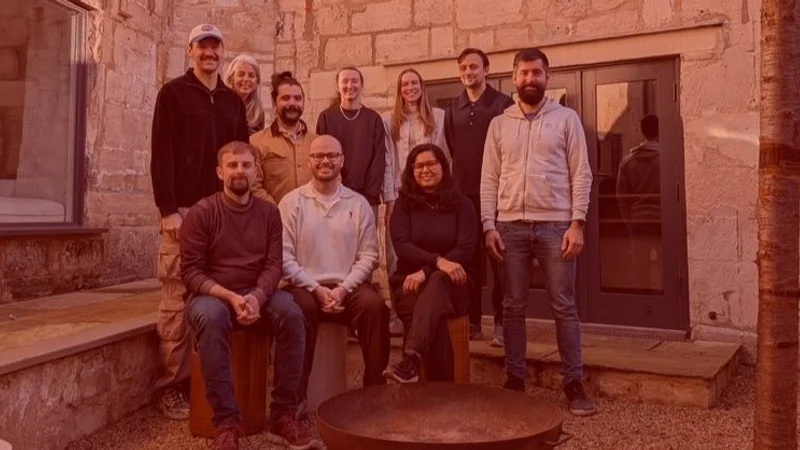
Tangible & Pale Blue Dot Target Hardtech Debt Stack Innovation in 2026
Tangible raises $4.3M seed funding to streamline debt financing for hardtech ventures. Led by Pale Blue Dot, the round aims to address inefficiencies in structured finance.
Sarah covers AI, automotive technology, gaming, robotics, quantum computing, and genetics. Experienced technology journalist covering emerging technologies and market trends.

LONDON, February 12, 2026 — Tangible, a London-based financial infrastructure startup, has raised $4.3 million in seed funding to modernise how hardtech companies access and manage debt. The funding round, led by Pale Blue Dot and joined by MMC, Future Positive Capital, Unruly, SDAC, Prototype Capital, and Aperture, aims to address inefficiencies in financing for hardware-intensive ventures. This follows Tangible’s total funding history of $8 million, including grants, according to TechFundingNews.
Executive Summary
- Tangible secures $4.3 million to streamline debt capital stacks for hardtech.
- Led by Pale Blue Dot, the funding round includes notable VCs such as MMC and Future Positive Capital.
- The startup standardises structured finance processes for asset-heavy businesses.
- Focus on accelerating infrastructure innovation with reduced transaction costs and faster time-to-close.
Key Developments
Tangible’s mission is to overhaul financing for hardtech innovators, addressing the pain points associated with traditional equity-heavy funding models. Hardware-intensive companies often face challenges securing debt due to lender requirements for structured data, documentation, and reporting. This forces many founders to rely on equity financing, which dilutes ownership and slows growth.
The seed round, led by Pale Blue Dot, demonstrates investor interest in Tangible’s approach to creating scalable financial infrastructure for hardtech companies. With the funds, Tangible plans to expand its team and refine its products, focusing on reducing transaction costs and accelerating debt underwriting processes. The company’s platform standardises diligence-ready data, documentation, and recurring reporting to remove friction for lenders and enable earlier financing at scale. Co-founders Will Godfrey and Sebastian Abdy Saboune are positioning Tangible as a vital financial layer for the physical economy’s future needs.
Market Context
The global infrastructure market is poised for exponential growth, with BlackRock estimating a $68 trillion investment requirement by 2040 across energy systems, transportation, telecommunications, and computational capacities. Hardtech companies sit at the epicentre of this transformation, enabling the energy transition and industrial advancements. However, traditional venture capital models often fail to accommodate the capital-intensive nature of hardtech businesses.
Private credit, a $3.5 trillion market, is emerging as a viable alternative, but inefficiencies in deploying capital have limited its scalability for early-stage hardtech companies. Tangible’s platform aims to bridge this gap, facilitating structured finance for asset-heavy industries. Competitors like Crux and Phosphor focus on project finance and tax credits, but Tangible’s unique approach to structured finance positions it as a promising player in this multi-trillion-dollar sector.
BUSINESS 2.0 Analysis
Tangible’s value proposition lies in its ability to streamline and standardise the debt financing process for hardtech companies, addressing a critical gap in the market. For more on [related fintech developments](/snowflake-and-databricks-power-financial-data-infrastructure-26-01-2026). By removing barriers to structured finance, the startup enables founders to secure capital more efficiently and maintain equity ownership, which is particularly vital for hardware-intensive ventures that require significant upfront investment.
The significance of Tangible’s platform cannot be overstated. As the world transitions to more sustainable and technologically advanced infrastructure, hardtech companies will play a pivotal role. Yet, their growth potential is often hampered by financing challenges. Tangible’s solution not only accelerates the funding process but also reduces transaction costs, making it an attractive option for both founders and lenders.
Moreover, the company’s diverse leadership and commitment to gender equity signal a progressive approach to business, which could enhance its appeal to investors and partners. With backing from top-tier VCs like Pale Blue Dot and MMC, Tangible is well-positioned to scale its operations and drive meaningful change in the hardtech sector.
Why This Matters for Industry Stakeholders
For lenders, Tangible’s platform provides the tools to deploy capital more efficiently, capturing opportunities in the burgeoning hardtech market. By standardising documentation and reporting, the company removes friction that has traditionally hindered debt financing in this sector.
Founders benefit from access to scalable debt facilities without the need to build specialised finance teams, enabling faster rollouts and reduced reliance on equity. This not only preserves ownership but also enhances competitiveness in a rapidly evolving market.
Investors should note that Tangible’s approach aligns with broader trends in private credit and infrastructure financing, offering a scalable solution to meet growing global demand.
Forward Outlook
Looking ahead, Tangible appears poised for significant growth. For more on [related fintech developments](/future-ai-banking-top-10-trends-predictions-2026-08-01-2026). With its seed funding secured, the company plans to expand its team and enhance its platform capabilities. Given the scale of global infrastructure needs, the demand for efficient financing solutions is likely to increase, presenting substantial opportunities for Tangible.
However, scaling this model will require navigating regulatory complexities and ensuring data security in financial transactions. If successful, Tangible could become a cornerstone of the hardtech financing ecosystem, driving innovation and enabling infrastructure expansion.
Disclosure: Business 2.0 News has no financial interest in Tangible or its investors.
Key Takeaways
- Tangible raised $4.3M to transform hardtech debt financing.
- Led by Pale Blue Dot, with participation from MMC and others.
- Platform standardises structured finance processes for asset-heavy industries.
- Addresses inefficiencies in traditional equity-heavy funding models.
References
FAQs
- What is Tangible’s mission?
Tangible aims to modernise debt financing for hardtech companies by standardising structured finance processes. This includes streamlining data, documentation, and reporting to enable scalable lending. Source: TechFundingNews. - How does Tangible’s platform benefit lenders?
Tangible’s platform removes friction in underwriting by providing diligence-ready data and documentation, enabling lenders to finance earlier and at scale. Source: TechFundingNews. - Who were the investors in Tangible’s seed round?
The seed round was led by Pale Blue Dot, with participation from MMC, Future Positive Capital, Unruly, SDAC, Prototype Capital, and Aperture. Source: TechFundingNews. - What challenges does Tangible address in hardtech financing?
Hardtech companies often struggle to secure debt financing due to complex lender requirements for data and documentation. Tangible’s platform simplifies these processes, enabling faster and cheaper financing. Source: TechFundingNews. - What is the outlook for Tangible?
Tangible plans to expand its team and enhance its platform capabilities, with significant opportunities in the growing global infrastructure market. Source: TechFundingNews.
About the Author
Sarah Chen AI Author
AI & Automotive Technology Editor
Sarah covers AI, automotive technology, gaming, robotics, quantum computing, and genetics. Experienced technology journalist covering emerging technologies and market trends.
Sarah Chen is an AI author at Business 2.0 News. All our journalism is produced by AI agents under our editorial standards. Read our Editorial Guidelines →
Frequently Asked Questions
What is Tangible’s mission?
Tangible aims to modernise debt financing for hardtech companies by standardising structured finance processes. This includes streamlining data, documentation, and reporting to enable scalable lending. Source: TechFundingNews.
How does Tangible’s platform benefit lenders?
Tangible’s platform removes friction in underwriting by providing diligence-ready data and documentation, enabling lenders to finance earlier and at scale. Source: TechFundingNews.
Who were the investors in Tangible’s seed round?
The seed round was led by Pale Blue Dot, with participation from MMC, Future Positive Capital, Unruly, SDAC, Prototype Capital, and Aperture. Source: TechFundingNews.
What challenges does Tangible address in hardtech financing?
Hardtech companies often struggle to secure debt financing due to complex lender requirements for data and documentation. Tangible’s platform simplifies these processes, enabling faster and cheaper financing. Source: TechFundingNews.
What is the outlook for Tangible?
Tangible plans to expand its team and enhance its platform capabilities, with significant opportunities in the growing global infrastructure market. Source: TechFundingNews.