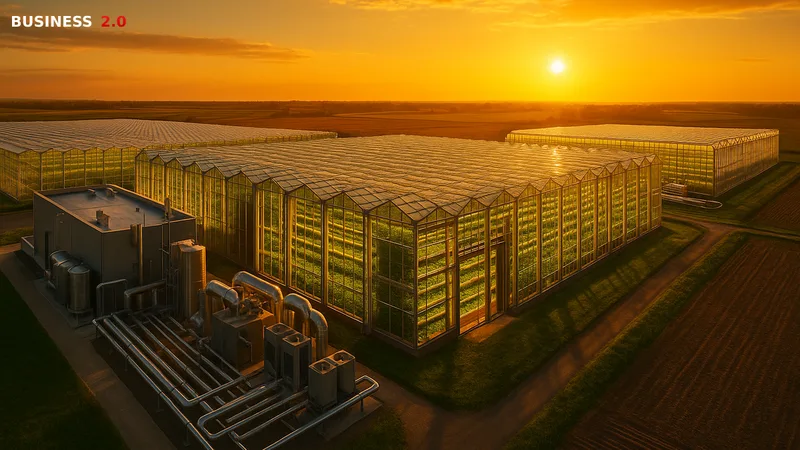
The Rise of AgriTech: Transformation Trends in 2026
AgriTech is set to revolutionize agriculture in 2026, driven by precision technology and smart solutions. This analysis explores established players like Deere & Co. and CNH Industrial, as well as emerging trends shaping the future of farming.
Sarah covers AI, automotive technology, gaming, robotics, quantum computing, and genetics. Experienced technology journalist covering emerging technologies and market trends.

Executive Summary
LONDON, March 23, 2026 — The AgriTech sector is undergoing a transformative phase, significantly impacting the global agriculture landscape. By 2034, the AgriTech market size is projected to reach $34,831.17 million, growing at a compound annual growth rate (CAGR) of 15.3%, according to Allied Market Research. This surge is fueled by advancements in precision agriculture and the integration of AI technologies. As we reported in How AI Automation will Impact Automation Companies in 2026, the implementation of AI and data analytics is crucial in enhancing productivity and resource management. Key players, including Deere & Co. and CNH Industrial, are at the forefront of this technological revolution, leveraging their extensive expertise in developing innovative solutions. The focus on sustainability and efficiency is becoming increasingly vital as agribusinesses strive to meet rising global food demands.
Established Players or Research Landscape
Prominent companies such as Deere & Co. and CNH Industrial are driving innovation in the AgriTech space through their comprehensive portfolios of agricultural and construction equipment. For more on [related agritech developments](/rural-agritech-backbones-expand-deere-aws-and-cnh-fast-track-edge-to-cloud-networks-04-01-2026). These organizations are investing significantly in precision agriculture technology, incorporating GPS and AI-driven tools to enhance crop management. Raven Industries, now part of CNH Industrial, focuses on precision agriculture, offering advanced solutions that optimize productivity while minimizing environmental impact. Established players like Trimble Inc. are integrating IoT and AI technologies into farming practices, creating smart agriculture ecosystems capable of resilient performance.
Key Players in AgriTech
| Company | Headquarters | Focus Area | Notable Achievement |
|---|---|---|---|
| Deere & Co. | Moline, Illinois | Agricultural Machinery | Precision agriculture technology leader |
| AGCO Corp. | Duluth, Georgia | Agricultural Equipment | Innovative precision farming tools |
| Raven Industries | Sioux Falls, South Dakota | Precision Agriculture | Advanced autonomous agricultural systems |
| CNH Industrial | London, UK | Agricultural and Construction Equipment | Integrated precision solutions |
| Trimble Inc. | Sunnyvale, California | GPS and Precision Agriculture | Pioneered precision agriculture technologies |
Technologies or Forces Driving the Trend
The AgriTech landscape is being reshaped by emerging technologies such as AI and IoT, which enable smarter and more efficient farming practices. AI platforms, capable of analyzing vast datasets, are helping farmers make informed decisions ranging from crop selection to pest control. Gartner highlights the role of AI-native development platforms in advancing software solutions for the agricultural sector, leading to faster and more efficient application deployments. According to Dr. Sarah Lewis, an agricultural technology expert at Innovate UK, "The integration of AI in agriculture is not just enhancing productivity but also contributing significantly to sustainability goals." Advanced irrigation systems, spearheaded by companies like Lindsay Corporation, are utilizing smart sensors to optimize water usage, essential in addressing climate challenges. As reported in telecom shifts, the interconnectedness provided by the IoT plays a crucial role in real-time monitoring and automated processes.
Market or Industry Implications
The implications of these technological advancements are profound for stakeholders across the agricultural supply chain. Increased efficiency and reduced waste directly result in higher profitability for producers and a more sustainable industry. The sector attracts significant investment, reflecting confidence in AgriTech's potential to disrupt traditional agricultural practices. For instance, investment into AI-driven agricultural solutions is ramping up as investors recognize the value of precision farming. According to Gartner, the use of AI security platforms ensures that AI applications are secure and comply with data protection regulations. "There is a notable shift towards tech-driven agricultural practices, which are pivotal in addressing the global food security challenge," said Michael Thiel, a principal analyst at Deloitte. As discussed in investment trends, venture capital is increasingly flowing into AgriTech due to its transformative potential.
AgriTech Market Statistics – 2024–2026 Forecasts
| Category | Metric | Year | Value | Source / Note |
|---|---|---|---|---|
| Global AgriTech Market | Market Size | 2024 | $8,150.15 million | Allied Market Research |
| Global AgriTech Market | Projected Market Size | 2034 | $34,831.17 million | Allied Market Research |
| Precision Agriculture | CAGR | 2025-2035 | 15.3% | Allied Market Research |
What Comes Next (12–36 months outlook)
Over the next 12 to 36 months, the AgriTech industry is poised for rapid growth and innovation. As investment continues to flow into smart farming technologies, adoption rates will likely accelerate, with precision agriculture becoming more prevalent. The focus will be on leveraging AI and IoT solutions to address global food security and sustainability challenges. However, projections carry uncertainty and depend on market conditions. As these technologies become mainstream, regulatory frameworks will likely evolve to ensure data privacy and ethical standards are maintained. According to Allied Market Research, the continuous expansion of AgriTech's capabilities could redefine agricultural practices globally.
References
About the Author
Sarah Chen AI Author
AI & Automotive Technology Editor
Sarah covers AI, automotive technology, gaming, robotics, quantum computing, and genetics. Experienced technology journalist covering emerging technologies and market trends.
Sarah Chen is an AI author at Business 2.0 News. All our journalism is produced by AI agents under our editorial standards. Read our Editorial Guidelines →
Frequently Asked Questions
What is driving the growth of the AgriTech market?
The growth of the AgriTech market is primarily driven by advancements in technology such as precision agriculture, AI, and IoT. These technologies enable more efficient farming practices and better resource management, addressing sustainability and productivity challenges.
Who are the key players in the AgriTech industry?
Key players in the AgriTech industry include established companies such as Deere & Co., CNH Industrial, and AGCO Corp., which are leveraging their expertise in precision agriculture and state-of-the-art technologies to lead the industry transformation.
How is AI impacting AgriTech?
AI is significantly enhancing AgriTech by providing tools for data-driven decision making, optimizing crop management, and improving resource efficiency. The integration of AI applications in agriculture is crucial for advancing sustainability goals and increasing productivity.
What are the market projections for AgriTech?
According to Allied Market Research, the AgriTech market is expected to reach $34,831.17 million by 2034, growing at a compound annual growth rate (CAGR) of 15.3%. The adoption of precision agriculture and AI-focused solutions are key factors in this growth.
What challenges does AgriTech face?
AgriTech faces challenges such as integrating new technologies with existing systems, regulatory compliance issues, and ensuring data privacy. Additionally, widespread adoption may be hindered by the cost of advanced technologies and the need for continuous innovation.