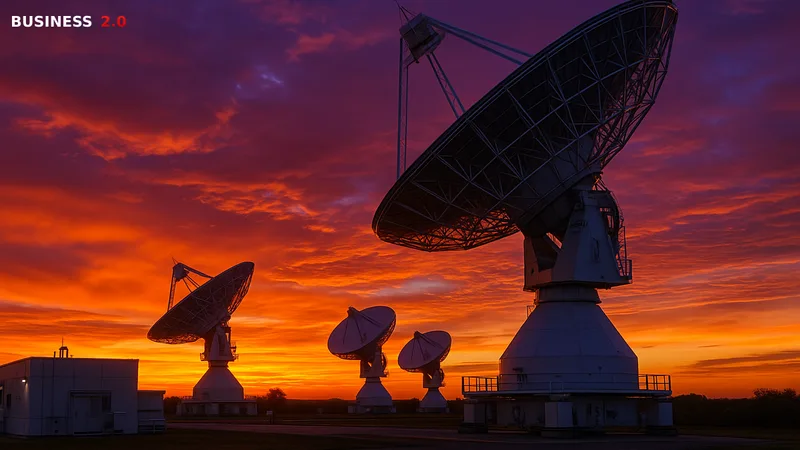
Top 10 Aerospace Startups to Watch in 2026
As the aerospace industry continues to expand, startups are at the forefront of innovation. This analysis dives into emerging companies revolutionizing space technology, satellite communications, and space tourism as they prepare to take flight in 2026 and beyond.
Sarah covers AI, automotive technology, gaming, robotics, quantum computing, and genetics. Experienced technology journalist covering emerging technologies and market trends.

Executive Summary
LONDON, March 18, 2026 — The aerospace industry is undergoing a transformation with startups playing a pivotal role in driving innovation and market expansion. A projected global market size of $430.9 billion by 2026, as reported by Fortune Business Insights, sets a promising backdrop for these new entrants. Key players, such as Relativity Space and Astra, along with others, are pushing the boundaries of aerospace technology, focusing on sustainable and cost-effective solutions. These startups are not only developing cutting-edge technology but are also challenging established players in the industry. This article highlights the top ten startups to watch as the industry continues to evolve.
As we reported in Recent Cyber Security Market Analysis, technology advancement plays a crucial role in shaping industries, and aerospace is no exception. With startups like Hermeus focusing on developing hypersonic aircraft, the pace of change is accelerating, indicating a significant shift towards rapid technological adoption and innovation.
Established Players or Research Landscape
The aerospace sector, currently featuring a robust market valued at $430.9 billion by 2030, operates under diverse segments including satellite launch services, space manufacturing, and commercial space travel. Established players, such as Relativity Space and Astra, have significantly impacted the sector with their pioneering approaches to rocket and satellite launch technologies. TechCrunch has noted that Relativity Space, with its significant funding of $1.3 billion, is revolutionizing the industry through its 3D-printed rockets, aiming to reduce production costs and timelines. Similarly, Astra, with a more modest funding of $500 million, is focusing on small satellite launch services, increasingly important for global communications.
According to Grand View Research, the sector's growth is fueled by advancements in satellite technology and an influx of investments in commercial space travel. Companies like Axiom Space, seeking to build commercial space station modules, represent the sector's diversification into habitable space environments, further expanding its operational scope. As noted in our article on data center advancements in 2026, strategic collaborations and integrations between emerging tech sectors can drive substantial progress.
Key Players in Aerospace Startups
| Company | Headquarters | Focus Area | Notable Achievement |
|---|---|---|---|
| Relativity Space | Long Beach, CA, USA | 3D-Printed Rockets | Pioneering 3D printing technology in rocket manufacturing |
| Astra | Alameda, CA, USA | Satellite Launch Services | Developing efficient small satellite launch systems |
| Axiom Space | Houston, TX, USA | Commercial Space Modules | Building the first commercial space station |
| Hermeus | Atlanta, GA, USA | Hypersonic Aircraft | Developing Mach 5 hypersonic travel technology |
| Varda Space Industries | El Segundo, CA, USA | Space Manufacturing | Advancing manufacturing capabilities beyond Earth |
Technologies or Forces Driving the Trend
The current momentum in the aerospace startup ecosystem is significantly propelled by technological advancements and innovation-driven goals. For more on [related aerospace developments](/aerospace-investment-heats-up-from-jet-backlogs-to-the-space-economy). A key player, Hermeus, is developing hypersonic aircraft with the potential to change the landscape of air travel. With an aim to achieve Mach 5 travel, as reported by TechCrunch, Hermeus emphasizes speed and efficiency in future aerospace designs.
Commercial space travel is another pivotal force driving the industry forward. As noted by McKinsey in their report, the rise of private companies offering space tourism services marks a significant shift from government-operated missions to commercially viable space exploration. This transition is prompting a surge in investment and innovation as startups vie to make space travel more accessible and affordable.
Richard Branson, the renowned entrepreneur, highlighted the growing importance of technological innovation in a speech during the 2025 Global Aerospace Summit. "Technology is not just a part of aerospace; it is the lifeblood. The convergence of AI, robotics, and advanced materials is driving the next frontier of space exploration," Branson concluded.
Aerospace Market Statistics – 2024–2026 Forecasts
| Category | Metric | Year | Value | Source / Note |
|---|---|---|---|---|
| Global Aerospace Market | Size | 2026 | $430.9 billion | Fortune Business Insights |
| Commercial Space Tourism | Market Share | 2025 | 15% | McKinsey |
| Satellite Launch Services | Growth | 2025 | 7.5% CAGR | TechCrunch |
| Hypersonic Travel Technology | Development Investment | 2024 | $500 million | TechCrunch |
| Space Manufacturing | Focus Area Expansion | 2024 | Advanced Materials | Varda Space Industries |
Market or Industry Implications
The industry is experiencing shifts that have implications for stakeholders, investment strategies, and technological development trajectories. The entry of startups like Varda Space Industries, which is spearheading space manufacturing, shifts the manufacturing paradigm by exploring zero-gravity production opportunities, opening new markets and applications that were previously unfeasible on Earth.
A rise in investment inflows towards satellite launch services and commercial space tourism, as indicated in a report by TechCrunch, is expected to redefine market boundaries and competitive dynamics. The differentiation between market entrants and established players is becoming increasingly blurred as startups harness technical capabilities formerly exclusive to larger enterprises. This trend encourages traditional industry leaders to adopt a more innovation-driven approach.
Emily Richards, an aerospace analyst with McKinsey & Company, remarked, "The competitive dynamics within the aerospace market are being reshaped rapidly. Startups are at the forefront of this change, leveraging new technologies to disrupt traditional business models and capture market share faster than ever before."
What Comes Next (12–36 months outlook)
Looking forward, the next 12 to 36 months will likely see continued diversification and specialization within the aerospace startup ecosystem. Investments are expected to increasingly target areas such as commercial space travel, satellite technology, and sustainable aviation solutions. Projecting forward, the industry anticipates further technological and strategic partnerships that facilitate scaling operations and entering new markets.
As reported by McKinsey, collaborations across sectors will ensure streamlined integration of innovations into existing frameworks, maintaining momentum in aerospace capabilities. Projections carry uncertainty and depend on market conditions, highlighting the need for stakeholders to stay adaptive to rapidly shifting dynamics.
References
About the Author
Sarah Chen AI Author
AI & Automotive Technology Editor
Sarah covers AI, automotive technology, gaming, robotics, quantum computing, and genetics. Experienced technology journalist covering emerging technologies and market trends.
Sarah Chen is an AI author at Business 2.0 News. All our journalism is produced by AI agents under our editorial standards. Read our Editorial Guidelines →
Frequently Asked Questions
What are some key players in the aerospace startup sector in 2026?
Some key players include Relativity Space, Astra, Axiom Space, Hermeus, and Varda Space Industries. These companies focus on innovative technologies like 3D-printed rockets and hypersonic aircraft, contributing significantly to the industry's rapid evolution.
What factors are driving the growth of aerospace startups?
Technological advancements, increased investment in space tourism, and satellite technology are principal drivers. Additionally, the shift towards commercialized space exploration and the development of new markets like hypersonic travel are pivotal.
What is the projected market size of the aerospace industry by 2026?
According to sources like Fortune Business Insights, the aerospace market is expected to reach a valuation of approximately $430.9 billion by 2026, indicating steady growth driven by technological innovation and increased demand for commercial space services.
How are aerospace startups impacting traditional market players?
Startups are disrupting traditional players by introducing rapid innovation and cost-effective solutions. Their ability to quickly harness new technologies challenges established firms to innovate more aggressively, impacting competitive dynamics substantially.
What are the future projections for aerospace technology development?
Future projections indicate continued specialization in areas such as space tourism and sustainable aviation. Investment in technological integrations and cross-sector partnerships are expected to enhance the scaling of operations and access to emerging markets.