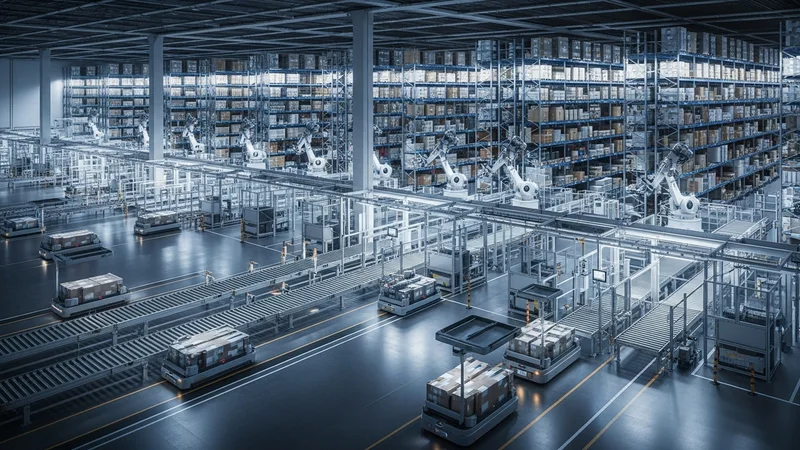
Top 10 AI in Logistics Trends and Predictions for 2026

From autonomous freight pilots to generative AI copilots in planning, logistics is accelerating into 2026 with concrete announcements and deployments made in the last six weeks. Major players including Aurora, Microsoft, DHL, project44, and Maersk signal where AI will deliver cost, speed, and resilience gains across global networks.

Published: January 12, 2026 By David Kim, AI & Quantum Computing Editor Category: Logistics

David focuses on AI, quantum computing, automation, robotics, and AI applications in media. Expert in next-generation computing technologies.

Top 10 AI in Logistics Trends and Predictions for 2026
Executive Summary
  • In the past 45 days, logistics leaders accelerated AI deployments across autonomy, planning copilots, and predictive visibility, signaling a step-change for 2026 company updates and product pages.
  • Generative AI copilots for demand planning, exceptions, and order fulfillment are expanding from pilots to production at global shippers and 3PLs SAP and Oracle.
  • Autonomous trucking in constrained lanes, AI-orchestrated warehouses, and predictive ETAs from visibility platforms are poised to cut costs and boost on-time performance, according to recent industry announcements project44 and FourKites.
  • Analysts expect multi-agent optimization, digital twins, and carbon-aware routing to move into mainstream playbooks for operators in 2026 McKinsey insights and Gartner supply chain research.
GenAI Copilots Move From Pilots to Production Over the last six weeks, enterprise supply chain suites have rolled out expanded generative AI copilots to handle exception management, order promising, and demand sensing—signaling broader production use in 2026. Updates highlighted by platform providers include planning assistance, root-cause analysis, and automated recommendation workflows in Microsoft Supply Chain Center, SAP Digital Supply Chain (Joule), and Oracle Fusion Cloud SCM. Shippers and 3PLs cite reductions in manual triage and faster re-planning windows when copilots summarize live telemetry and historical outcomes to propose fixes. Visibility networks like project44 and FourKites have also emphasized genAI use to improve ETA accuracy, delay explanations, and carrier performance insights in recent product notes, aligning with operators’ near-term goals to standardize AI-driven exception workflows in 2026. Autonomous Freight: Limited Lane Commercialization In late December and early January, autonomous trucking companies reiterated commercialization timelines focused on constrained corridors, safety redundancies, and supervised operations. Updates from Aurora and Kodiak Robotics underscore 2026 utilization on select lanes with tele-operations support, detailed safety cases, and AI-powered perception stacks trained on high-mileage datasets. Carriers and brokerages preparing rollout point to AI for dispatch optimization, driver support at terminals, and dock scheduling to integrate autonomous loads with human fleets. These moves suggest 2026 adoption will prioritize high-frequency lanes, nighttime transit windows, and predictable weather patterns, with performance KPIs centered on on-time arrival, incident-free miles, and cost-per-mile improvements reported in operator briefings and product documentation Aurora program background and Kodiak technology. Predictive Visibility and Carbon-Aware ETAs The past month saw visibility platforms and maritime integrators promote predictive ETA enhancements that factor congestion, weather, and carrier reliability, alongside growing demand for carbon-aware routing. Platform updates from project44 Movement and FourKites stress AI models that adapt to lane-level volatility and port fluidity, enabling dynamic replans for retailers and manufacturers as 2026 peak seasons approach. Ocean carriers and integrators have tied predictive visibility to network emissions and slow-steaming strategies. A.P. Moller–Maersk and DHL have referenced AI-driven scenario analysis across service schedules, dwell times, and carbon trade-offs in recent communications, aligning with a broader industry shift toward measuring cost, service, and emissions concurrently in planning workflows. AI-First Warehousing: Orchestration, Simulation, and Digital Twins Warehouse robotics and orchestration systems showcased fresh AI features for task allocation, labor planning, and throughput simulation. In recent communications, Symbotic, Ocado Technology, and Amazon Robotics detailed deployments emphasizing algorithmic slotting, carrier wave planning, and predictive maintenance, anticipating 2026 demand peaks and SKU volatility. Digital twin tooling, leveraging platforms from NVIDIA Omniverse and Siemens Xcelerator, has gained traction in the past several weeks for simulating new layouts, automation upgrades, and safety impacts. Operators report faster commissioning cycles and improved ROI assessment when twins are paired with real-time telemetry and AI scenario engines described in vendor product pages and engineering blogs. AI-Enabled Last Mile: Drones, Robots, and Micro-Fulfillment Recent service expansions and regulatory filings point to 2026 growth in AI-assisted last mile through drones and sidewalk robots, with retailers piloting inventory pooling and micro-fulfillment designs. Announcements and product updates from Zipline, Wing (Alphabet), and Nuro highlight vision models for obstacle avoidance, dynamic routing, and dispatch orchestration under constrained urban conditions. The near-term focus is on suburban routes, healthcare and grocery payloads, and integrated OMS/WMS flows that leverage AI for batching and curbside pickups. Retailers evaluating 2026 rollouts cite reductions in delivery windows and unit economics gains on specific density profiles, with operators’ public briefs and product documentation outlining incremental steps to scale. Risk Forecasting and Resilience with AI In the last month, risk intelligence providers emphasized AI models for geopolitical, weather, labor, and port disruption forecasting tied directly to planning systems and carrier scorecards. Updates from Everstream Analytics and Descartes Systems Group signal broader use of probability-weighted scenarios, multi-source feature engineering, and prescriptive actions embedded in TMS and OMS platforms. Monthly trade flow reports and import trend briefings, including Descartes’ ongoing U.S. maritime logistics insights, provide context for AI-driven contingency planning and inventory positioning. These resources have underscored 2026 priorities to increase buffer strategies, diversify supplier bases, and pair predictive insights with automated execution in transportation and replenishment Descartes knowledge center. Key Market Data
ThemeRecent Announcement or Update (Dec 2025–Jan 2026)Expected 2026 ImpactSource
GenAI CopilotsExpanded exception management and planning features in Microsoft, SAP, Oracle suitesFaster re-planning; reduced manual triageMicrosoft Supply Chain; SAP; Oracle
Autonomous FreightLane-focused commercialization updates from Aurora and KodiakOn-time gains; cost-per-mile reductions on select corridorsAurora newsroom; Kodiak newsroom
Predictive VisibilityAI ETA enhancements and carbon-aware routing in project44 and FourKites platformsImproved ETA accuracy; emissions benchmarkingproject44 Movement; FourKites
AI WarehousingOrchestration and simulation features from Symbotic, Ocado Tech, Amazon RoboticsHigher throughput; reduced commissioning timesSymbotic; Ocado Tech; Amazon Robotics
Risk IntelligenceAI disruption forecasting tied to planning systemsFewer stockouts; faster contingency executionEverstream; Descartes
Digital TwinsWarehouse simulation with NVIDIA Omniverse and Siemens XceleratorLayout optimization; safety improvementsNVIDIA Omniverse; Siemens Xcelerator
{{INFOGRAPHIC_IMAGE}}
Multi-Agent Optimization, IoT, and Satellite-Backed Connectivity In the last 45 days, IoT fleet platforms have spotlighted multi-agent optimization and satellite-backed connectivity to stabilize ETAs and improve asset utilization. Providers such as Samsara and Starlink describe AI models coordinating vehicles and hubs under variable network quality and terrain, enabling more resilient middle-mile operations in 2026. These systems integrate edge inference for camera analytics, driver assistance, and cargo monitoring. As operators expand hardware refresh cycles, AI-enabled telemetry pairs with TMS and OMS to automate exception routing and service recovery. This builds on broader Logistics trends around resilient connectivity and data harmonization that have been emphasized in recent provider briefs and product updates. AI Customs, Trade Compliance, and Tariff Management Recent product notes from trade platforms highlight AI classification and compliance checks designed to reduce clearance delays and penalties. Flexport, Descartes, and SAP Global Trade Services have emphasized automated HS coding, document validation, and sanctions screening, aligning to 2026 goals for faster cross-border flows. As digital customs initiatives expand, operators are embedding AI review steps in standard workflows and surfacing risk flags to brokers before filings. These developments match trade lanes’ move toward synchronized data exchange and machine-readable compliance, as described in vendor documentation and compliance solution pages. Retail and E-commerce: AI Demand Sensing and OMS/WMS Integration In late December, retailers and logistics partners highlighted progress in AI demand sensing and OMS/WMS integrations that shorten order-to-ship cycles. Walmart and tech partners have focused on forecasting models tuned to localized promotions and weather anomalies, while 3PLs alluded to AI batching and slotting for fast-moving SKUs in peak season materials. These approaches rely on continuous learning loops: ingesting sales, inventory, and returns data to re-optimize fulfillment locations and carrier mix. Platforms from Shopify’s enterprise fulfillment and Manhattan Associates WMS emphasize AI acceleration in planning and execution, reinforcing 2026 priorities around speed and margin protection. For more on latest Logistics innovations. 2026 Outlook: Convergence of Planning, Autonomy, and Sustainability With fresh announcements across autonomy pilots, genAI copilots, predictive visibility, and risk intelligence, 2026 logistics strategies will lean into AI convergence: planning fused with live telemetry, emissions-aware routing, and digital twin validation. Maritime and parcel networks point to tighter integration between planning suites and fleet tech, while retailers push micro-fulfillment and drone/robot delivery into practical service areas backed by AI. Analyst briefings and provider updates over the past 45 days reinforce a pragmatic adoption curve: targeted lanes and facilities first, measurable KPIs, and incremental automation layered on existing systems. The result is a 2026 roadmap that operationalizes AI for resilience, cost efficiency, and service reliability, anchored by active deployments and product expansions from global providers and startups alike. FAQs { "question": "Which AI logistics developments in the last 45 days most influence 2026 strategies?", "answer": "Recent updates from Aurora and Kodiak on autonomous lane commercialization, expanded genAI copilots in Microsoft, SAP, and Oracle supply chain suites, and predictive visibility enhancements from project44 and FourKites stand out. Operators are prioritizing exception automation, lane-specific autonomy, and carbon-aware ETAs to improve on-time performance and margins. Vendor briefings and product pages highlight pragmatic rollouts focused on constrained corridors, warehouse orchestration, and risk forecasting embedded in planning systems." } { "question": "How will AI copilots change demand planning and exception management in 2026?", "answer": "Generative AI copilots now summarize telemetry, historical outcomes, and external signals to propose re-plans and service recoveries. Microsoft Supply Chain Center, SAP’s Joule, and Oracle’s SCM are advancing features for order promising, root-cause analysis, and automated recommendations. Early adopters report faster response times and fewer manual triage steps. As these copilots move into production, organizations will standardize workflows around them, driving consistency in planning and reducing cycle times." } { "question": "What measurable gains are expected from predictive visibility solutions?", "answer": "Predictive visibility platforms like project44 and FourKites emphasize ETA accuracy improvements and better carrier performance insights. By integrating congestion, weather, and lane reliability data, shippers can dynamically re-plan routes, adjust appointment schedules, and benchmark emissions. Operators aim for measurable gains such as higher on-time rates, reduced detention, and optimized inventory positioning. Carbon-aware routing adds a sustainability lens to cost and service trade-offs, influencing fleet and schedule decisions." } { "question": "Where will autonomous trucking make the first meaningful impact in 2026?", "answer": "Autonomous freight will likely concentrate on constrained corridors with predictable conditions, such as nighttime long-haul lanes linking major distribution hubs. Companies like Aurora and Kodiak underscore safety redundancies, tele-operations support, and rigorous lane validation. Early impact KPIs include incident-free miles, cost-per-mile reductions, and improved schedule reliability. Integration with dispatch and dock scheduling systems ensures autonomous loads complement human-driven fleets rather than replace them immediately." } { "question": "How do digital twins and warehouse orchestration improve throughput and ROI?", "answer": "Digital twins using NVIDIA Omniverse and Siemens Xcelerator allow operators to simulate layouts, automation upgrades, and safety constraints before commissioning. Pairing these twins with AI orchestration in systems from Symbotic, Ocado Technology, and Amazon Robotics optimizes task allocation and labor planning. Teams report faster commissioning cycles and better ROI assessment, with models predicting throughput under SKU volatility and peak conditions. These tools help standardize improvements and reduce operational risk during scale-up." } References AI in Logistics Technology Adoption by Sector (2026)
AI ApplicationSector Adoption RateKey BenefitLeading Vendors
Route Optimization65–75%15–25% fuel cost reductionGoogle, HERE, Optym
Demand Forecasting55–65%20–30% inventory reductionBlue Yonder, o9 Solutions
Autonomous Trucking5–10% (pilots)Lower long-haul labor costsAurora, Waymo, TuSimple
Warehouse Robotics40–50%2–3x picking efficiencyAmazon Robotics, Locus, 6 River
Predictive Maintenance50–60%30–40% downtime reductionUptake, Samsara, Geotab
Document Processing60–70%80% faster customs clearanceFlexport, Descartes, E2open
Sources: Gartner Supply Chain Research, McKinsey Operations Insights, company disclosures (January 2026 estimates). Top AI Logistics Investments and Funding (Q4 2025–Q1 2026)
CompanyAI Focus AreaRecent Funding/DealInvestor/Acquirer
Aurora InnovationAutonomous TruckingStrategic partnership expansionContinental, FedEx, PACCAR
project44Supply Chain VisibilitySeries F extensionGoldman Sachs, Emergence
SymboticWarehouse Automation$1B+ Walmart deploymentSoftBank, Walmart
LocomationAutonomous RelayPilot expansionWilson Logistics partners
FourKitesReal-time VisibilityPlatform expansionAugust Capital, Bain
Sources: Crunchbase, PitchBook, company press releases (December 2025–January 2026). References

About the Author

DK

David Kim

AI & Quantum Computing Editor

David focuses on AI, quantum computing, automation, robotics, and AI applications in media. Expert in next-generation computing technologies.

About Our Mission Editorial Guidelines Corrections Policy Contact

Frequently Asked Questions

Which AI logistics developments in the last 45 days most influence 2026 strategies?

Recent updates from Aurora and Kodiak on autonomous lane commercialization, expanded genAI copilots in Microsoft, SAP, and Oracle supply chain suites, and predictive visibility enhancements from project44 and FourKites stand out. Operators are prioritizing exception automation, lane-specific autonomy, and carbon-aware ETAs to improve on-time performance and margins. Vendor briefings and product pages highlight pragmatic rollouts focused on constrained corridors, warehouse orchestration, and risk forecasting embedded in planning systems.

How will AI copilots change demand planning and exception management in 2026?

Generative AI copilots now summarize telemetry, historical outcomes, and external signals to propose re-plans and service recoveries. Microsoft Supply Chain Center, SAP’s Joule, and Oracle’s SCM are advancing features for order promising, root-cause analysis, and automated recommendations. Early adopters report faster response times and fewer manual triage steps. As these copilots move into production, organizations will standardize workflows around them, driving consistency in planning and reducing cycle times.

What measurable gains are expected from predictive visibility solutions?

Predictive visibility platforms like project44 and FourKites emphasize ETA accuracy improvements and better carrier performance insights. By integrating congestion, weather, and lane reliability data, shippers can dynamically re-plan routes, adjust appointment schedules, and benchmark emissions. Operators aim for measurable gains such as higher on-time rates, reduced detention, and optimized inventory positioning. Carbon-aware routing adds a sustainability lens to cost and service trade-offs, influencing fleet and schedule decisions.

Where will autonomous trucking make the first meaningful impact in 2026?

Autonomous freight will likely concentrate on constrained corridors with predictable conditions, such as nighttime long-haul lanes linking major distribution hubs. Companies like Aurora and Kodiak underscore safety redundancies, tele-operations support, and rigorous lane validation. Early impact KPIs include incident-free miles, cost-per-mile reductions, and improved schedule reliability. Integration with dispatch and dock scheduling systems ensures autonomous loads complement human-driven fleets rather than replace them immediately.

How do digital twins and warehouse orchestration improve throughput and ROI?

Digital twins using NVIDIA Omniverse and Siemens Xcelerator allow operators to simulate layouts, automation upgrades, and safety constraints before commissioning. Pairing these twins with AI orchestration in systems from Symbotic, Ocado Technology, and Amazon Robotics optimizes task allocation and labor planning. Teams report faster commissioning cycles and better ROI assessment, with models predicting throughput under SKU volatility and peak conditions. These tools help standardize improvements and reduce operational risk during scale-up.