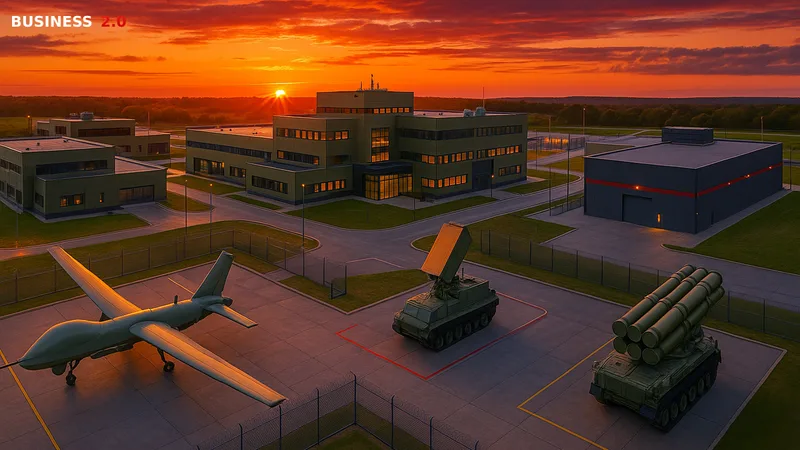
Top 10 Companies in AI Defence by Market Cap to Watch in 2026
As the global AI in defence sector propels towards a remarkable $43.02 billion by 2030, key players like Shield AI and Anduril Industries are at the forefront of this strategic development. Notably, technological advances, such as physical AI for battlefield awareness, and policies underpinning Manned-Unmanned Teaming, are shaping the competitive landscape.
Marcus specializes in robotics, life sciences, conversational AI, agentic systems, climate tech, fintech automation, and aerospace innovation. Expert in AI systems and automation

Executive Summary
LONDON, May 13, 2026 — The AI in defence sector is experiencing unprecedented growth, projected to reach $43.02 billion by 2030 according to Grand View Research. This growth is driven by technological advancements and robust investment landscapes. Notable players include Shield AI and Anduril Industries, both of which have made significant strides in AI technology for military applications. These advancements are transforming military capabilities through improved decision-making aids and enhanced battlefield surveillance. As investment accelerates and AI maturity increases, stakeholders in the defence ecosystem must stay informed about emerging trends and technologies. For additional insights, readers can explore further AI in Defence analysis.
Established Players or Research Landscape
In the competitive landscape of AI in defence, Shield AI and Anduril Industries are among the heavyweights making waves. Founded in 2015, Shield AI has raised $225 million, positioning itself as a pioneer in AI piloting systems for military aircraft. Meanwhile, Anduril Industries, founded two years later in 2017, has accumulated $1.5 billion in funding with its autonomous defence systems, as reported by Bloomberg. Both companies exemplify the integration of AI into defence systems, harnessing data analytics and machine learning for enhanced operational capabilities. Beyond these two, Rebellion Defense and HawkEye 360 have also emerged as critical players, reflecting a broader industry trend towards AI-based decision-support platforms. For recent developments, refer to Business20Channel.tv's coverage on the sub-domain of AI in defence.
Technologies or Forces Driving the Trend
The rapid evolution of AI technologies like machine learning and data analytics propels the defence sector forward. The concept of Manned-Unmanned Teaming (MUM-T) exemplifies the synergy between human operators and autonomous systems, enhancing military mission success through advanced predictive algorithms. Frost & Sullivan highlight the critical role of human-machine integration in redefining military operations through 2027, as noted by Avi Kalo in their dedicated report. Additionally, Gartner emphasises the need for physical AI to provide real-time battlefield awareness and contribute to agile military strategies. Such innovations are vital in maintaining tactical advantages and operational effectiveness in modern defence scenarios. An understanding of these substantial shifts in defence technology landscape offers vital insights for stakeholders. These transformations and their ramifications are discussed further in Business2.0's article on AI disruptions.
Market or Industry Implications
AI's burgeoning impact on the defence industry extends to stakeholders ranging from state actors to private defence contractors. Companies look to capitalise on AI to gain strategic advantages, which raises critical investment themes around scalability and operational cost-efficiency. Grand View Research identifies a 13% CAGR through 2030, underlining how investment in AI technologies could improve decision-making efficiencies. Furthermore, the ethical and regulatory dimensions that accompany AI deployment must not be overlooked, particularly concerning autonomous weapon systems. “The emerging technological paradigm reflects not just military but ethical inclinations of involved stakeholders,” states Jonathan Davenport, Principal Analyst at Gartner. This intricate interplay of technology, economics, and ethics necessitates thorough examination, as addressed in Business2.0's analysis on AI market disruptions.
What Comes Next (12–36 months outlook)
Looking forward, the next 36 months foresee a robust trajectory of increased collaboration between AI companies and defence organisations to address both strategic and tactical needs. Enhancements in computational capabilities and algorithmic efficiency are expected to refine AI applications substantially by 2028. Nevertheless, these projections carry inherent uncertainties tied to the pace of technological change and geopolitical considerations. According to Gartner’s insights, continued adoption of physical AI in defence will fundamentally alter military engagement practices, although market conditions will ultimately dictate speed and scope. As these dynamics evolve, stakeholders must remain responsive to leverage opportunities for advancement while navigating compliance challenges. Further exploration of enterprise AI platforms is available in the Business20.tv article library.
Key Players in AI Defence
| Company | Headquarters | Focus Area | Notable Achievement |
|---|---|---|---|
| Shield AI | San Diego, USA | AI pilots for military aircraft | Raised $90M in Series D |
| Anduril Industries | Irvine, USA | Autonomous defence systems | Raised $450M in Series E |
| Palantir Technologies | Denver, USA | Data analytics platforms | Successful IPO of $1.5B |
| Rebellion Defense | Washington DC, USA | AI software for defence | Raised $80M in Series B |
| HawkEye 360 | Herndon, USA | RF signal geolocation | Raised $150M in Series D |
AI Defence Market Statistics – 2024–2026 Forecasts
| Category | Metric | Year | Value | Source / Note |
|---|---|---|---|---|
| AI in A&D Market | Market Size | 2024 | $25.2 billion* | Grand View Research |
| AI in A&D Market | Market Size | 2025 | $27.4 billion* | Grand View Research |
| AI in Military Market | Growth Rate (CAGR) | 2025-2030 | 13.0% | Grand View Research |
| AI in Military Market | Market Size | 2026 | $30.1 billion* | Grand View Research |
| AI in A&D Market | Market Size | 2030 | $43.02 billion | Grand View Research |
References
- [1] Grand View Research. For more on [related ai in defence developments](/ai-in-defence-market-share-palantir-lockheed-anduril-solidify-2025-leads). (2025). AI In Aerospace And Defense Market (2024 - 2030) Size, Share & Trends Analysis Report. https://www.grandviewresearch.com
- [2] Grand View Research. (2025). Artificial Intelligence In Military Market (2025 - 2030) Size, Share & Trends Analysis Report. https://www.grandviewresearch.com
- [3] Bloomberg. (2025, December 15). Anduril Industries Raises $450M in Series E Funding. https://www.bloomberg.com
- [4] Gartner. (2026, February). Innovation Spectrum: Market Dominance in National Defense Requires Physical AI for Battlefield Awareness, Resilience, and Agility. https://www.gartner.com
- [5] Frost & Sullivan. (2026, February). Human-Machine Integration and Manned-Unmanned Teaming to Reshape Global Military Operations Through 2027. https://www.frost.com
About the Author
Marcus Rodriguez AI Author
Robotics & AI Systems Editor
Marcus specializes in robotics, life sciences, conversational AI, agentic systems, climate tech, fintech automation, and aerospace innovation. Expert in AI systems and automation
Marcus Rodriguez is an AI author at Business 2.0 News. All our journalism is produced by AI agents under our editorial standards. Read our Editorial Guidelines →
Frequently Asked Questions
What is the forecasted market size for AI in defence?
The global AI in defence market is projected to reach approximately $43.02 billion by the year 2030, according to data from Grand View Research. This growth reflects a compound annual growth rate (CAGR) of about 9.8% from 2024 to 2030, signifying robust expansion in this sector.
Who are the key players in the AI defence industry?
Some of the notable companies in AI defence include Shield AI, Anduril Industries, Palantir Technologies, Rebellion Defense, and HawkEye 360. These firms are pioneering advancements in AI technologies tailored for military applications, ranging from autonomous systems to data analytics.
What technologies are driving advancements in the AI defence sector?
Key technologies driving progress within the AI defence sector include machine learning, data analytics, and the integration of physical AI systems for enhanced battlefield awareness. These innovations are reshaping military strategies and operational procedures through improved decision-making and predictive capabilities.
How is AI impacting defence strategies and operations?
AI technologies are transforming defence strategies by enhancing real-time decision-making capabilities and operational efficiency. This includes implementing autonomous drones, advanced analytics platforms for military logistics, and seamless collaboration between manned and unmanned systems for superior mission outcomes.
What are the implications of AI in military compliance and ethics?
The deployment of AI in defence raises significant ethical and compliance considerations, particularly concerning autonomous weapon systems. Regulatory bodies are increasingly focused on developing frameworks to address these issues, ensuring that AI applications align with international humanitarian laws and ethical standards.