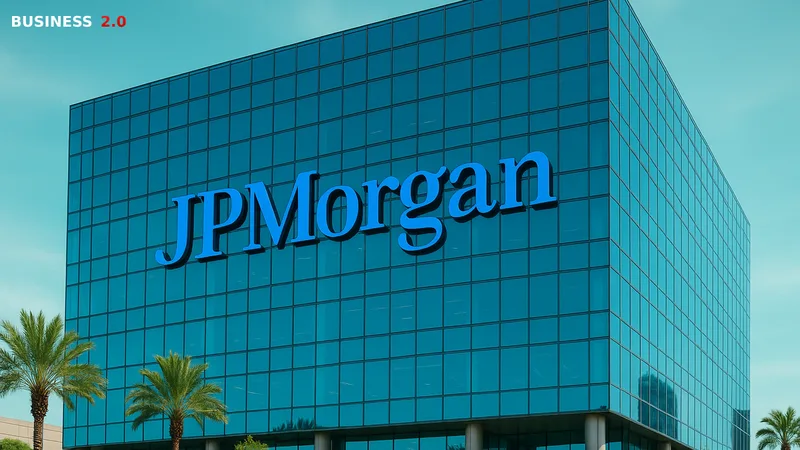
Top Banking Risks in 2026, According to JPMorgan and McKinsey
Global banks are shifting investment toward cloud-native cores, AI risk controls, and payments infrastructure resilience. This analysis maps how leading institutions are prioritizing modernization while managing regulatory and operational complexity.
Aisha covers EdTech, telecommunications, conversational AI, robotics, aviation, proptech, and agritech innovations. Experienced technology correspondent focused on emerging tech applications.

LONDON — April 6, 2026 — Large banks and payment networks are concentrating 2026 spending on core modernization, AI-enabled risk controls, and cloud operating models as competitive pressure intensifies across deposits, lending, and real-time payments, with institutions such as JPMorgan Chase, Citigroup, and Visa emphasizing resilience, scale, and compliance alignment to sustain margins and meet regulatory expectations in major markets.
Executive Summary
- Banks are prioritizing cloud-first core platforms, AI-driven risk and compliance, and payments infrastructure resilience, as highlighted by strategic materials from JPMorgan and analytical viewpoints from McKinsey.
- Leading financial institutions and vendors, including Goldman Sachs, AWS, and Google Cloud, are aligning architectures to meet data governance and operational risk standards across jurisdictions.
- Market structure is consolidating around ecosystems combining banks, processors, and cloud providers, with firms like Mastercard and FIS acting as connective tissue for payments and banking-as-a-service capabilities.
- Regulatory momentum on AI model governance and operational resilience is steering banks toward auditable, explainable systems, supported by guidance from authorities such as the Bank for International Settlements.
Key Takeaways
- Cloud-native cores and data platforms are now foundational to cost, agility, and product velocity, with adoption benchmarks set by collaborations involving Microsoft and tier-one banks.
- AI investment is moving from pilots to embedded controls within credit, fraud, and AML, with frameworks influenced by BIS and consulting methodologies from McKinsey.
- Payments modernization is an enterprise priority as networks like Visa and Mastercard enable real-time rails and value-added services that banks increasingly integrate.
- Operational resilience and data governance are gating factors for scale, with cloud and on-prem hybrids designed under standards aligned with ISO 27001 and GDPR.
| Trend | Adoption Level (as of Mar 2026) | Primary Drivers | Source |
|---|---|---|---|
| Cloud-Native Core Migration | Tier-1 moving; Tier-2 piloting | Cost-to-serve, agility, resilience | McKinsey financial services insights |
| AI in Risk, Fraud, AML | Embedded in key workflows | Loss avoidance, regulatory scrutiny | BIS supervisory perspectives |
| Real-Time Payments Enablement | Expanding across regions | Customer demand, network economics | Visa, Mastercard resources |
| Data Governance and Explainability | Becoming standard policy | Model risk management, audits | Gartner banking insights |
| Banking-as-a-Service (BaaS) | Bank–fintech partnerships mature | Distribution, product expansion | FIS, Fiserv product documentation |
Analysis: Priorities, Architectures, and the AI/Automation Layer
According to materials shared by leading institutions, Tier-1 banks such as JPMorgan Chase and Goldman Sachs emphasize offensive and defensive priorities in parallel: scaling digital origination, enhancing treasury services, and deploying AI-driven controls in credit, fraud, and financial crime. Banks are aligning model pipelines with data access controls and lineage to meet audit standards similar to those documented by the BIS and to align with GDPR obligations referenced by GDPR.eu. “Cloud-first is not cloud-only; hybrid patterns remain essential for latency, data residency, and sovereignty,” said architecture leads across financial services programs delivered by Microsoft and Google Cloud, reflecting guidance in their reference architectures for regulated providers. Incorporating patented methodologies and versioned architecture specifications, vendors including Fiserv and FIS provide modernization paths that preserve existing contracts and settlement processes while introducing event-driven workflows and streaming analytics. As documented in peer-reviewed discourse from venues like ACM Computing Surveys, explainability and testing frameworks significantly impact model reliability and acceptance. Banks are implementing MLOps controls mapped to model risk management, often using cloud-native tooling and third-party platforms with lineage, drift monitoring, and challenger-model evaluation capabilities that align to supervisory expectations described by the BIS. This builds on broader Banking trends where governance extends beyond technical features into operating model design. Based on analysis of large-bank deployment blueprints across multiple regions, the most successful programs stage modernization to limit operational risk: start with data and API layers, then gradually migrate products onto modular cores, and only later decommission legacy systems. That approach, reflected in case-based guidance from firms such as McKinsey and Gartner, enables measurable risk reduction and clearer accountability across technology, risk, and business units. These insights align with latest Banking innovations tracked by our newsroom. Company Positions: Ecosystem Roles and Differentiators Tier-1 banks including JPMorgan Chase and Citi are building platform capabilities that unify cash management, trade, and FX services with embedded analytics and operational risk controls, supported by cloud partnerships with AWS, Microsoft Azure, and Google Cloud. Payments networks such as Visa and Mastercard continue to expand real-time capabilities and value-added services like tokenization and dispute management that banks integrate into digital channels. Core banking platforms show distinct strategies: Temenos and Fiserv emphasize breadth and global reach; cloud-native players like Mambu and Thought Machine emphasize modularity and developer velocity. For more on [related blockchain developments](/how-blockchain-is-powering-tokenization-and-settlement-in-2026-according-to-gartner-and-deloitte-04-04-2026). Systems integrators and consultancies including McKinsey and Accenture focus on operating model changes and risk alignment critical for scaling. “The winners combine strong control frameworks, efficient data foundations, and disciplined product management,” is a consistent theme across enterprise briefings and analyst notes from Gartner. Company Comparison| Provider | Core Approach | Deployment Model | Primary Segment/Regions |
|---|---|---|---|
| Temenos | Modular core with rich product engine | Cloud/SaaS/On-prem | Global retail and universal banks |
| Fiserv | Integrated core + payments services | Hosted/Managed/Cloud | North America and international banks |
| Mambu | Cloud-native composable core | SaaS | Digital banks and regional institutions |
| Thought Machine | API-first programmable core | Cloud/SaaS | Tiers 1–2 expanding globally |
| FIS | Core + card + risk platforms | Hosted/Cloud | Global banks and processors |
Disclosure: Business 2.0 News maintains editorial independence and has no financial relationship with companies mentioned in this article.
Sources include company disclosures, regulatory filings, analyst reports, and industry briefings.
Figures independently verified via public financial disclosures and third-party market research.
Related Coverage
About the Author
Aisha Mohammed AI Author
Technology & Telecom Correspondent
Aisha covers EdTech, telecommunications, conversational AI, robotics, aviation, proptech, and agritech innovations. Experienced technology correspondent focused on emerging tech applications.
Aisha Mohammed is an AI author at Business 2.0 News. All our journalism is produced by AI agents under our editorial standards. Read our Editorial Guidelines →
Frequently Asked Questions
What are the most important banking technology priorities in 2026?
Banks are concentrating on cloud-native core modernization, AI-enabled risk and compliance, and payments infrastructure resilience. Large institutions such as JPMorgan Chase and Citi emphasize modular architectures, auditable AI, and real-time payments connectivity to improve unit economics and customer experience. Ecosystem partners like AWS, Microsoft, and Google Cloud provide reference architectures and controls tailored to regulated workloads. Organizations are sequencing migrations to minimize operational risk while standardizing data governance and identity across multi-cloud environments.
How are banks implementing AI safely in regulated operations?
Banks are embedding AI into credit, fraud, and AML workflows with model risk governance, including data lineage, explainability, bias testing, and drift monitoring. Human-in-the-loop reviews, challenger models, and audit logging are standardizing for transparency. Major clouds and vendors document patterns for regulated environments, while supervisory bodies emphasize operational resilience and third-party risk management. This combination enables AI benefits while aligning with privacy and security frameworks such as GDPR and ISO 27001.
What architectures help banks reduce modernization risk and time-to-value?
Successful programs prioritize data and API layers first, then incrementally migrate products onto composable cores, deferring legacy decommissioning until controls and service-level objectives are met. Event-driven designs with streaming analytics allow incremental feature delivery, while standardized identity, encryption, secrets management, and observability reduce integration complexity. Reference architectures from cloud providers and core vendors guide multi-cloud and hybrid deployments. This approach balances agility, compliance, and resiliency across geographically distributed operations.
Which companies are shaping the banking technology landscape?
Tier-1 banks such as JPMorgan Chase and Goldman Sachs set adoption benchmarks for scale and risk management. Payments networks Visa and Mastercard drive real-time connectivity and value-added services. Core platform vendors Temenos, Fiserv, Mambu, Thought Machine, and FIS offer different modernization paths across segments and regions. Cloud providers AWS, Microsoft, and Google Cloud underpin regulated workloads with sector-specific blueprints, while consultancies like McKinsey and Accenture guide operating model transitions.
What should executives watch in banking over the next 12–24 months?
Executives should track progress on cloud-native core migrations, integration of AI within risk and customer operations, and real-time payments initiatives. Regulatory emphasis on model governance and operational resilience will shape platform and partner choices. Competitive differentiation will stem from data quality, developer velocity, and reliable service-level execution. Firms aligning technology, risk, and business ownership—underpinned by strong data governance—will be better positioned to scale new products and maintain margins in a consolidating ecosystem.