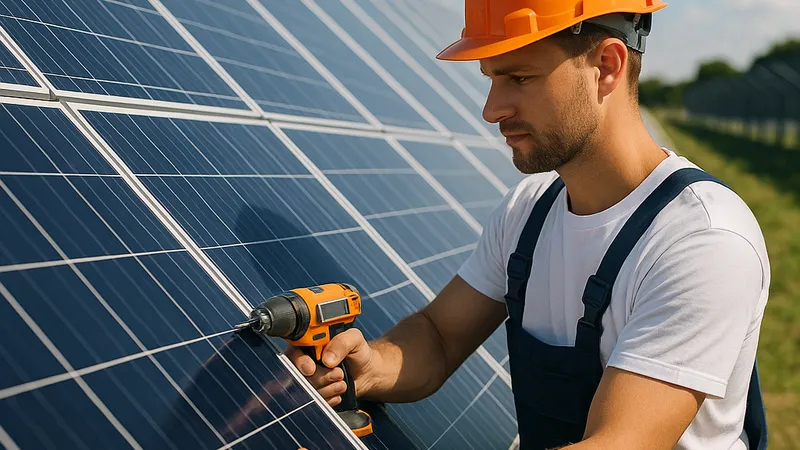
U.S. Energy Department Backs Training as Ørsted and First Solar Step Up Hiring

Climate Tech employers sharpen recruiting with apprenticeships, cross-industry hires, and skills-based screening as government funding and fresh corporate commitments expand headcount. New data points to green roles growing faster than the broader job market, prompting companies to localize talent pipelines and accelerate workforce programs.

Published: January 15, 2026 By James Park, AI & Emerging Tech Reporter Category: Climate Tech

James covers AI, agentic AI systems, gaming innovation, smart farming, telecommunications, and AI in film production. Technology analyst focused on startup ecosystems.

U.S. Energy Department Backs Training as Ørsted and First Solar Step Up Hiring
Executive Summary
  • U.S. Energy Department announces $150-200 million in new clean energy workforce grants since mid-December, accelerating training pipelines for grid, storage, and efficiency roles, according to recent DOE updates.
  • Employers including Ørsted, First Solar, and Siemens Energy outline 2026 hiring plans focused on technicians, manufacturing, and grid software, with targeted expansion in the U.S. For more on [related retail developments](/shein-files-london-ipo-as-retail-unicorns-advance-ai-and-logistics-plays-11-01-2026). and Europe.
  • LinkedIn data indicates green talent demand outpacing non-green roles in early 2026, with employers shifting to skills-based hiring and apprenticeships to fill critical shortages.
  • Companies emphasize cross-sector recruitment from oil and gas, expanded apprenticeship programs, and university partnerships as core strategies to meet near-term project milestones.
Demand Signal and Where Hiring Is Concentrating Clean energy hiring signals strengthen into 2026 as U.S. federal funding and corporate buildouts converge on power grids, storage, and domestic manufacturing. The U.S. Department of Energy has announced additional clean energy workforce funding tranches since mid-December, totaling an estimated $150-200 million to support training programs for technicians and project delivery staff, per recent DOE workforce updates and notices of intent (DOE). Employers are emphasizing field roles—HVDC technicians, battery storage commissioning engineers, and residential solar installers—tied to grid modernization and distributed energy projects. Ørsted said it is ramping U.S. offshore wind workforce recruitment in 2026 as it rebuilds its development pipeline, with plans to onboard hundreds of technicians, HSE specialists, and marine operations staff across East Coast ports. “We are rebuilding our U.S. offshore trajectory with a sharp focus on execution talent and local content,” said Mads Nipper, CEO of Ørsted, in a recent interview discussing U.S. hiring plans (Reuters). Manufacturing-led hiring continues in solar: First Solar reiterated plans to add several hundred roles at its Alabama and Ohio facilities into 2026, including maintenance technicians and process engineers aligned with production ramp schedules (First Solar IR). Talent Acquisition Strategies: Skills-Based, Apprenticeships, and Cross-Industry Hires Climate Tech employers are leaning into skills-based assessments and accelerated apprenticeships to expand candidate pools amid tight supply for licensed electricians, inverter technicians, and grid software engineers. LinkedIn’s early 2026 indicators show green talent demand outpacing broader postings, with employers shifting job descriptions to emphasize competencies over pedigrees and prioritizing recognized certifications for safety-critical roles (LinkedIn Economic Graph). “Apprenticeships shorten the runway for critical field roles and create durable career ladders,” said Mary Powell, CEO of Sunrun, outlining 2026 hiring for licensed and trainee installers in program markets (CNBC). Grid and storage suppliers are expanding cross-industry recruitment from oil and gas, maritime, and automotive to meet commissioning timelines. For more on [related climate tech developments](/list-of-10-best-climate-funds-to-invest-in-2026-in-uk-europe-us-asia-and-uae-07-12-2025). Siemens Energy said it plans to grow grid-software and HVDC engineering headcount in 2026 to address a backlog of interconnection and transmission projects, with priority hubs in Germany and the U.S. “We are scaling software and systems talent to deliver critical HVDC and grid expansion,” said Christian Bruch, CEO of Siemens Energy, during a January update on capacity plans (Siemens Energy press room). This builds on broader Climate Tech trends around domestic manufacturing and grid digitalization. Compensation, Localization, and University Partnerships Compensation remains elevated in markets with intense project buildouts. Industry recruiters report premium pay for North American HVDC and BESS commissioning talent, and relocation stipends for roles tied to new facilities in the U.S. Southeast and Midwest, supported by state incentives and federal tax credits (Bloomberg). Employers are localizing pipelines with union partnerships and community colleges to support multi-year project schedules. First Solar’s hiring plans emphasize technical training and maintenance upskilling aligned to throughput targets at its U.S. plants (First Solar IR), while offshore wind developers—including Ørsted and BP joint ventures—are coordinating with port authorities on safety and maritime operations training (Reuters). Companies are also extending university partnerships to secure power systems, electrochemistry, and materials science talent. Storage providers like Fluence and inverter manufacturers such as Enphase Energy have targeted co-op and graduate recruitment for firmware, grid code compliance, and field services in 2026, citing commissioning backlogs and service-contract growth (TechCrunch). “We hire for system-level problem solvers and upskill quickly on site-specific requirements,” said Manuel Perez Dubuc, CEO of Fluence, describing the company’s 2026 intake priorities (Reuters). Key Hiring Announcements and Workforce Investments The first weeks of 2026 feature notable workforce commitments. Climeworks has expanded U.S. hiring to support North American DAC project development and operations roles, including site engineers and process technicians in Texas and the Mountain West (Climeworks). Meanwhile, DOE workforce grants are prioritizing registered apprenticeships and rapid credential programs for energy efficiency auditors, heat pump installers, and grid technicians, with awards flowing to state energy offices and community colleges (DOE). Employers are pairing these programs with referral bonuses and retention incentives for remote and hybrid roles in grid analytics and scheduling, according to recruiters tracking Q1 postings (McKinsey). “Local content rules and domestic manufacturing incentives are reshaping where and how we hire,” said Mark Widmar, CEO of First Solar, noting the company’s focus on U.S.-based technical roles and supplier development into 2026 (First Solar IR). For more on related Climate Tech developments. Company Workforce Moves and Training Investments
Organization2026 Hiring FocusPlanned Adds or InvestmentSource
U.S. Department of EnergyClean energy workforce grants and apprenticeships$150-200 million since mid-December 2025DOE
ØrstedU.S. For more on [related esg developments](/esg-market-trends-data-disclosure-and-investment-signals-to-watch-in-2025). offshore wind technicians and HSEHundreds of roles across East Coast portsReuters
First SolarManufacturing technicians and maintenanceSeveral hundred roles in AL and OH in 2026First Solar IR
Siemens EnergyHVDC and grid software engineersHeadcount growth in EU and U.S. hubsSiemens Energy
ClimeworksDAC project engineers and operationsU.S. expansion in TX and Mountain WestClimeworks
FluenceBESS commissioning and field serviceGraduate and experienced hires across NA and EUReuters
What This Means for Employers and Candidates For employers, the near-term imperative is to align workforce plans with project critical paths and interconnection timelines, using apprenticeships and rapid credentialing to mitigate scarce-credential bottlenecks. Skills-based hiring and cross-industry pipelines can compress time-to-fill for grid, storage, and installation roles, while retention hinges on clear progression from trainee to licensed technician and field leadership (LinkedIn Economic Graph). For candidates, accredited safety and electrical credentials, OEM-specific training, and familiarity with grid codes materially improve hiring outcomes in 2026, especially in regions benefiting from domestic manufacturing incentives and DOE-backed training (DOE). Companies that embed on-the-job training, standardized assessments, and partnerships with community colleges and unions are positioned to capture scarce technical talent. Several employers, including Sunrun, Enphase Energy, and Fluence, are formalizing structured learning paths with OEM certifications, which recruiters say shortens ramp time and reduces early attrition (TechCrunch). “The winning playbook pairs localized training with transparent career ladders and mobility across projects,” Siemens Energy’s Bruch said in his January remarks (Siemens Energy press room). FAQs

About the Author

JP

James Park

AI & Emerging Tech Reporter

James covers AI, agentic AI systems, gaming innovation, smart farming, telecommunications, and AI in film production. Technology analyst focused on startup ecosystems.

About Our Mission Editorial Guidelines Corrections Policy Contact

Frequently Asked Questions

Where is hiring strongest in Climate Tech at the start of 2026?

Hiring is strongest in grid and storage roles, offshore wind field operations, and U.S. solar manufacturing. Companies such as Ørsted are recruiting offshore technicians and HSE specialists on the U.S. East Coast, while First Solar adds technicians and maintenance staff in Alabama and Ohio. Siemens Energy is prioritizing HVDC and grid software engineering to meet transmission buildout. These moves align with U.S. DOE workforce grants supporting apprenticeships and rapid credential programs for energy efficiency and installation roles.

What talent acquisition strategies are Climate Tech employers using to fill gaps?

Employers are adopting skills-based hiring, expanding registered apprenticeships, and recruiting from adjacent sectors like oil and gas and maritime. LinkedIn data shows green talent demand outpacing broader postings, encouraging companies to emphasize competencies and certifications over degrees. Firms including Sunrun and Fluence are building structured learning programs tied to OEM certifications, while grid suppliers like Siemens Energy are opening regional hubs to tap local talent. These strategies aim to reduce time-to-fill and increase early-career retention.

How are compensation and localization affecting recruiting and retention?

Compensation remains elevated for scarce roles like HVDC engineers and BESS commissioning specialists, particularly in North America. Employers are offering relocation support and retention incentives for facility-tied positions in the U.S. Southeast and Midwest. Localization strategies include partnering with unions, community colleges, and state workforce programs to create stable pipelines. First Solar and Ørsted highlight local content and site-specific training as critical to meeting project milestones and controlling turnover.

What role do government programs play in expanding the Climate Tech workforce?

Government programs are boosting capacity through grants for apprenticeships, rapid credentials, and state-led training initiatives. The U.S. Department of Energy has announced additional clean energy workforce funding since mid-December, prioritizing energy efficiency, grid modernization, and installation roles. These programs help standardize curricula, de-risk employer participation, and improve job quality. Employers are pairing public funding with internal academies and vendor training, creating consistent pathways from trainee to licensed technician and field supervisor.

Which companies are expanding headcount and what roles are prioritized?

Ørsted plans to add hundreds of U.S. offshore wind technicians and safety roles; First Solar is hiring manufacturing technicians and maintenance staff tied to production ramp schedules; Siemens Energy intends to grow HVDC and grid software engineering teams. Climeworks is expanding U.S. hiring for DAC project development and operations. Storage and inverter providers such as Fluence and Enphase Energy are recruiting commissioning engineers and field service personnel to address project backlogs and service obligations across North America and Europe.