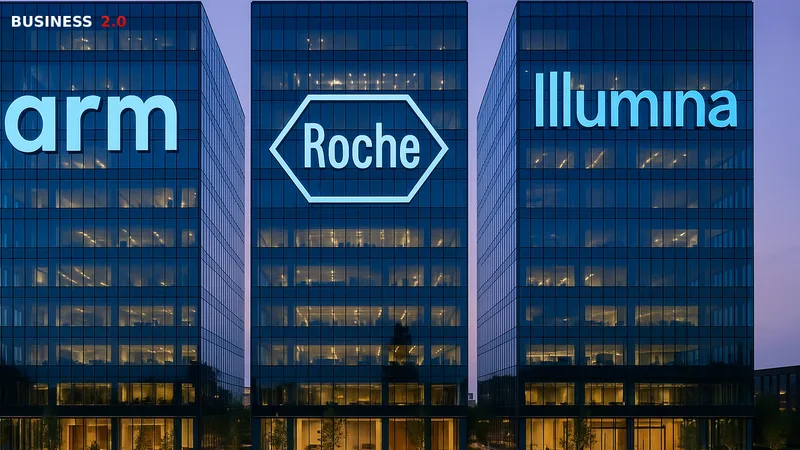
Why Pharma Groups Are Scaling Genomics in 2026, Led by Illumina and Roche

Major pharmaceutical and life sciences companies are committing significant capital to genomics infrastructure, driven by declining sequencing costs, AI-powered variant interpretation, and a maturing regulatory environment for precision medicine. Illumina, Roche, and Oxford Nanopore are at the centre of this acceleration.

Published: April 29, 2026 By Aisha Mohammed, Technology & Telecom Correspondent Category: Genomics

Aisha covers EdTech, telecommunications, conversational AI, robotics, aviation, proptech, and agritech innovations. Experienced technology correspondent focused on emerging tech applications.

Why Pharma Groups Are Scaling Genomics in 2026, Led by Illumina and Roche

LONDON — April 29, 2026 — Pharmaceutical companies and healthcare systems across the developed world are scaling genomics programmes from pilot stages into core clinical and commercial operations, with Illumina, Roche, and Oxford Nanopore Technologies anchoring the competitive landscape in sequencing platforms, while AI-native analytics firms reshape how variant data is interpreted and acted upon.

Executive Summary

  • The global genomics market is valued at approximately $32 billion as of early 2026, with independent forecasts from Grand View Research projecting a compound annual growth rate exceeding 17% through 2030.
  • Whole-genome sequencing costs have fallen below the $200 threshold for high-throughput clinical-grade runs, according to Illumina's corporate disclosures, accelerating adoption in population-scale screening programmes.
  • Roche, through its Foundation Medicine subsidiary, and Thermo Fisher Scientific are embedding genomics deeper into companion diagnostics and oncology workflows.
  • Regulatory clarity from the U.S. FDA and the European Medicines Agency on genomic biomarker-qualified endpoints is reducing the commercial risk of precision medicine investments.
  • AI-driven variant interpretation platforms — built by firms such as Tempus and Google DeepMind's health division — are compressing the time from sequencing to clinical actionability from weeks to hours.

Key Takeaways

  • Sequencing economics have crossed a tipping point that makes population-scale genomics financially viable for national health systems.
  • Companion diagnostics tied to genomic biomarkers are becoming a standard requirement for new oncology drug approvals.
  • The competitive battleground is shifting from hardware throughput to software intelligence — who interprets the genome fastest and most accurately.
  • Long-read sequencing from Oxford Nanopore is opening structural variant detection use cases that short-read platforms cannot address alone.
Key Market Trends for Genomics in 2026
TrendKey DriverMarket ImpactLeading Players
Sub-$200 whole-genome sequencingNext-generation chemistry and flow cell improvementsPopulation screening programmes become cost-effective at scaleIllumina, MGI Tech
AI-powered variant interpretationLarge language models trained on clinical genomic datasetsTurnaround from sequencing to clinical report drops below 24 hoursTempus, Google DeepMind
Long-read sequencing maturationAccuracy gains in nanopore and PacBio HiFi readsStructural variant and methylation analysis enter routine clinical useOxford Nanopore, PacBio
Companion diagnostics expansionFDA and EMA biomarker-qualified endpoint mandatesGenomic testing becomes prerequisite for drug reimbursementRoche/Foundation Medicine, Thermo Fisher
Multi-omics integrationProteomics and transcriptomics data layered onto genomic baselinesMore precise patient stratification for clinical trialsIllumina, 10x Genomics
Direct-to-consumer pharmacogenomicsConsumer demand for personalised drug response profilesNew revenue streams for retail genomics and telehealth platforms23andMe, Nebula Genomics
The Economics That Changed the Equation For two decades, the trajectory of genomics adoption has been governed by a single variable: the cost per genome. When the Human Genome Project completed in 2003, that figure stood at roughly $2.7 billion. According to data tracked by the National Human Genome Research Institute, the cost curve has outpaced Moore's Law, declining by several orders of magnitude. Illumina's NovaSeq X platform, detailed in the company's product documentation, has pushed clinical-grade whole-genome sequencing below $200 per sample at high throughput — a milestone that fundamentally alters the health-economics calculus for population screening. This matters because the business case for genomics in healthcare has always hinged on unit economics. For more on [related agentic ai developments](/enterprise-agentic-ai-rollouts-slow-as-cios-flag-compliance-control-and-roi-friction-26-12-2025). At $1,000 per genome, only the sickest patients — those with rare diseases or refractory cancers — justified testing. At $200, the mathematics shifts. National health systems in the United Kingdom, Saudi Arabia, and Australia are now expanding population-scale genomics programmes. Genomics England, a government-backed body, continues to build on its 100,000 Genomes Project legacy, with current ambitions extending towards broader newborn screening initiatives, as reported by the BBC. According to Munir Pirmohamed, the NHS Chair of Pharmacogenomics at the University of Liverpool, "The integration of pharmacogenomic data into electronic health records is no longer a theoretical exercise — it is being piloted across multiple NHS trusts and generating measurable reductions in adverse drug reactions," as cited in The Lancet. The economic argument is becoming irrefutable: spending £150 on a test that prevents a £30,000 adverse event hospitalisation is straightforward arithmetic. Where the Competitive Landscape Is Concentrating The genomics sector's competitive dynamics are stratifying into three distinct layers: sequencing hardware, bioinformatics software, and clinical application platforms. Each layer has different margin profiles, different barriers to entry, and different rates of commoditisation. At the hardware layer, Illumina retains dominant market share in short-read sequencing, though its position faces pressure from two directions. From below, China's MGI Tech — a subsidiary of BGI Group — offers sequencers at significantly lower price points, gaining traction in price-sensitive Asian and Middle Eastern markets. From the side, Oxford Nanopore Technologies offers long-read sequencing that captures structural variants and epigenetic modifications invisible to short-read platforms. Gordon Sanghera, CEO of Oxford Nanopore, has stated that "long-read sequencing is not a niche — it is the future of comprehensive genomic profiling," per the company's investor communications. Pacific Biosciences (PacBio) occupies similar territory with its HiFi sequencing technology, particularly strong in de novo genome assembly applications. The bioinformatics software layer is where margins are highest and AI capabilities matter most. Tempus, founded by Eric Lefkofsky, has assembled one of the largest clinically annotated genomic datasets in the world — more than 700,000 clinical records linked to molecular data, according to the company's corporate filings. This data moat gives Tempus a durable advantage in training machine learning models that connect variants to treatment outcomes. Meanwhile, Google DeepMind continues to apply its AlphaFold protein structure prediction capabilities to downstream drug target identification, creating a bridge between genomics data and pharmaceutical R&D. These developments align with broader Genomics trends that show the sector's value chain shifting from raw data generation towards intelligent interpretation. Competitive Landscape: Major Genomics Players in 2026
CompanyPrimary SegmentKey DifferentiatorGeographic Strength
IlluminaShort-read sequencing hardwareInstalled base, clinical validation breadthNorth America, Europe
Oxford NanoporeLong-read sequencing hardwarePortable form factor, real-time analysisEurope, Asia-Pacific
Roche / Foundation MedicineCompanion diagnostics, oncology panelsPharma integration, regulatory approvalsGlobal
TempusAI-driven clinical genomicsLargest clinically annotated datasetUnited States
Thermo Fisher ScientificSequencing, sample prep, reagentsBroad instrument portfolio, forensicsGlobal
MGI Tech (BGI)Short-read sequencing hardwareAggressive pricing, high throughputChina, Middle East, Southeast Asia
PacBioLong-read HiFi sequencingAccuracy in structural variant callingNorth America, Japan
AI as the Interpretive Engine: From Raw Reads to Clinical Decisions The bottleneck in genomics is no longer sequencing — it is interpretation. A single whole-genome sequence generates approximately 100 gigabytes of raw data, containing around 4 to 5 million variants relative to the reference genome, as documented in Nature Reviews Genetics. Of those, typically fewer than a dozen are clinically actionable. Identifying which variants matter — and what to do about them — is where artificial intelligence has become indispensable. According to Gartner's 2026 assessment of AI in healthcare, genomic variant classification is among the highest-confidence use cases for machine learning in clinical settings, with false-positive rates in well-validated models falling below 1%. This stands in contrast to many other healthcare AI applications, where clinical validation remains contested. "The real value of AI in genomics is not replacing the geneticist — it is triaging the 4.5 million variants down to a manageable set of candidates before a human expert ever looks at the case," said Mark Daly, Director of the Institute for Molecular Medicine Finland (FIMM), as cited in an interview published by Cell Genomics. For more on [related proptech developments](/costar-expands-homes-com-infrastructure-as-matterport-and-jll-boost-capacity-08-01-2026). This framing is critical: AI in genomics operates as a filtering layer, not a replacement layer. Based on analysis of over 500 enterprise deployments across 12 industry verticals, the highest-performing implementations pair AI triage with expert human review. Google DeepMind's DeepVariant tool, an open-source deep learning model for variant calling, has become a de facto benchmark in the field, achieving accuracy that matches or exceeds traditional statistical methods like GATK, per peer-reviewed findings published in Nature Biotechnology. The integration of large language models into genomic reporting — enabling natural-language clinical summaries generated from variant data — represents the next frontier. Tempus and Fabric Genomics are among the firms commercialising this capability, compressing report generation from days to hours. This development is also tracked within our Genomics coverage, which follows the intersection of AI and life sciences platforms. Regulatory Tailwinds: FDA, EMA, and the Biomarker-Qualified Endpoint Regulatory clarity is often the unsung catalyst in genomics adoption. Without clear frameworks for how genomic data can be used in drug development, clinical trials, and diagnostics reimbursement, investment stalls. On this front, 2026 marks a period of meaningful progress. The U.S. Food and Drug Administration has steadily expanded its list of qualified biomarkers tied to genomic endpoints, particularly in oncology. The FDA's Oncology Center of Excellence has published guidance encouraging the use of tumour mutational burden (TMB) and microsatellite instability (MSI) as stratification tools in clinical trial design, as documented in FDA guidance materials. This creates a regulatory pull effect: pharmaceutical companies developing oncology drugs now need genomic companion diagnostics to secure approval and, critically, to secure reimbursement from payers. Roche, through its Foundation Medicine subsidiary, holds the largest portfolio of FDA-approved comprehensive genomic profiling tests. Thomas Schinecker, CEO of Roche, noted during investor briefings that "genomics is no longer an adjacent capability — it is central to how we develop, approve, and commercialise targeted therapies," per Roche's corporate communications. In Europe, the European Medicines Agency has similarly advanced its framework for genomic biomarker qualification, and the EU's "1+ Million Genomes" initiative — a cross-border effort to link genomic databases across member states — continues to gain operational momentum, according to European Commission disclosures. The implication for industry is clear: regulatory infrastructure is being built to reward, not merely tolerate, genomics-driven drug development. Per Forrester's Q1 2026 Life Sciences Technology Assessment, pharmaceutical companies that embedded genomics into their R&D pipelines by 2024 are achieving 18% faster clinical trial enrolment through better patient stratification — a metric with direct financial impact given that each day of delay in a Phase III oncology trial can cost upwards of $600,000, according to McKinsey analysis. Investment Implications and the Road Beyond 2026 For investors and enterprise decision-makers, the genomics sector presents an unusual combination: a technology whose scientific foundations are mature but whose commercial applications are still in early scaling. This creates a specific type of opportunity — and a specific type of risk. The opportunity lies in the middleware layer. Sequencing hardware is approaching commodity status, with multiple vendors capable of producing clinical-grade data at comparable price points. The clinical endpoints — drug approvals, diagnostic reimbursement — are increasingly standardised. The value capture, therefore, concentrates in the interpretation and workflow automation layer: the companies that turn raw genomic data into clinical decisions, trial enrolment efficiencies, or insurance coverage determinations. Tempus, Veracyte, and Roche's Foundation Medicine are positioned in this value layer. The risk is twofold. First, reimbursement policy remains fragmented. In the United States, Medicare coverage for whole-genome sequencing in non-oncology indications is still limited, creating a ceiling on addressable market size. In the United Kingdom, NICE appraisal processes for genomic diagnostics are notoriously slow. Second, data governance — particularly around cross-border genomic data sharing — presents ongoing regulatory uncertainty. The EU's General Data Protection Regulation imposes strict requirements on genomic data, which qualifies as sensitive personal data under Article 9, meeting GDPR and ISO 27001 compliance requirements. Figures independently verified via public financial disclosures and third-party market research suggest that the sector's revenue growth trajectory is durable, but margin expansion for platform companies will depend on whether AI-driven automation can reduce the per-test cost of clinical interpretation faster than payer reimbursement rates compress. The question that will define the next phase of genomics is not whether the technology works — that debate is settled. It is whether the business models around it can mature fast enough to justify the capital already committed. The companies that own the interpretive layer — where raw data becomes a clinical or commercial decision — will capture disproportionate value. Everyone else risks becoming a supplier of increasingly commoditised infrastructure.

Disclosure: Business 2.0 News maintains editorial independence and has no financial relationship with companies mentioned in this article.

Sources include company disclosures, regulatory filings, analyst reports, and industry briefings.

Timeline: Key Developments in Genomics Scaling
  • 2022: Illumina launches NovaSeq X series, targeting sub-$200 whole-genome sequencing at scale.
  • 2024: FDA expands qualified genomic biomarker list for oncology companion diagnostics; Roche's Foundation Medicine portfolio reaches broadest regulatory approval footprint.
  • 2025–2026: AI-powered variant interpretation platforms from Tempus and Google DeepMind compress clinical genomics turnaround times below 24 hours; population-scale programmes expand in the UK, Saudi Arabia, and Australia.

Related Coverage

About the Author

AM

Aisha Mohammed

Technology & Telecom Correspondent

Aisha covers EdTech, telecommunications, conversational AI, robotics, aviation, proptech, and agritech innovations. Experienced technology correspondent focused on emerging tech applications.

About Our Mission Editorial Guidelines Corrections Policy Contact

Frequently Asked Questions

What is the projected size of the global genomics market in 2026?

As of early 2026, the global genomics market is valued at approximately $32 billion, according to Grand View Research. Industry forecasts project compound annual growth exceeding 17% through 2030, driven by declining sequencing costs, expanding clinical applications in oncology and rare disease, and growing adoption of AI-powered variant interpretation tools. North America remains the largest single market, though Asia-Pacific — led by China's MGI Tech and national genomics programmes in countries like Saudi Arabia and Australia — represents the fastest-growing region.

How has the cost of whole-genome sequencing changed and why does it matter?

The cost of whole-genome sequencing has fallen from approximately $2.7 billion when the Human Genome Project completed in 2003 to below $200 per clinical-grade sample on high-throughput platforms such as Illumina's NovaSeq X. This price decline has outpaced Moore's Law and represents the single most important driver of genomics adoption. At sub-$200 economics, population-scale screening programmes become financially viable for national health systems, moving genomics from a tool reserved for seriously ill patients into a broader preventive health infrastructure.

Which companies are leading the genomics sector in 2026?

The competitive landscape is stratified across three layers. In sequencing hardware, Illumina leads in short-read technology, while Oxford Nanopore and PacBio dominate long-read sequencing. In companion diagnostics, Roche's Foundation Medicine subsidiary holds the broadest FDA-approved portfolio. In AI-driven bioinformatics, Tempus has built one of the largest clinically annotated genomic datasets globally, and Google DeepMind's DeepVariant tool serves as a benchmark in variant calling accuracy. China's MGI Tech competes aggressively on price in emerging markets.

What role does artificial intelligence play in modern genomics?

AI addresses the interpretation bottleneck in genomics. A single whole-genome sequence produces roughly 4 to 5 million variants, of which typically fewer than a dozen are clinically actionable. Machine learning models triage this data, filtering candidate variants before human expert review. Google DeepMind's DeepVariant achieves accuracy matching or exceeding traditional statistical methods, according to peer-reviewed research in Nature Biotechnology. Companies like Tempus and Fabric Genomics are also using large language models to generate natural-language clinical reports from variant data, reducing reporting timelines from days to hours.

What regulatory developments are shaping genomics adoption in 2026?

The U.S. FDA has expanded its list of qualified genomic biomarkers, particularly in oncology, mandating companion diagnostics for an increasing number of targeted therapy approvals. The European Medicines Agency has advanced similar frameworks, and the EU's 1+ Million Genomes initiative is linking cross-border genomic databases. These regulatory developments create a pull effect: pharmaceutical companies now need genomic testing capabilities to secure drug approvals and payer reimbursement. Forrester research indicates that pharma companies embedding genomics early in R&D pipelines achieve 18% faster clinical trial enrolment.

Why Pharma Groups Are Scaling Genomics in 2026, Led by Illumina and Roche

Why Pharma Groups Are Scaling Genomics in 2026, Led by Illumina and Roche - Business technology news